Zagreb Lenuci’s Horseshoe
Core idea
U-shaped chain of parks/institutions
Why it matters
Civic landscape sequence structuring the center
Description
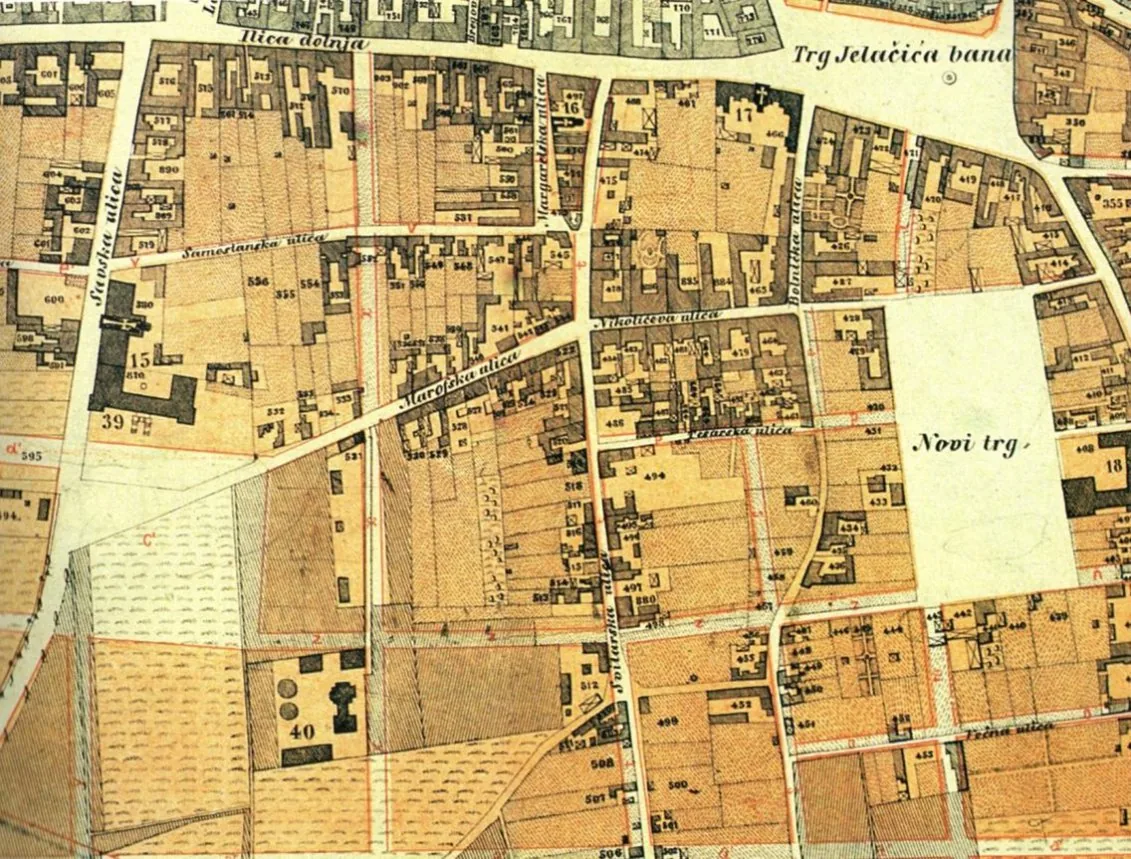
Lenuci's Horseshoe, developed in Zagreb during the 1880s and 1890s and associated with the engineer Milan Lenuci, is a U-shaped sequence of seven landscaped squares and a botanical garden framing the Lower Town grid. The green frame is lined with the principal cultural and scientific institutions of the era, including the academy, theatre and art pavilion, forming a continuous promenade of parks and monumental public buildings. It was realised incrementally within the regulatory plans for the expanding city.
Significance
The Horseshoe gave Zagreb a coherent civic and landscape armature comparable to Vienna's Ringstrasse, structuring the centre of the city to this day. It is significant as a Central European example of civic monumentalism achieved through a planned sequence of public spaces rather than a single boulevard, and it remains the touchstone of Croatian planning history.
What shaped it
- The public park (1843–1858)
- The nation-state: German and Italian unification (1861 / 1871)
- The linear park / greenway (1878 / 2009 revival)