Abuja Master Plan
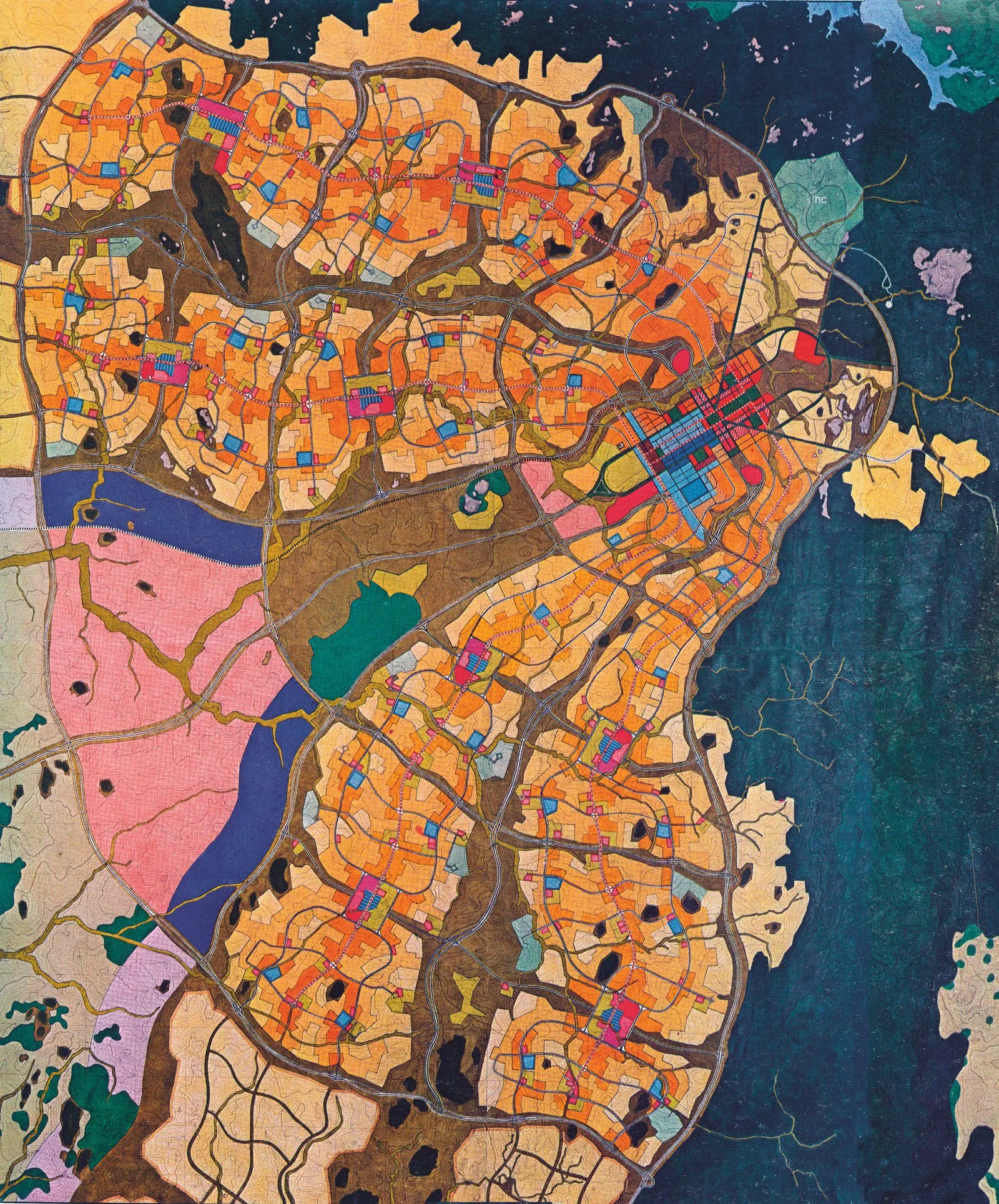
Core idea
Greenways & sectoral capital layout
Why it matters
New national capital with ecological structure
Description
Abuja's 1979 master plan, devised to replace overcrowded, ethnically charged Lagos as Nigeria's capital, laid out a new monumental administrative city on a crescent plan with zoned districts and a central axis terminating at Aso Rock.
Significance
Abuja is a major example of late-20th-century capital relocation and nation-building in Africa, intended as neutral common ground for a diverse federation — and a case study in the gap between master-plan ideals and lived reality.
What became of it
Realised: Abuja replaced Lagos as Nigeria's capital on 12 December 1991 and has grown rapidly, though largely beyond the planned core.
Critique
Strict, costly plan controls priced out lower-income residents, spawning extensive informal settlements on the city's fringes.
What shaped it
- The master plan (early 20th c.)
- Garden Cities of To-Morrow (1898 / 1902)
- The linear park / greenway (1878 / 2009 revival)
- Zoning (1884 Germany / 1916 NYC)
- New Towns Act (1946)
- Ekistics (1968)
Plans it influenced
- 6th of October City Master Plan (Egypt) (1979)
- Sheikh Zayed City Master Plan (Egypt) (1993)
- Putrajaya Masterplan (Malaysia) (1993–)