Colombo Urban Regeneration Programme
Core idea
Canal restoration, resettlement, Fort area
Why it matters
Water-centric regeneration
Description
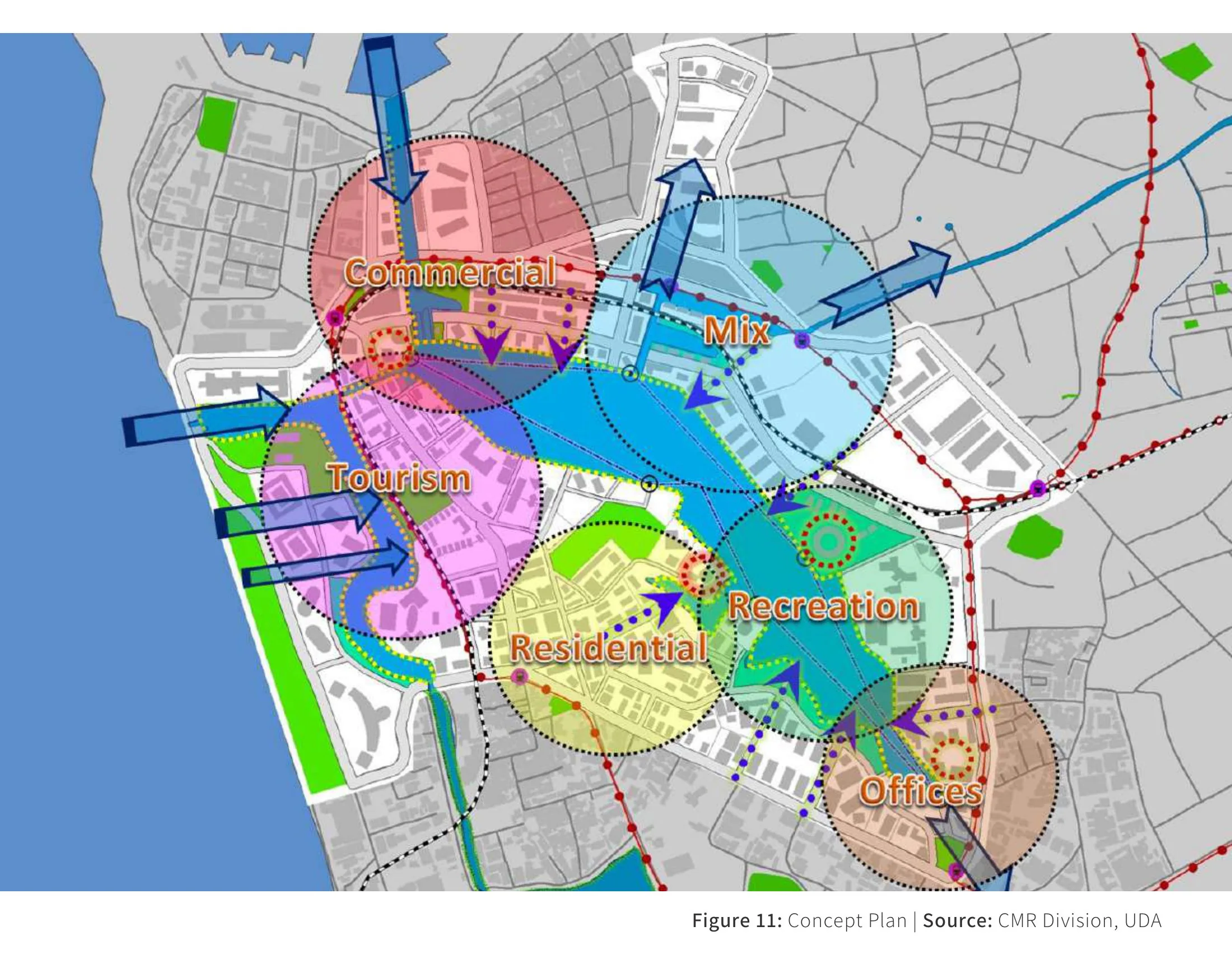
The Colombo Urban Regeneration Programme, led by Sri Lanka's Urban Development Authority from the 2010s, combined restoration of the city's canal and wetland network, relocation of underserved settlements into new high-rise housing, and refurbishment of the colonial-era Fort and Pettah areas. Undertaken partly under military-linked administration after the civil war, it aimed to reposition Colombo as a clean, flood-resilient commercial capital.
Significance
The programme is significant for its water-centric approach, recognising Colombo's canals and wetlands as flood infrastructure, an emphasis later reinforced by the city's designation as a Ramsar Wetland City. It is also controversial: the resettlement of low-income communities to make land available for development has been criticised as displacement under a beautification agenda. The case features in debates on post-war urbanism, militarised planning and equitable resilience in South Asia.
What shaped it
- The linear park / greenway (1878 / 2009 revival)
- John Turner & self-help housing (1972-1976)
Sources
- https://www.uda.gov.lk/urban-regeneration-programme.html
- https://www.aiib.org/en/projects/details/2019/approved/Sri-Lanka-Support-to-Colombo-Urban-Regene