Dongtan Eco-city (unbuilt)
Core idea
Eco-city on Chongming Island
Why it matters
Early high-profile eco-city vision
Description
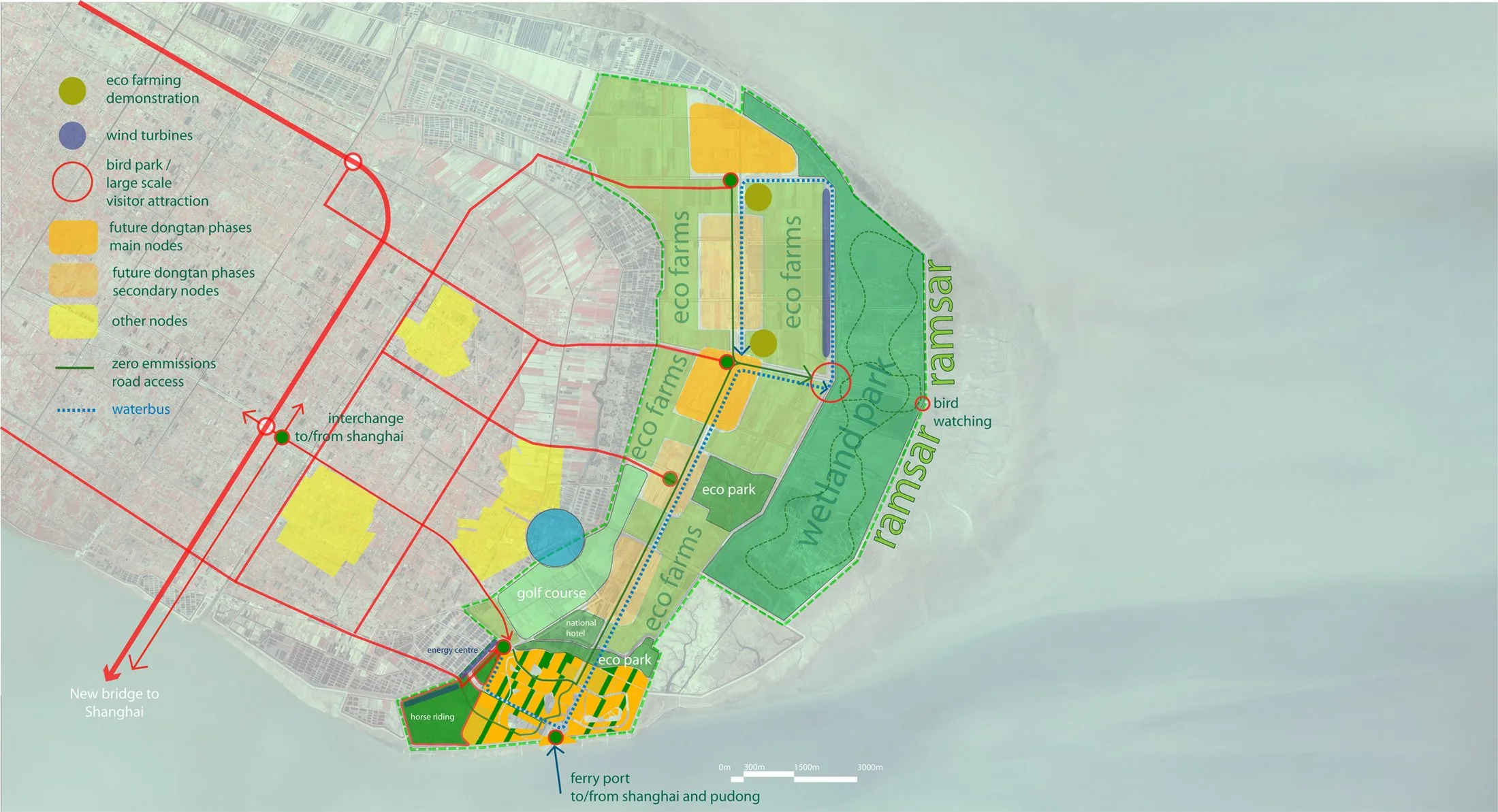
A masterplan commissioned around 2005 from the engineering firm Arup by the Shanghai Industrial Investment Corporation for an ecological new town on Chongming Island at the mouth of the Yangtze. Dongtan was conceived as a compact, largely car-free settlement powered by renewable energy, with closed-loop water and waste systems and buffers protecting adjacent wetlands. Despite extensive design work and international publicity, the project stalled and was never built.
Significance
Dongtan was the most prominent early attempt to design a comprehensive eco-city from scratch, and its collapse made it a touchstone in debates about eco-city rhetoric, feasibility and governance in China. It is frequently contrasted with the later, partially realised Sino-foreign eco-city projects such as Tianjin Eco-city, and it shaped critical scholarship on sustainability branding in masterplanning.
What shaped it
- Sustainable development (Brundtland) (1987)
- Kyoto Protocol (1997)
Plans it influenced
- Tianjin Eco-City (Sino–Singapore) (2008–)
- Changsha Meixi Lake (2009–)
- Masdar City Masterplan (2006–)
Sources
- https://e360.yale.edu/features/chinas_grand_plans_for_eco-cities_now_lie_abandoned
- https://www.holcimfoundation.org/projects/dongtan-eco-city-urban-concept-shanghai-china