Greater Jakarta NCICD
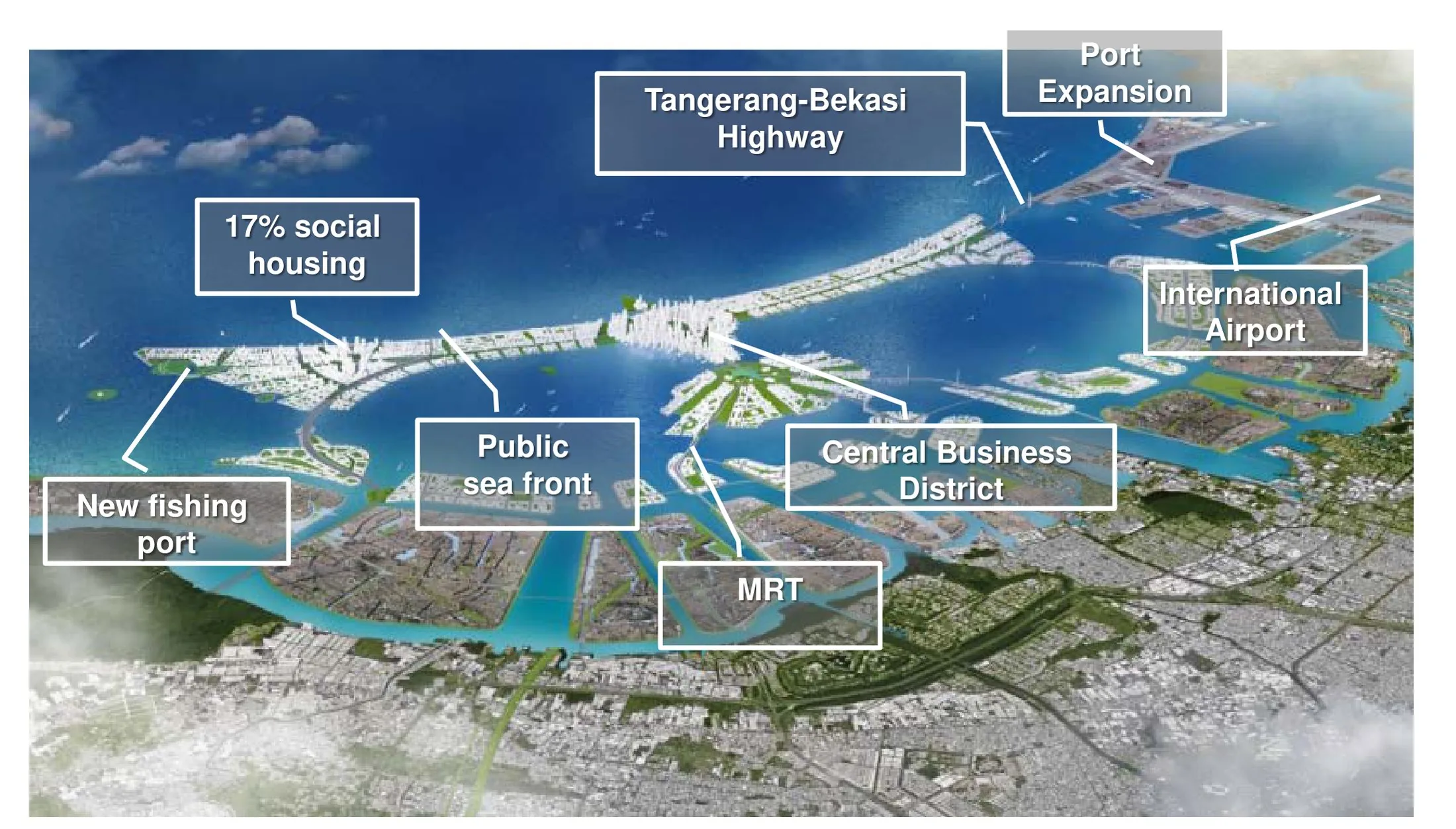
Core idea
Sea wall + polders + urban redevelopment
Why it matters
Climate adaptation for megacity delta
Description
The National Capital Integrated Coastal Development programme for Greater Jakarta, developed from 2014 by the Government of Indonesia with Dutch engineering and planning partners. It proposed a giant outer sea wall across Jakarta Bay, a system of polders and pumping, and associated land reclamation and urban redevelopment to protect the rapidly subsiding, flood-prone megacity delta. The scheme evolved through several phases, with the shoreline defences advancing while the iconic 'Great Garuda' sea wall remained contested.
Significance
NCICD is a landmark of climate-adaptation planning at megacity scale and a prominent example of exported Dutch delta expertise. It provoked sustained debate over whether hard infrastructure can substitute for tackling groundwater extraction and subsidence, and over the social and ecological costs of bay reclamation, questions sharpened by Indonesia's subsequent decision to relocate its capital.
What shaped it
- Urban resilience (2013)
- Steam-powered pumped drainage (steam land-drainage from the early 1800s)
- UN 2030 Agenda & Sustainable Development Goals (2015)
Plans it influenced
Sources
- https://en.wikipedia.org/wiki/Giant_Sea_Wall_Jakarta
- https://kppip.go.id/en/priority-projects/water-sanitation/national-capital-integrated-coastal-de