Heijō-kyō (Nara)
Core idea
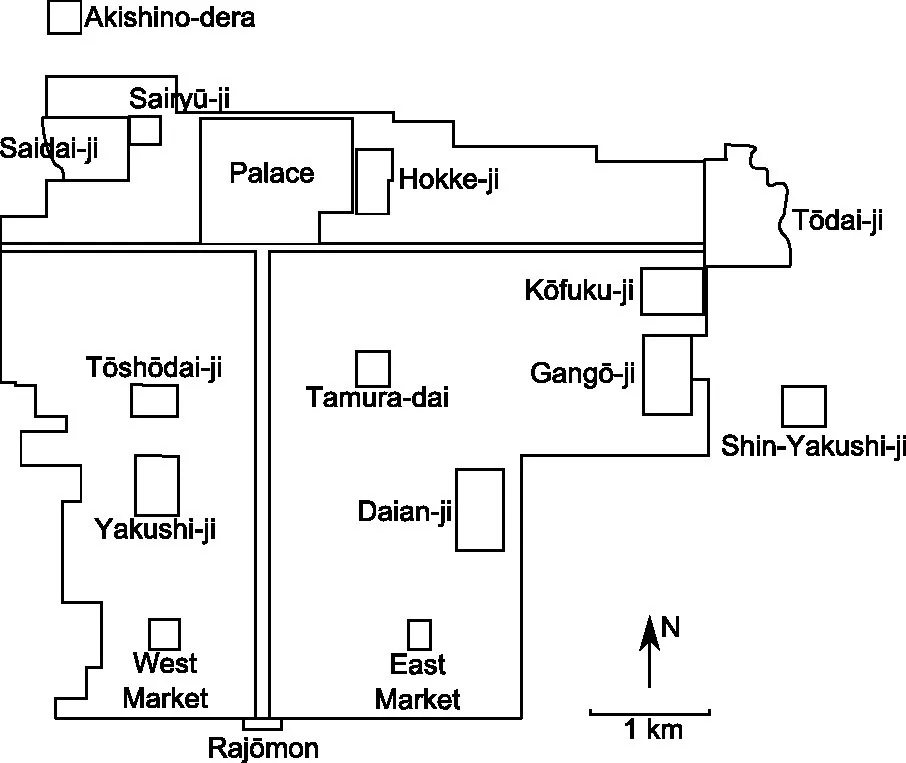
Orthogonal warded plan with axial palace
Why it matters
Introduces Chinese planning principles in Japan
Description
Heijō-kyō, established in 710 CE at present-day Nara, was the first enduring permanent capital of Japan, laid out by the imperial court on the model of the Tang Chinese capital Chang'an. The plan was a rectangular orthogonal grid of avenues and wards, bisected by the broad Suzaku Avenue leading north to the walled palace compound, with markets, temples and aristocratic residences assigned to regulated blocks.
Significance
Heijō-kyō marks the decisive introduction of Chinese cosmological and administrative planning principles into Japan, establishing the gridded, palace-anchored capital as the template for Japanese imperial urbanism. It set the precedent followed at Heian-kyō, and its remains, part of a UNESCO World Heritage listing at Nara, document how planning models were transmitted and adapted across East Asia.
What shaped it
- The walled-ward (fang) city system (Sui–Tang, c. 6th–9th c.)
- Buddhism (c. 5th c. BCE)
Plans it influenced
- Heian-kyō (Kyoto) (794)