Ho Chi Minh City Thu Thiem New Urban Area
Core idea
New CBD across the river
Why it matters
Major expansion of HCMC core
Description
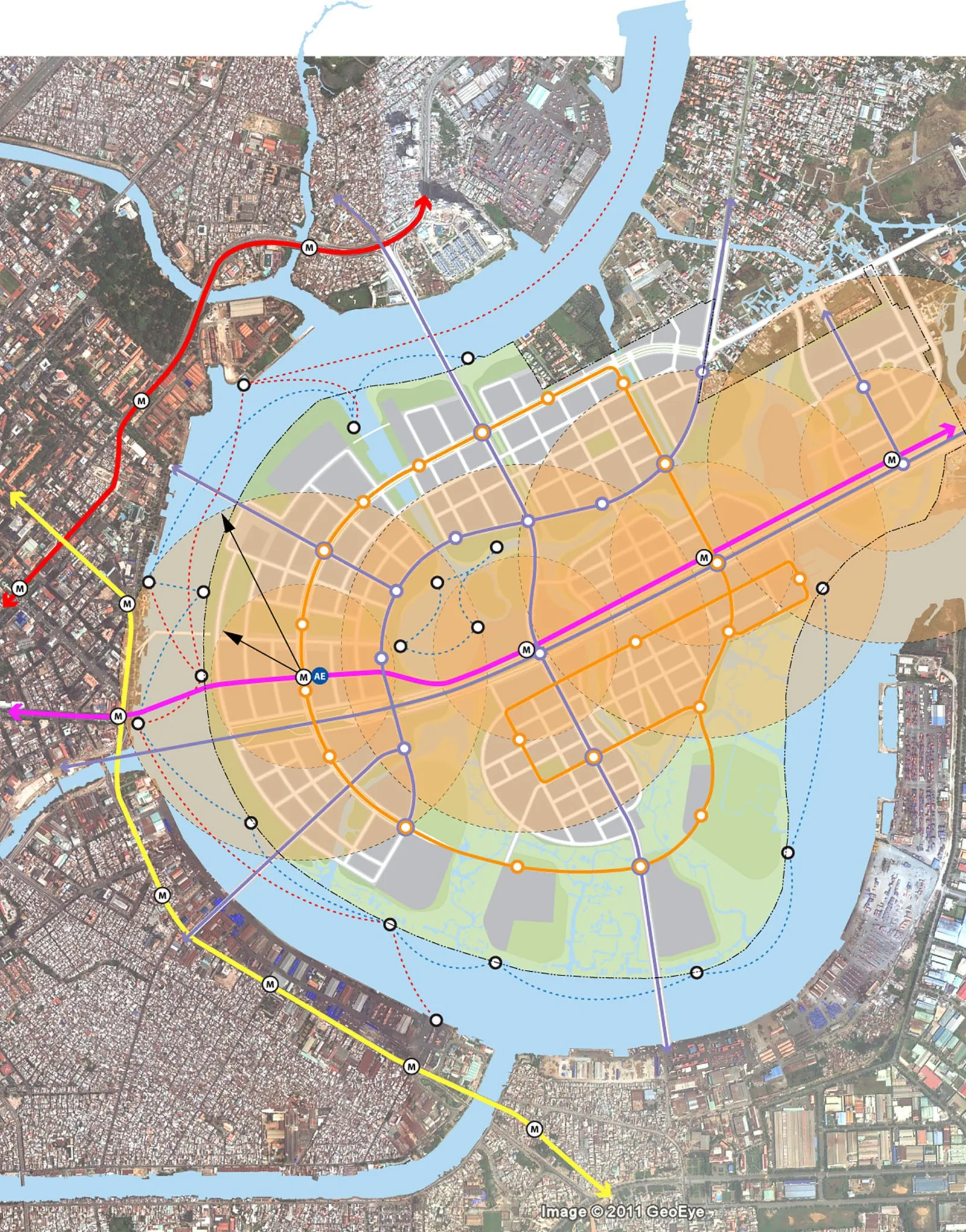
Thu Thiem New Urban Area is a planned extension of Ho Chi Minh City on a peninsula of the Saigon River directly opposite the historic centre, designated in 1996 and re-masterplanned in the 2000s with Sasaki Associates producing the guiding plan adopted in 2005. The scheme envisages a dense new central business district of around 657 hectares with a canal-threaded landscape framework, civic and cultural buildings, and new bridges and a tunnel linking it to District 1. Implementation required the relocation of tens of thousands of residents and has proceeded in phases.
Significance
Thu Thiem is Vietnam's most prominent attempt to build a new CBD across the river from an existing core, and a key case of post-reform socialist-market urbanisation. Its landscape-based Sasaki plan is cited for adapting delta hydrology to high-density development, while the project became nationally controversial over land clearance, compensation and official misconduct, making it central to Vietnamese debates on land rights and megaproject governance.
What shaped it
- The skyscraper (1885)
- Neoliberalism (1970s–1990s)
- Floor Area Ratio (FAR/FSI) (20th c.)
Sources
- https://en.wikipedia.org/wiki/Th%E1%BB%A7_Thi%C3%AAm_New_Urban_Area
- https://www.sasaki.com/projects/thu-thiem-new-urban-area/