Kanazawa (Maeda Castle Town)
Core idea
Major Edo-period castle town laid out for defence around Kanazawa Castle with distinct samurai and merchant quarters
Why it matters
A leading example of the Japanese jokamachi, the planned castle town that structured early-modern Japanese cities
Description
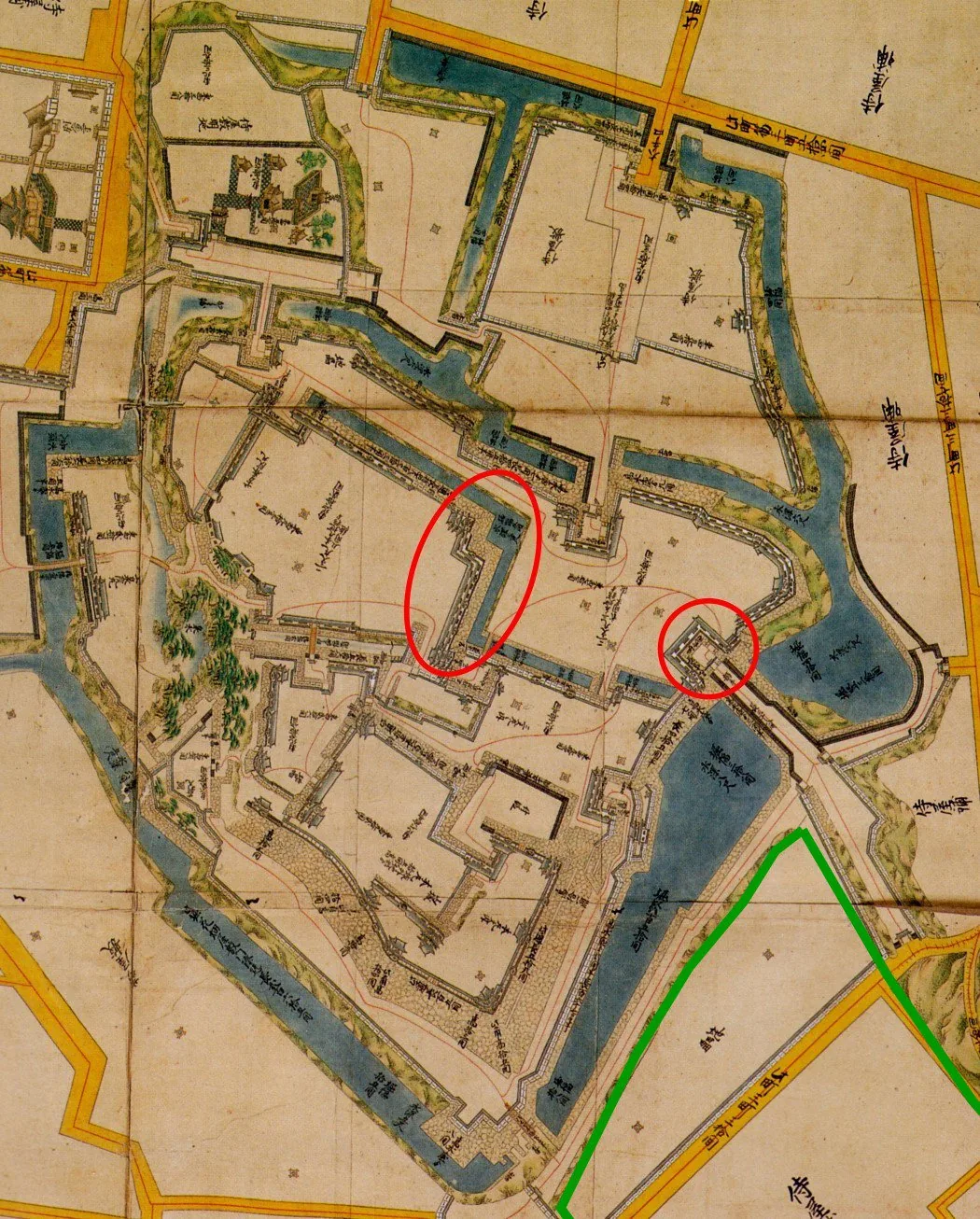
When Maeda Toshiie took possession of Kanazawa Castle in 1583, he founded the castle town (jokamachi) that became the seat of the immensely wealthy Kaga domain. Toshiie and his successors enlarged the castle and deliberately planned the surrounding city to meet defensive and administrative needs, designating guardian shrines, temple districts and graded residential zones for retainers. Samurai of high rank were settled in quarters such as Nagamachi near the centre of power, while merchants and artisans occupied separate districts, and winding streets, canals and temple precincts were arranged to channel and slow any attacker. These early policies fixed the waterways, pilgrimage routes and ward structure that continued to shape the city.
Significance
Kanazawa is among the most fully realised of Japan's castle towns, the urban form through which daimyo domains organised their populations in the Edo period. Its segregation of warrior, merchant and religious quarters around a fortified centre, and its defensively engineered street pattern, typify the jokamachi as a planned military and administrative city, and the surviving districts make it a reference case for early-modern Japanese urbanism.
What became of it
Realised and flourished as the Maeda clan's Kaga-domain castle town and one of Japan's largest Edo-period cities; it escaped wartime bombing and survives as one of the best-preserved historic Japanese cities, with intact samurai (Nagamachi) and merchant quarters.
Critique
Historians note the town's form expressed rigid feudal status segregation, with samurai districts dominating land near the castle and merchants confined to designated quarters, a spatial hierarchy serving Maeda control.
What shaped it
- Gunpowder and the cannon (9th–14th c.)
- Fengshui landscape cosmology (Han onward, codified by Song)
- The baojia mutual-responsibility registration (Northern Song, c. 1070)
Plans it influenced
- Edo (Tokugawa Capital) (1590–1868)