Lingang New City (Shanghai)
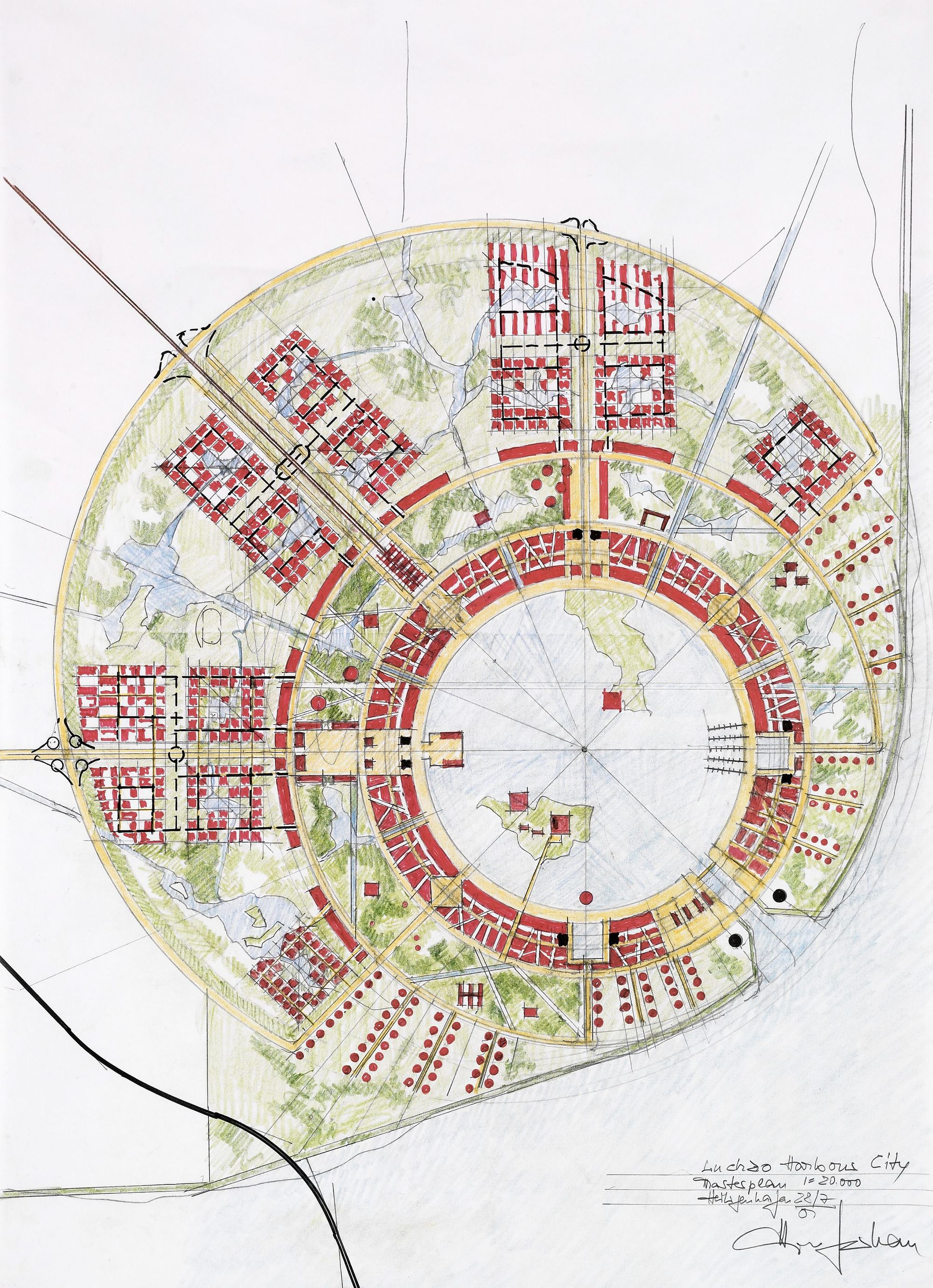
Core idea
Port-adjacent planned city
Why it matters
Strategic deep-water port urbanization
Description
Lingang New City is a planned city at the south-eastern tip of Shanghai, begun in 2002 to a masterplan by the German practice gmp (von Gerkan, Marg und Partner) in connection with the Yangshan deep-water port and its logistics zone. The plan is famously geometric: concentric rings of development arranged around the large artificial Dishui Lake, with radial avenues and green belts, intended to house a population of several hundred thousand tied to port, industrial and research functions.
Significance
Lingang stands out among Chinese new towns for its explicitly ideal-city geometry, drawing consciously on European garden-city and concentric-city imagery. Its slow initial take-up made it a case study in the difficulties of populating state-initiated cities, while its later designation within Shanghai's free-trade zone illustrates how such projects are repeatedly re-purposed by strategic economic policy.
What shaped it
- China's reform & opening (1978)
- The master plan (early 20th c.)
- Containerised-logistics scale-up (1970s–1990s)