Ljubljana Spatial Plan
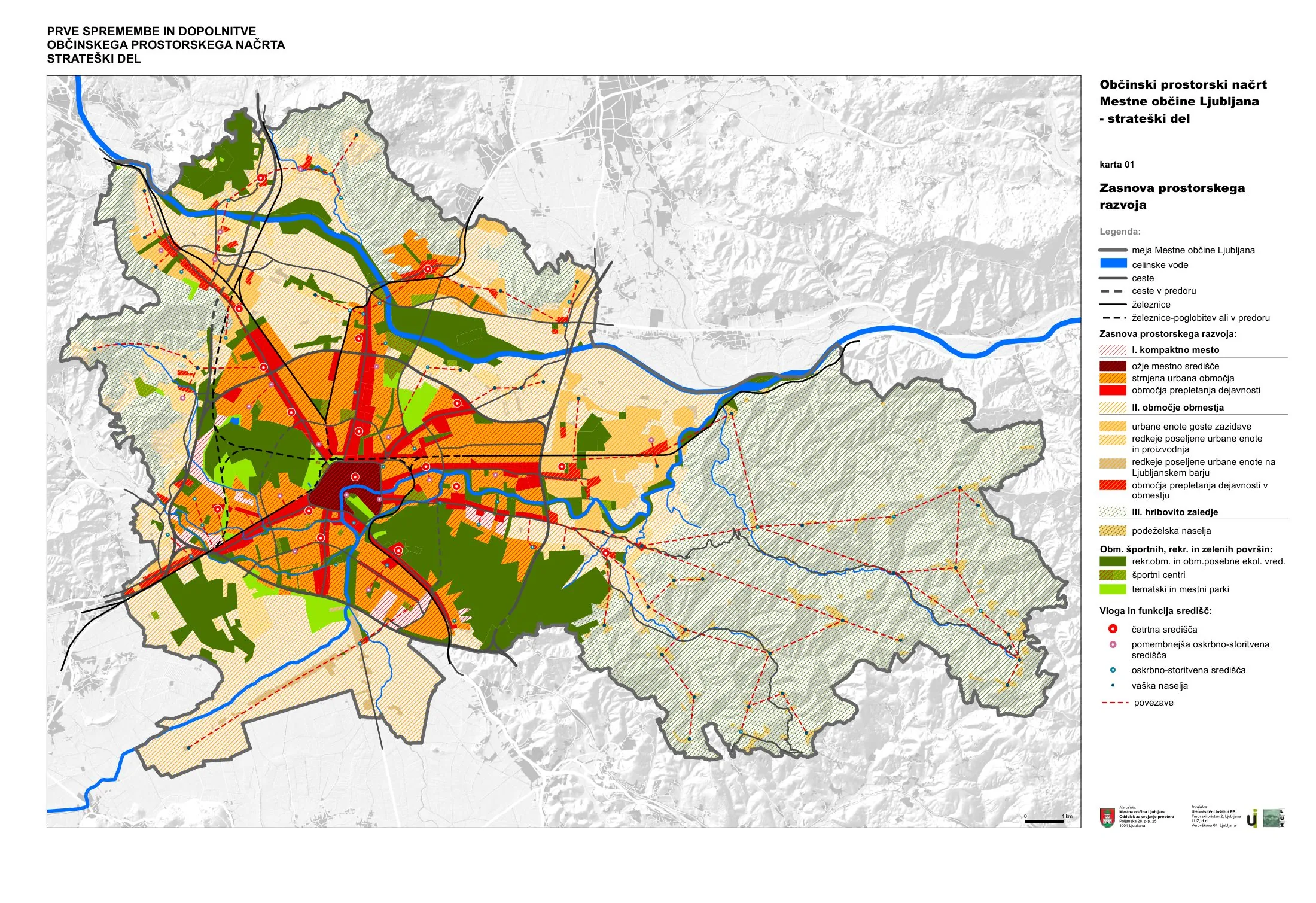
Core idea
Green wedges + cycling + riverfront
Why it matters
EU Green Capital model
Description
The Ljubljana Spatial Plan, adopted by the city in 2010, is the Slovenian capital's comprehensive municipal framework for land use and development. It reinforces the city's inherited structure of green wedges reaching into the centre, prioritises cycling and public transport, and supports the renewal of the Ljubljanica riverfront and the pedestrianisation of the historic core, aligning everyday planning decisions with an explicit environmental agenda.
Significance
The plan underpinned Ljubljana's emergence as a model small European green capital, culminating in its designation as European Green Capital in 2016. It is significant as evidence that a post-socialist capital of modest size can lead on sustainable mobility and public space, and its riverfront and car-free centre are widely invoked in debates on transferring green urbanism beyond wealthy Western European cities.
What shaped it
- The green belt (1898 concept / 1938 law)
- The linear park / greenway (1878 / 2009 revival)
- The compact city (1973-1990s)
- Global financial crisis (2007–2009)
Sources
- https://www.mdpi.com/2071-1050/16/8/3332
- https://www.ljubljana.si/assets/Uploads/ENV-15-003-Ljubljana-EN-web.pdf