London Olympic Legacy Masterplan Framework (LLDC)
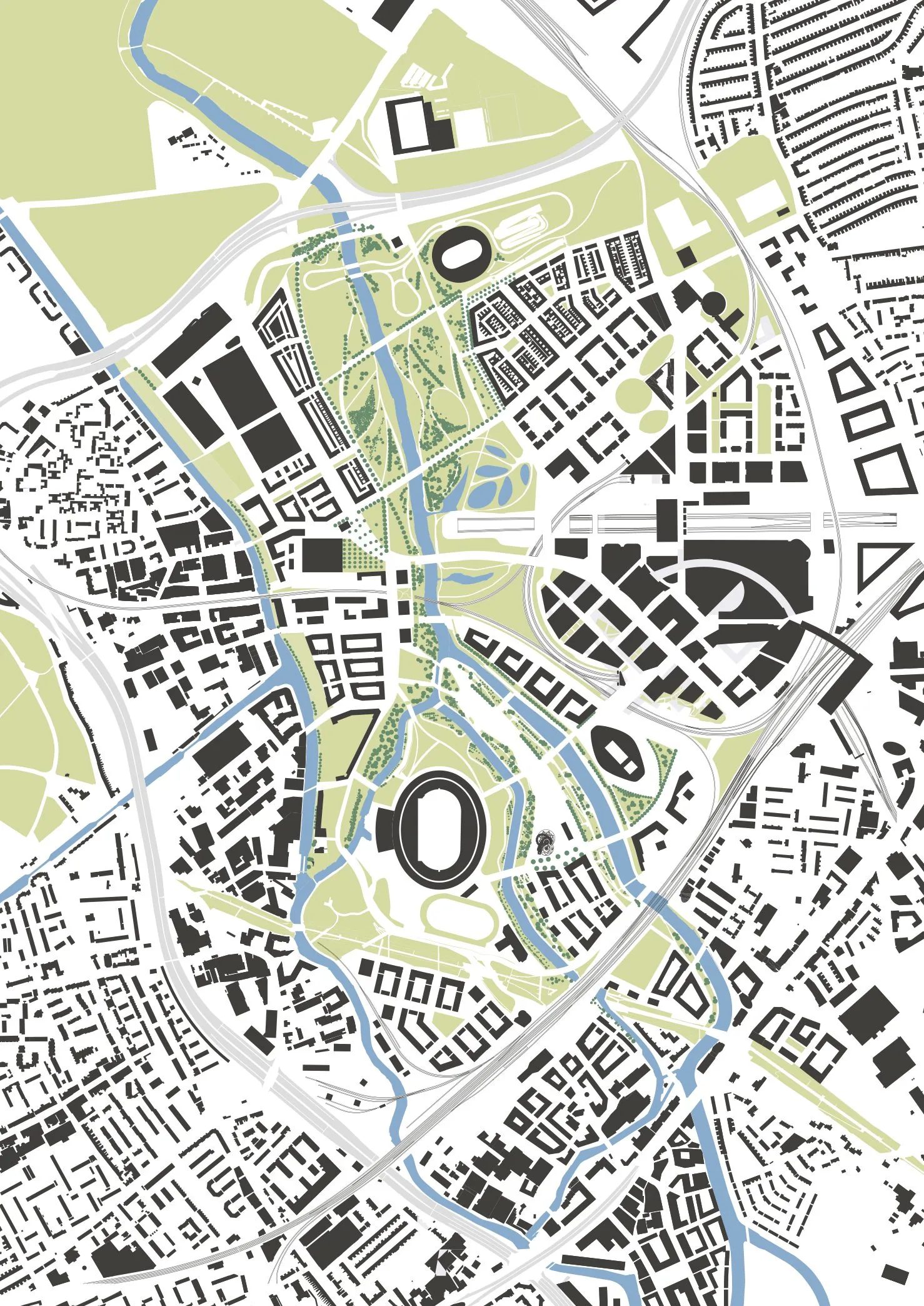
Core idea
Post-Games regeneration for Queen Elizabeth Olympic Park and surrounds
Why it matters
Sets long-term housing, employment, and parkland legacy for East London
Description
The London Legacy Development Corporation's framework (from 2012) governs the long-term conversion of the 2012 Olympic Park into Queen Elizabeth Olympic Park — a mixed-use district of new neighbourhoods, education and culture institutions, and reused venues.
Significance
The LLDC is the most sustained attempt to deliver genuine Olympic 'legacy,' planning the after-life of the Games from the outset and offering a closely watched test of whether mega-events can leave lasting urban benefit.
What became of it
Realised and ongoing: the 2012 Games venues were converted and new neighbourhoods, the East Bank cultural-education quarter and thousands of homes delivered, making it one of the more successful post-Olympic legacy regenerations.
Critique
Criticised for delivering fewer genuinely affordable homes than promised and for fuelling rising land values that displace existing east London communities.
What shaped it
- Landscape urbanism (Waldheim) (1997-2006)
- Urban resilience (2013)
- Sustainable development (Brundtland) (1987)
- The linear park / greenway (1878 / 2009 revival)
- The Leipzig Charter on Sustainable European Cities (2007 (renewed 2020))
Plans it influenced
Sources
- https://www.queenelizabetholympicpark.co.uk/about-us/who-we-are
- https://www.london.gov.uk/media/106437/download