Meroë, Capital of Kush
Core idea
Walled Kushite royal city with temple precincts and adjoining pyramid fields.
Why it matters
A major non-Mediterranean African capital and iron-working centre.
Description
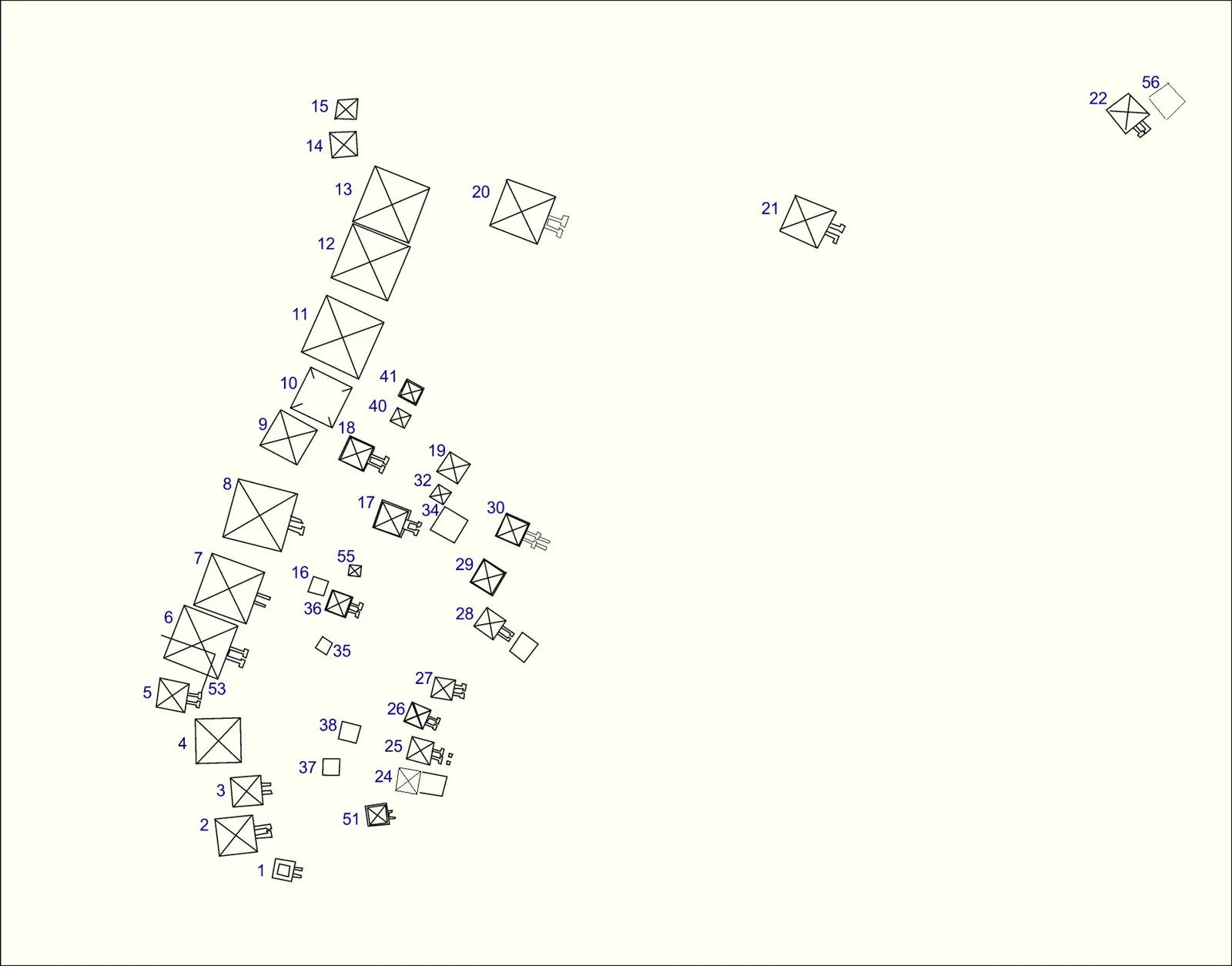
Meroë was the royal city of the Kingdom of Kush, becoming its principal capital in the centuries before the classic Meroitic period that flourished from around 300 BCE. Set on the east bank of the Nile in present-day Sudan, the walled Royal City contained a palace, temple precincts including an Amun temple, domestic quarters and substantial water-management installations. Adjacent lay three cemeteries of more than two hundred steep-sided Nubian pyramids serving as royal and elite tombs. The wider heartland, the Island of Meroe between the Nile and Atbara rivers, is inscribed as a UNESCO World Heritage Site for its temples, settlements and reservoirs.
Significance
Meroë was the capital of one of Africa's earliest and most advanced states, a major iron-production centre and a node in long-distance trade linking sub-Saharan Africa, Egypt and the Mediterranean. Its monumental pyramid fields and distinctive royal ideology, including the ruling Kandake or queen mother, attest to a sophisticated indigenous urban and political tradition independent of, though in dialogue with, Pharaonic Egypt. It stands as a key counterweight to Mediterranean-centred narratives of ancient urbanism.
What became of it
Royal capital of Kush for some nine centuries; declined and was effectively abandoned by the 4th c. CE around the time of Aksumite incursions, leaving the walled city, temples and pyramid fields as ruins (now a UNESCO World Heritage Site).
Critique
Urban population and density figures for Meroe are essentially undocumented and frequently inflated in popular accounts, with no systematic settlement-survey basis.
What shaped it
- The ziggurat / temple-platform (c. 3000 BCE)
- Bronze and iron metallurgy (Bronze c. 3300 BCE / Iron from c. 1200 BCE)
- The qanat (c. 800 BCE)
Plans it influenced
- Aksum, Capital of the Aksumite Empire (c. 100 CE)