Pataliputra (Mauryan Capital)
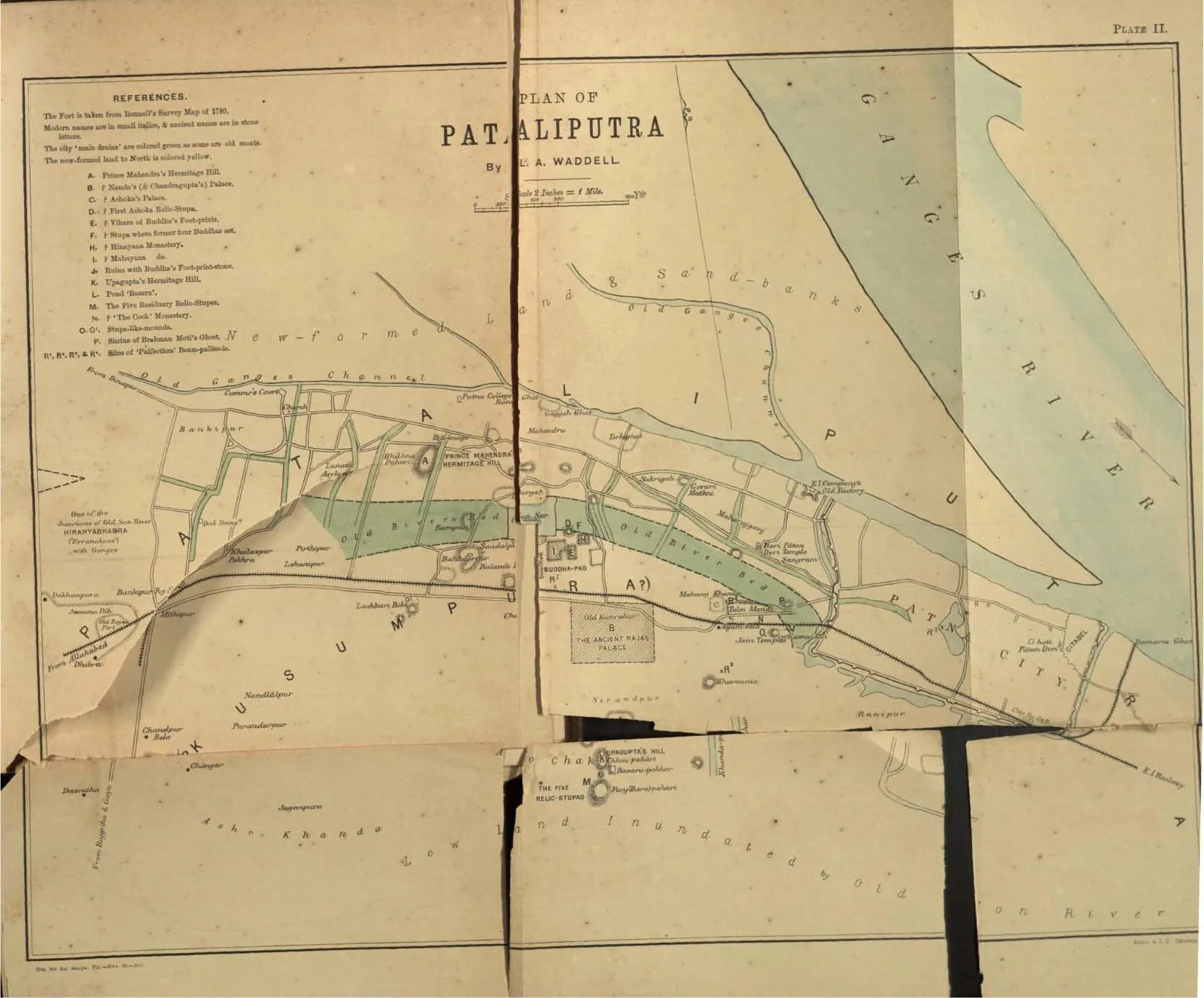
Core idea
Fortified riverine capital planned according to Arthashastra principles — gridded wards, moat, timber palisade
Why it matters
First South Asian mega-capital; Arthashastra provides earliest Indian treatise on town planning
Description
On the Ganges near modern Patna, Pataliputra became the capital of the Mauryan empire around 300 BCE under Chandragupta and Ashoka, described by the Greek envoy Megasthenes as an immense city stretching along the river behind a timber palisade with hundreds of towers and gates. Its planning reflected the principles of Kautilya's Arthashastra, which prescribed fortified, gridded, functionally-zoned towns.
Significance
Pataliputra was the first great imperial metropolis of South Asia and evidence that the subcontinent possessed a sophisticated, theorized tradition of town planning. The Arthashastra's detailed rules for siting, fortification, and zoning rank among the world's earliest planning treatises.
What shaped it
- Arthashastra (c. 300 BCE)
- The shreni (guild) economy (c. 4th c. BCE – 6th c. CE)
- The Uttarapatha and Grand Trunk Road (Mauryan origins; remade 16th c. CE)
Plans it influenced
- Anuradhapura (c. 4th c. BCE)