Anuradhapura
Core idea
Buddhist sacred capital with stupas, monasteries, and engineered tank-irrigation network
Why it matters
One of the oldest continuously inhabited cities; demonstrates Buddhist urbanism and hydraulic engineering at city scale
Description
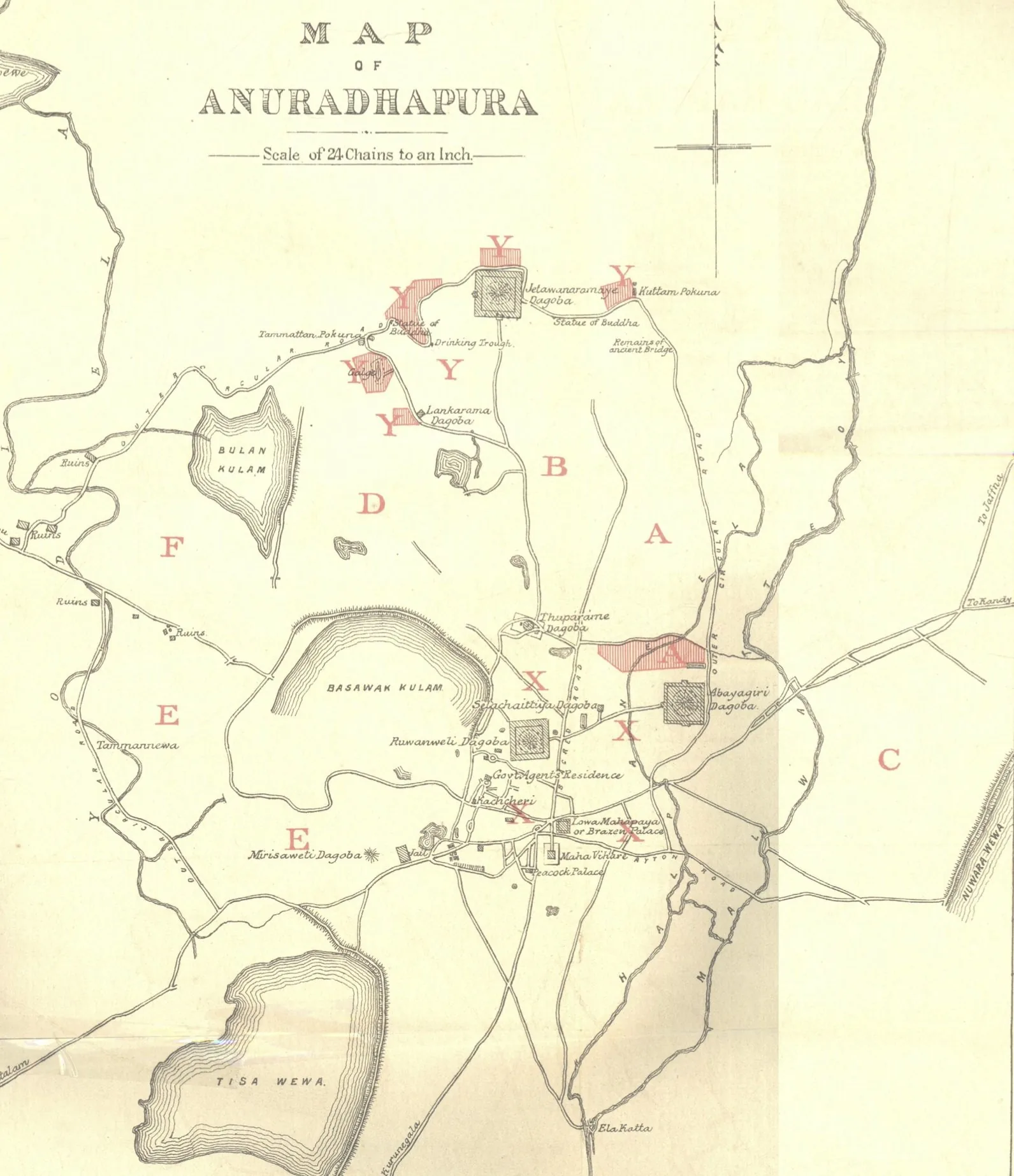
Capital of Sri Lanka for over a millennium from around the 4th century BCE, Anuradhapura combined a sacred core of colossal brick stupas and monastic complexes with one of the ancient world's most advanced hydraulic systems — vast reservoirs (tanks) and canals that stored monsoon water for the dry season and sustained a large population.
Significance
Anuradhapura is a premier example of Buddhist sacred urbanism fused with hydraulic engineering. It shows religion and water management jointly structuring a city over centuries, and stands among the longest continuously planned urban traditions in the world.
What shaped it
- Buddhism (c. 5th c. BCE)
- Arthashastra (c. 300 BCE)
Plans it influenced
- Sigiriya (c. 477 CE)
- Angkor (Khmer Empire) (c. 9th–13th c.)