Philadelphia Green City, Clean Waters
Core idea
Green infrastructure + CSO control
Why it matters
Pioneering GI at city scale
Description
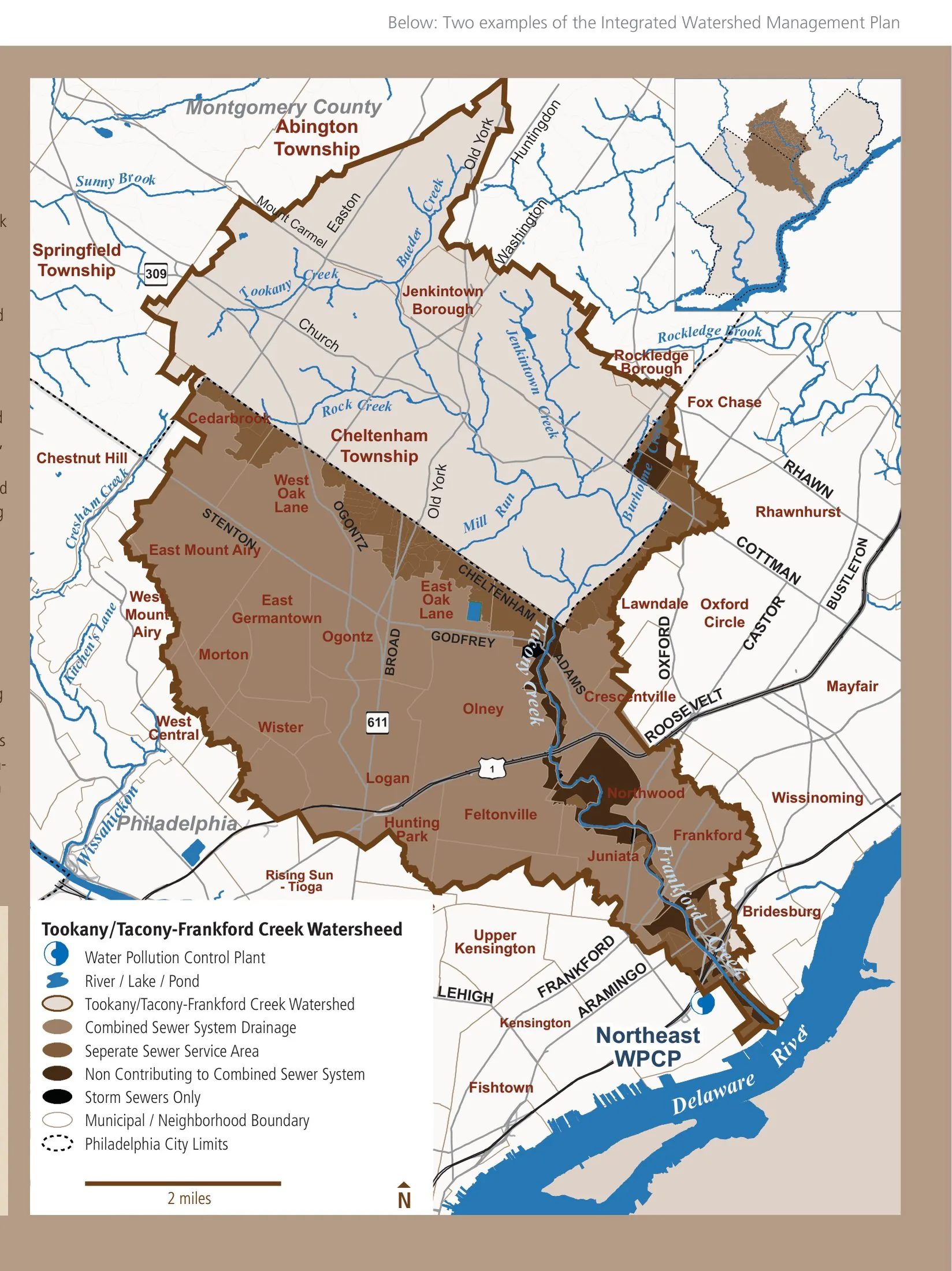
Green City, Clean Waters, adopted in 2011 by the Philadelphia Water Department, is a 25-year plan to control combined sewer overflows primarily through green stormwater infrastructure rather than conventional storage tunnels. Agreed with environmental regulators, it retrofits streets, schools, parks and private land with rain gardens, tree trenches, green roofs and permeable surfaces, measured in 'greened acres' of impervious surface managed. It was the first American plan to commit a major city's regulatory compliance chiefly to distributed green infrastructure.
Significance
The plan is a landmark in hygienist and infrastructural urbanism for the twenty-first century, recasting water-quality compliance as a citywide greening programme with co-benefits for heat, amenity and property value. It influenced stormwater policy in many North American cities and stimulated research on the performance, maintenance and equity of green infrastructure. Ongoing assessment of whether greened acres accumulate fast enough has made it a central case in debates on green versus grey infrastructure.
What shaped it
- Kyoto Protocol (1997)
- Silent Spring (Carson) (1962)
- Landscape urbanism (Waldheim) (1997-2006)
- Sewage treatment (activated sludge 1914)
- The linear park / greenway (1878 / 2009 revival)
- Sustainable development (Brundtland) (1987)
Sources
- https://water.phila.gov/green-city/
- https://www.pennfuture.org/about-philadelphia-water-dept-green-city