Pingyao
Core idea
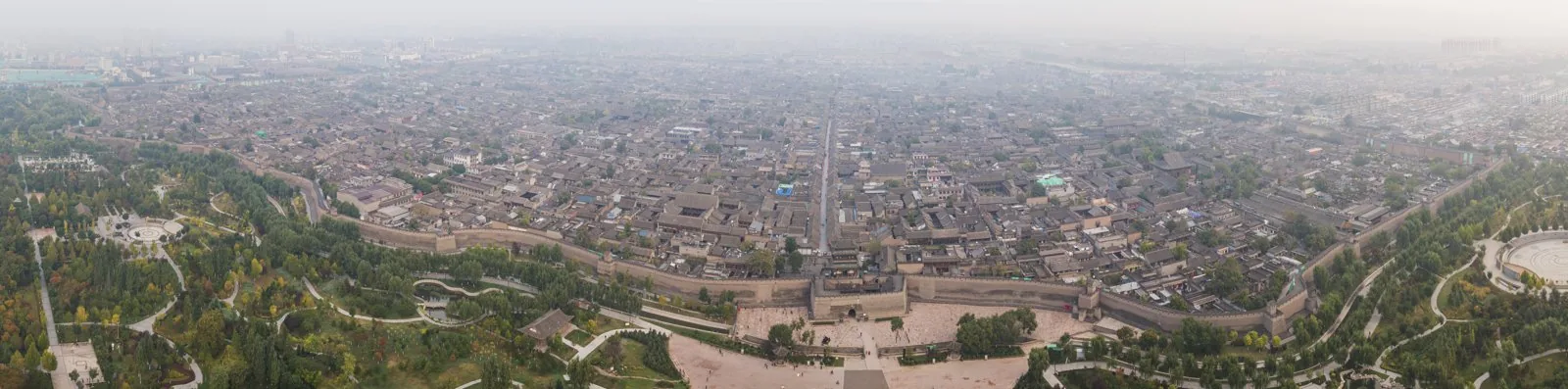
Intact Ming walled merchant town on a turtle-shaped plan, with a central market street and courtyard compounds
Why it matters
Best-preserved Han Chinese walled city; birthplace of the piaohao draft-bank, an early node of Chinese finance capitalism
Description
Pingyao was rebuilt and walled in 1370 under the early Ming dynasty as a county town in Shanxi province. Its rectangular circuit of high rammed-earth and brick walls, traditionally likened to a turtle-shaped plan, encloses a fabric of courtyard compounds ordered around a central market street with towers marking the crossings. In the nineteenth century it became the home of the piaohao draft banks that pioneered long-distance remittance in China.
Significance
Pingyao is the best-preserved walled Han Chinese city and a UNESCO World Heritage Site, offering an intact picture of Ming urban form and merchant urbanism. Its role as the cradle of the piaohao banks connects the traditional walled town to the early history of Chinese finance capitalism, making it a key case in studies of commercial urban culture in East Asia.
What shaped it
- Fengshui landscape cosmology (Han onward, codified by Song)
Plans it influenced
- Ming Beijing / Forbidden City (1406–1420)