Puebla Angelópolis Masterplan
Core idea
Planned edge-city expansion
Why it matters
Structured suburban growth in Mexico
Description
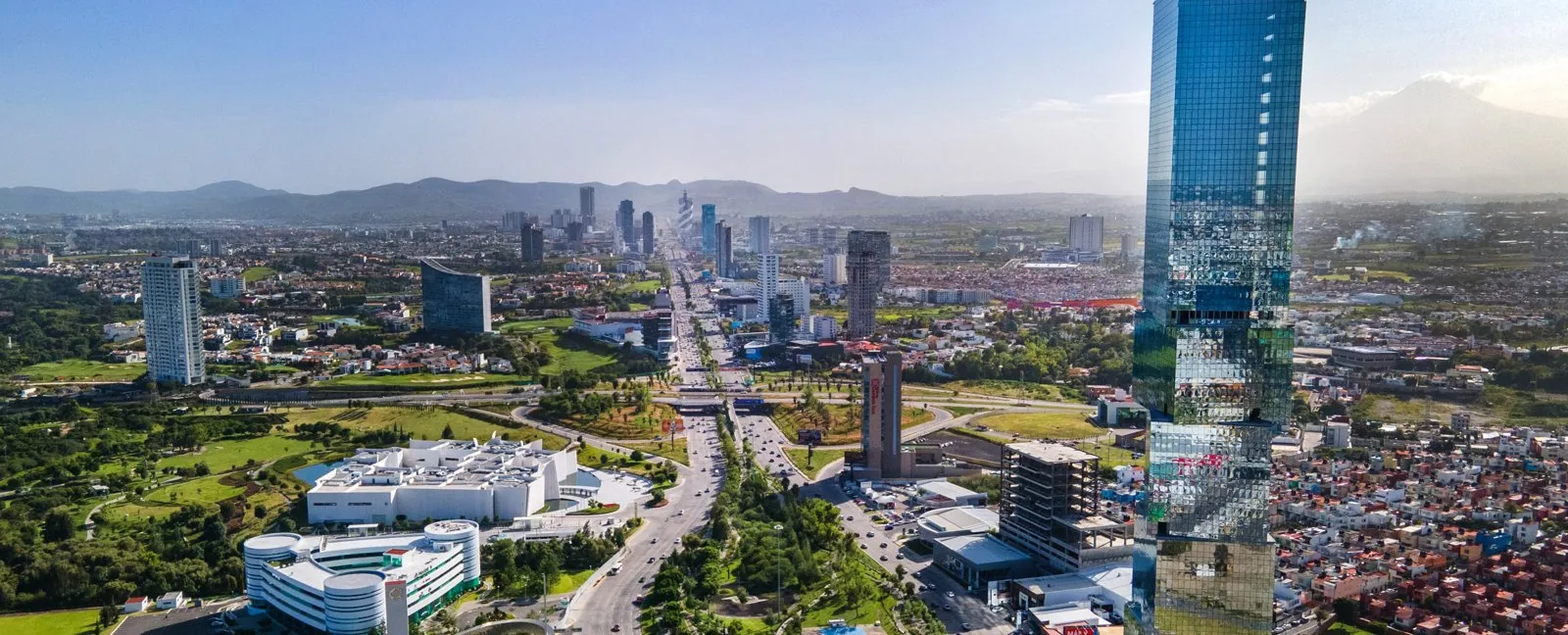
The Angelópolis masterplan, initiated in the 1990s by the Puebla state government with private developers, organised a large planned expansion zone on the south-western edge of Puebla, extending towards Cholula. Conceived as a reserva territorial with arterial infrastructure laid out in advance, it accommodated shopping centres, universities, hospitals, gated residential districts and later high-rise corridors, forming a recognisable edge city to the historic capital. Development has proceeded over several decades under a mix of public frameworks and private projects.
Significance
Angelópolis is a prominent Mexican example of structured suburban expansion, showing how state-assembled land and infrastructure can channel private growth into a coherent, if socially exclusive, urban quarter. It figures in Latin American planning debates as both a demonstration of proactive land management and a cautionary case of fragmented, car-oriented and gated urbanism displacing agricultural communities on the metropolitan fringe.
What shaped it
- Neoliberalism (1970s–1990s)
- The urban freeway (mid-20th c.)
- Zoning (1884 Germany / 1916 NYC)
Sources
- https://en.wikipedia.org/wiki/Angel%C3%B3polis_(Puebla)
- https://doi.org/10.1080/07352166.2024.2345646