Rabat Bouregreg Valley Development
Core idea
Twin-city riverfront redevelopment
Why it matters
Integrates heritage and new infrastructure
Description
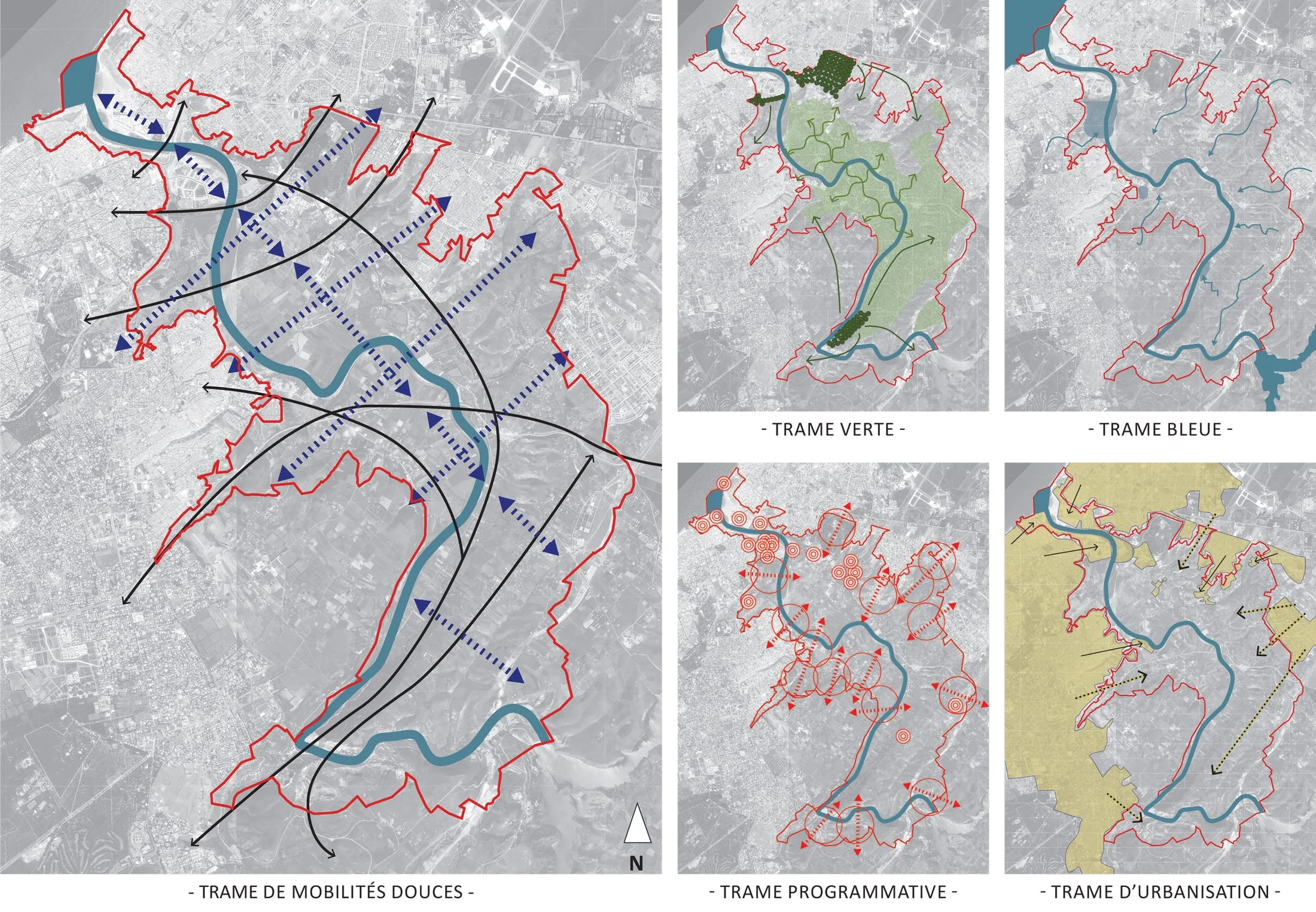
A programme launched in 2006 under a dedicated state agency, the Agence pour l'Aménagement de la Vallée du Bouregreg, to redevelop the Bouregreg river valley between the twin cities of Rabat and Salé in Morocco. Sequenced phases introduced the Bab Al Bahr quarter at the river mouth, a marina, a tramway linking the two cities, and later cultural landmarks including the Zaha Hadid-designed Grand Theatre, while engaging with the valley's ecological setting and the adjacent historic medinas and Kasbah of the Udayas.
Significance
The Bouregreg project is a leading North African example of state-driven riverfront regeneration, combining royal patronage, a special-purpose agency and international designers to reposition the Rabat-Salé conurbation. It is cited in debates on heritage-sensitive modernisation in Maghreb capitals and on the governance of exceptional planning regimes that bypass ordinary municipal control.
What shaped it
- Landscape urbanism (Waldheim) (1997-2006)
- Sustainable development (Brundtland) (1987)
- The linear park / greenway (1878 / 2009 revival)
- Genius Loci (Norberg-Schulz) (1979)
Sources
- https://fr.wikipedia.org/wiki/Agence_pour_l'am%C3%A9nagement_de_la_vall%C3%A9e_du_Bouregreg
- https://upfi-med.eib.org/fr/projects/projet-damenagement-de-la-vallee-du-bouregreg-a-rabat-seque