San Francisco Burnham Plan (unbuilt)
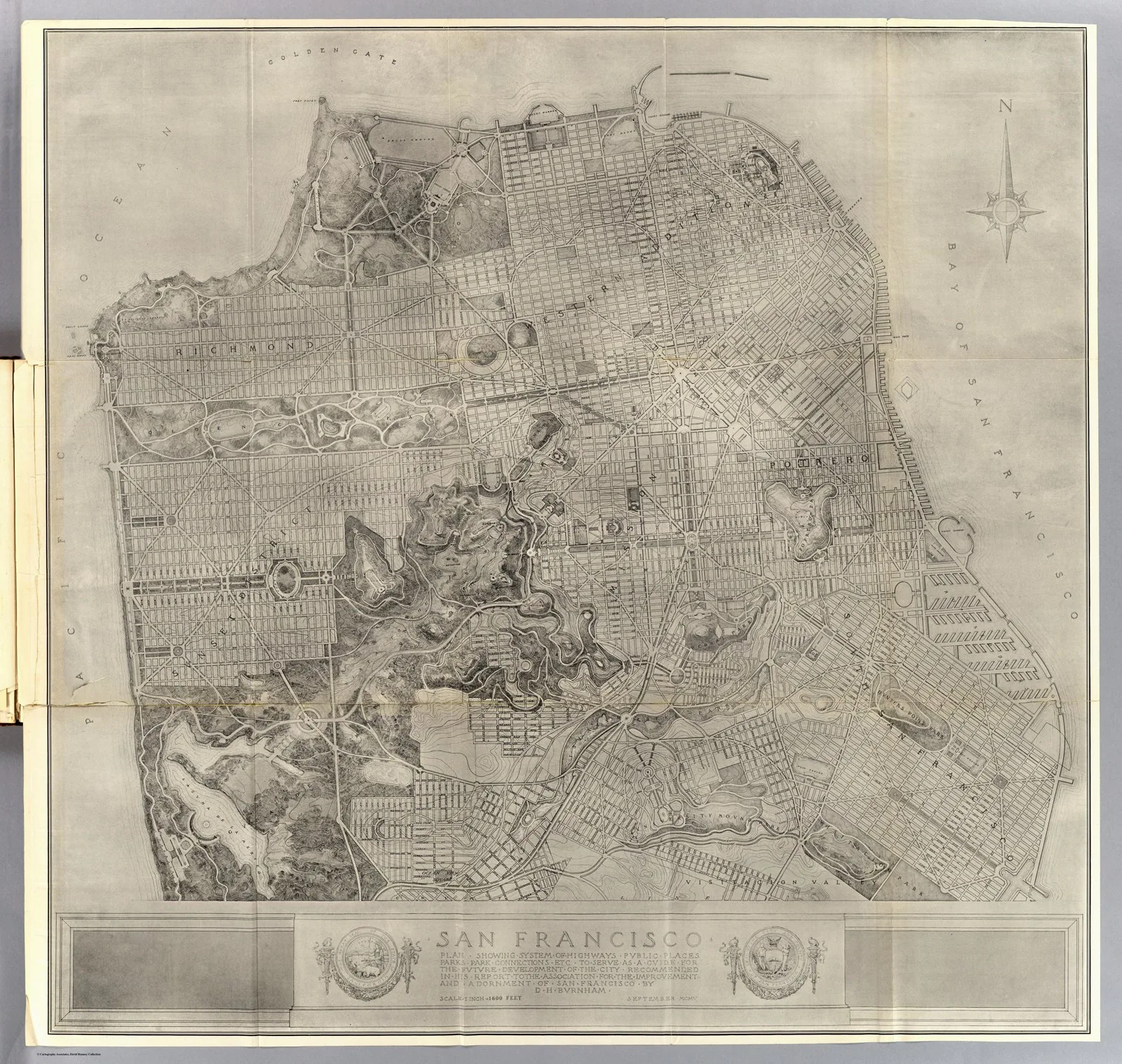
Core idea
Diagonals, civic center, grand boulevards
Why it matters
Pre-quake vision that influenced later works
Description
A comprehensive City Beautiful plan for San Francisco prepared by Daniel Burnham with Edward Bennett, presented to the city in 1905. It proposed a system of diagonal avenues cut across the grid, ringed boulevards following the hills, a monumental civic centre, and an extensive network of parks and terraced open spaces. The earthquake and fire of April 1906 arrived months after its publication, and in the rush to rebuild the plan was set aside almost entirely.
Significance
The plan is one of the most discussed unbuilt schemes in American planning, often cited to illustrate how property interests and the urgency of reconstruction can defeat comprehensive design. Elements of its thinking resurfaced in the later Civic Center and in Burnham and Bennett's Plan of Chicago of 1909, and it remains a touchstone in City Beautiful historiography.
What shaped it
- World's Columbian Exposition (1893)
- The boulevard (17th–19th c.)
- The public park (1843–1858)
Plans it influenced
Sources
- https://www.foundsf.org/Burnham_Plan_1905
- https://www.spur.org/publications/urbanist-article/2006-07-01/imagined-city-burnhams-vision