San Francisco Mission Bay Master Plan
Core idea
Biomedical campus + mixed-use district
Why it matters
Anchor of UCSF growth and housing
Description
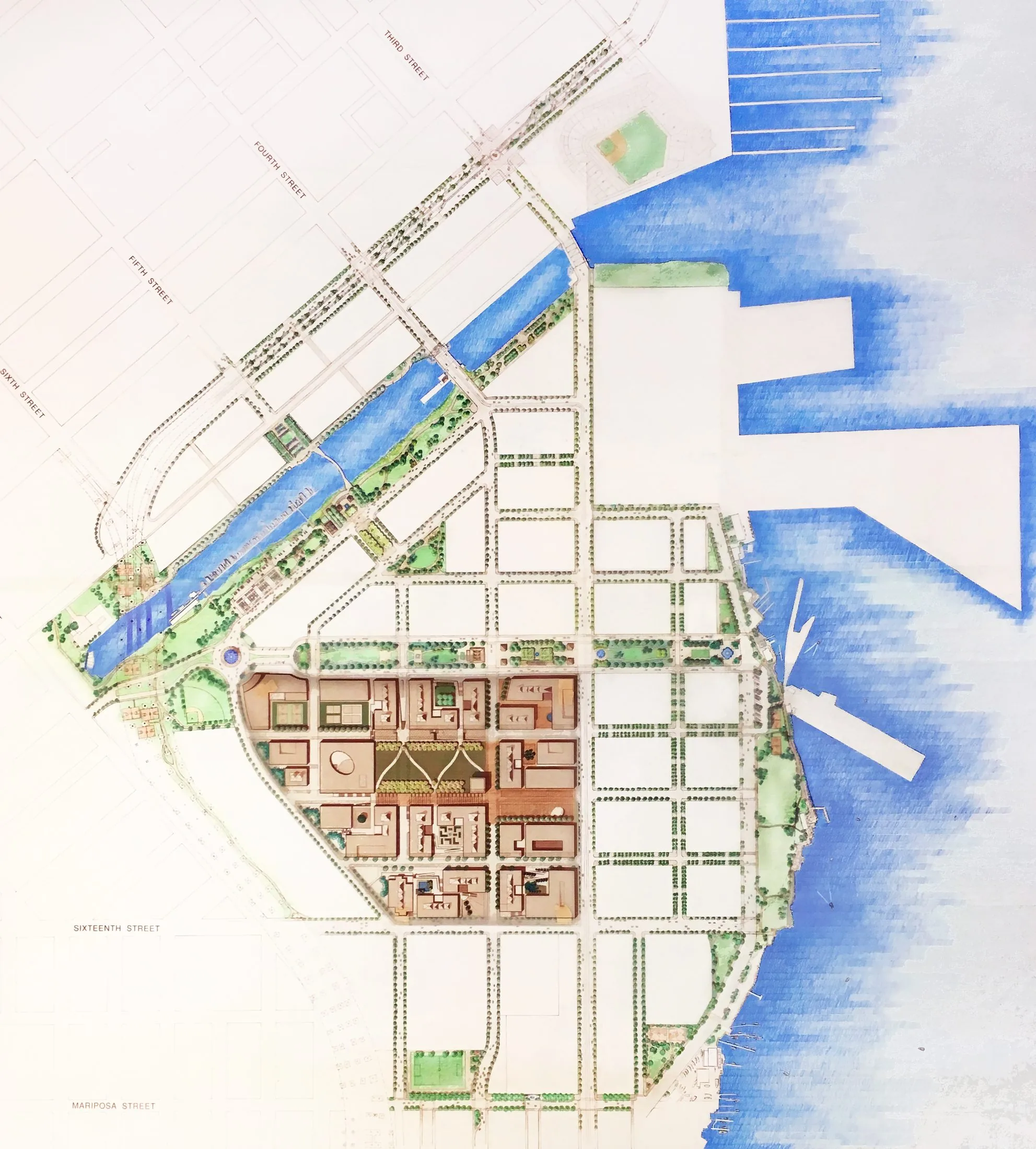
The Mission Bay Master Plan redeveloped roughly three hundred acres of former Southern Pacific rail yards south of downtown San Francisco into a mixed-use district anchored by a new University of California, San Francisco biomedical research campus. Prepared by landowner Catellus with landscape and urban design by Olin Partnership under the city's redevelopment agency, the plan laid out research and office blocks, thousands of housing units with substantial affordable components, parks and a new street grid knitted into the surrounding city.
Significance
Mission Bay is a leading American example of the innovation district, using an anchor institution to cluster life-science research, commercial biotechnology and housing on post-industrial land. It has shaped subsequent debates about university-led development, public-private redevelopment finance and the urban design quality of large single-ownership districts.
What shaped it
- Transit-oriented development (TOD) (1993)
- The compact city (1973-1990s)
- Floor Area Ratio (FAR/FSI) (20th c.)
- The master plan (early 20th c.)