Siena
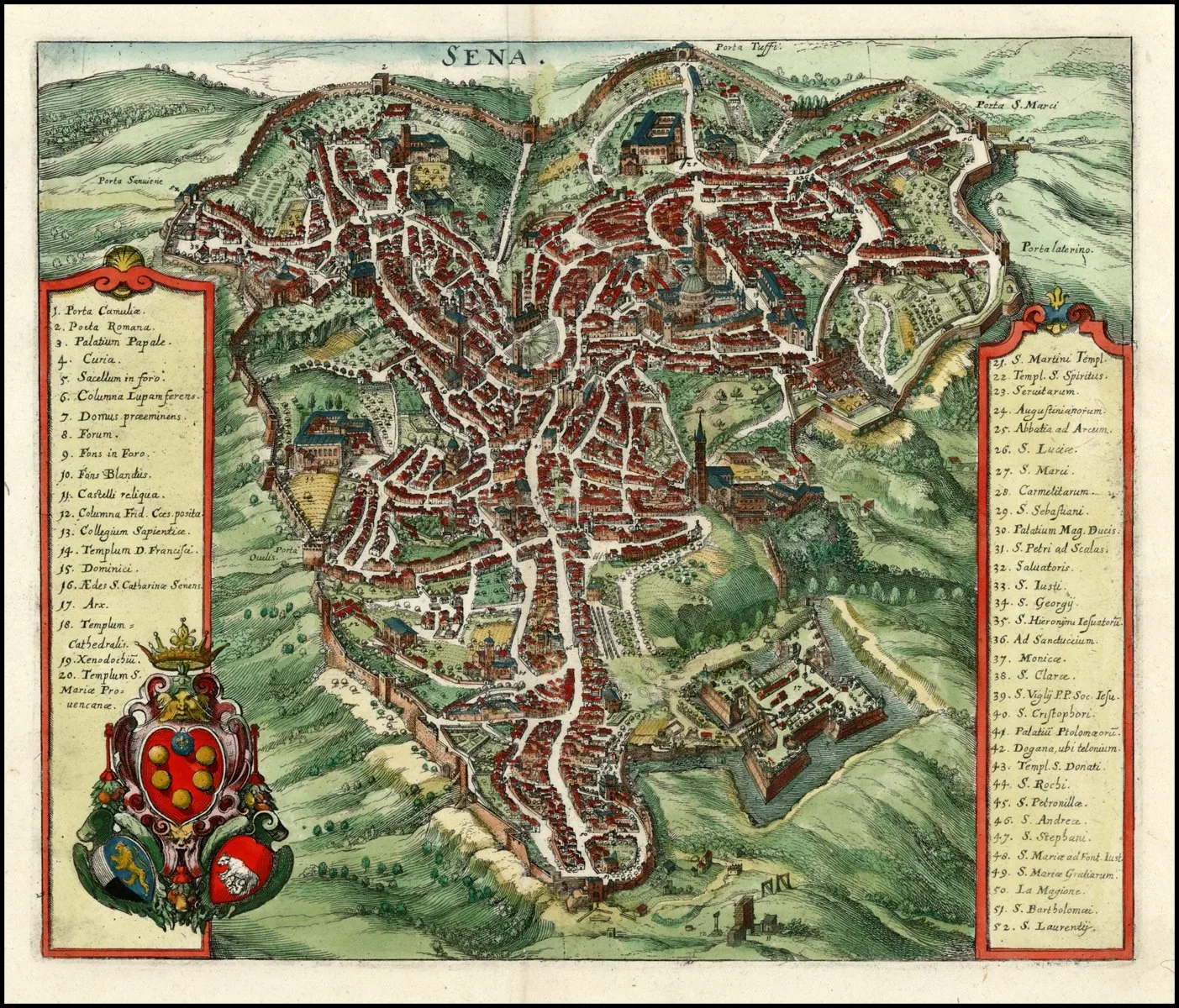
Core idea
Hill-city whose government enforced some of Europe's earliest building regulations — shaping the shell-shaped Piazza del Campo, harmonized façades, and the Palazzo Pubblico
Why it matters
Pioneering example of communal civic design control: aesthetics and public space governed by law centuries before modern zoning
Description
Siena around 1290, governed by the Council of Nine, enforced some of Europe's earliest municipal building regulations upon its hilltop fabric. Statutes controlled facade materials, window forms and street alignments, most famously around the shell-shaped Piazza del Campo, whose paved slope, harmonised palace fronts and Palazzo Pubblico were deliberately shaped by law. The commune thus directed the aesthetic and spatial development of the city without a single master plan.
Significance
Siena is a pioneering case of communal civic design control, showing public space and urban aesthetics governed by legislation centuries before modern zoning and design review. The Campo has become an archetype of the successful public square, endlessly cited by planners and urban designers from Camillo Sitte onwards.
What shaped it
- Aquinas and scholasticism (13th c.)
- Magna Carta (1215)
- The plaza / forum / agora (c. 500 BCE)
Plans it influenced
- Rome Sixtus V Plan (1585–1590)