Stuttgart Rosenstein Quartier
Core idea
Rail yard redevelopment + park extension
Why it matters
Large central brownfield conversion
Description
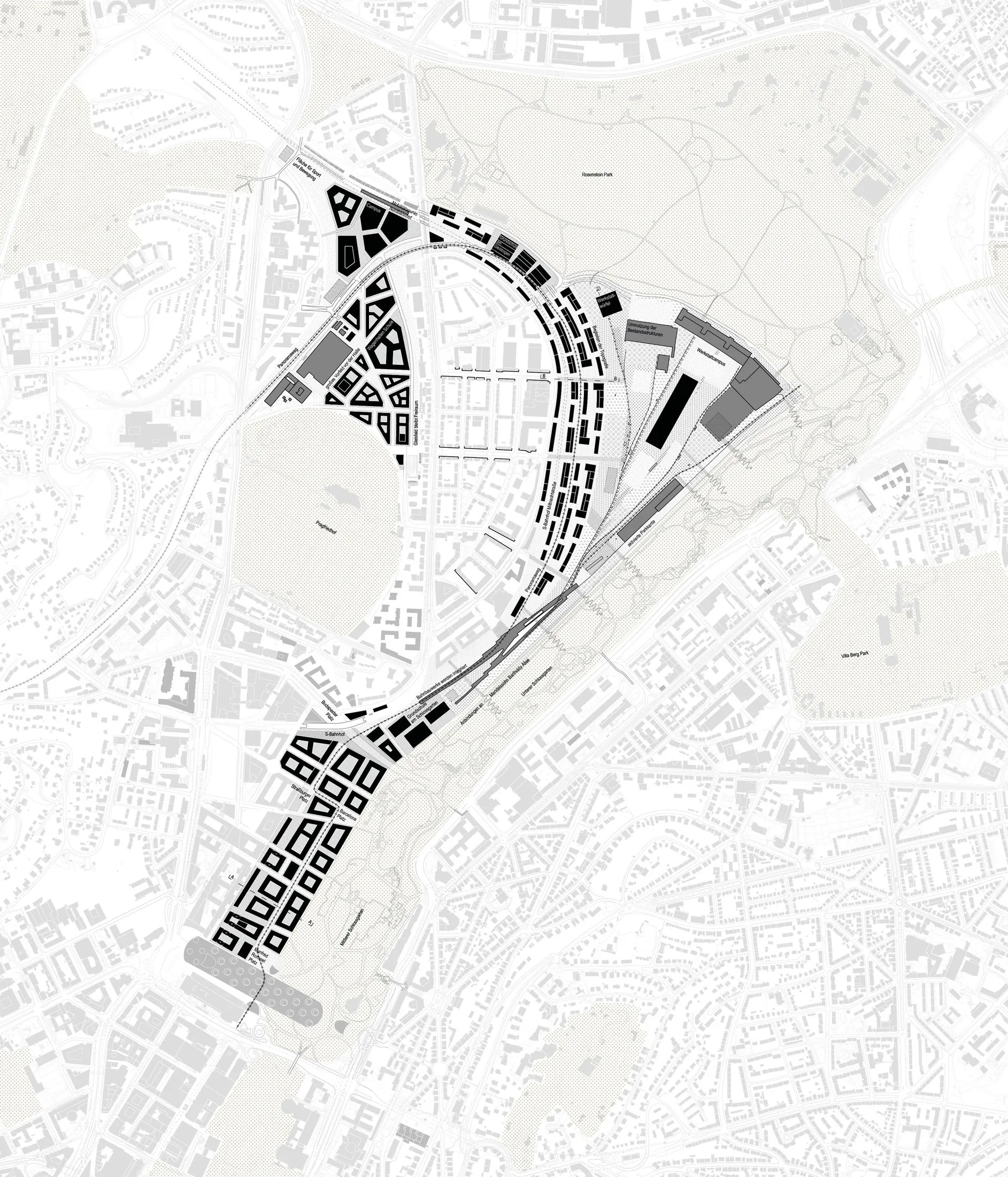
A plan by the City of Stuttgart for the Rosenstein quarter, a large tract of central railway yards released by the Stuttgart 21 project, which places the main station's through-tracks underground. Developed through international competition and extensive civic participation, the plan proposes a dense, largely car-free set of neighbourhoods on the former rail land, together with a substantial extension of the adjoining Rosenstein Park, knitting the site into the surrounding city districts.
Significance
Rosenstein is among the largest central brownfield conversions in Europe, and its fortunes are inseparable from the controversies of Stuttgart 21, which provoked some of Germany's fiercest infrastructure protests. It is watched as a test of whether the land dividend of undergrounding railways can deliver climate-orientated, socially mixed inner-city districts, and its emphasis on park extension reflects the landscape turn in German urbanism.
What shaped it
- The linear park / greenway (1878 / 2009 revival)
- Transit-oriented development (TOD) (1993)
- The compact city (1973-1990s)
Sources
- https://www.stuttgart.de/en/leben/stadtentwicklung/stuttgart-rosenstein
- https://www.asp-architekten.de/en/portfolio-items/climate-adapted-and-resilient-stuttgart-rosens