Tübingen Südstadt/Loretto
Core idea
Baugruppen-led infill
Why it matters
Citizen-developer urbanism model
Description
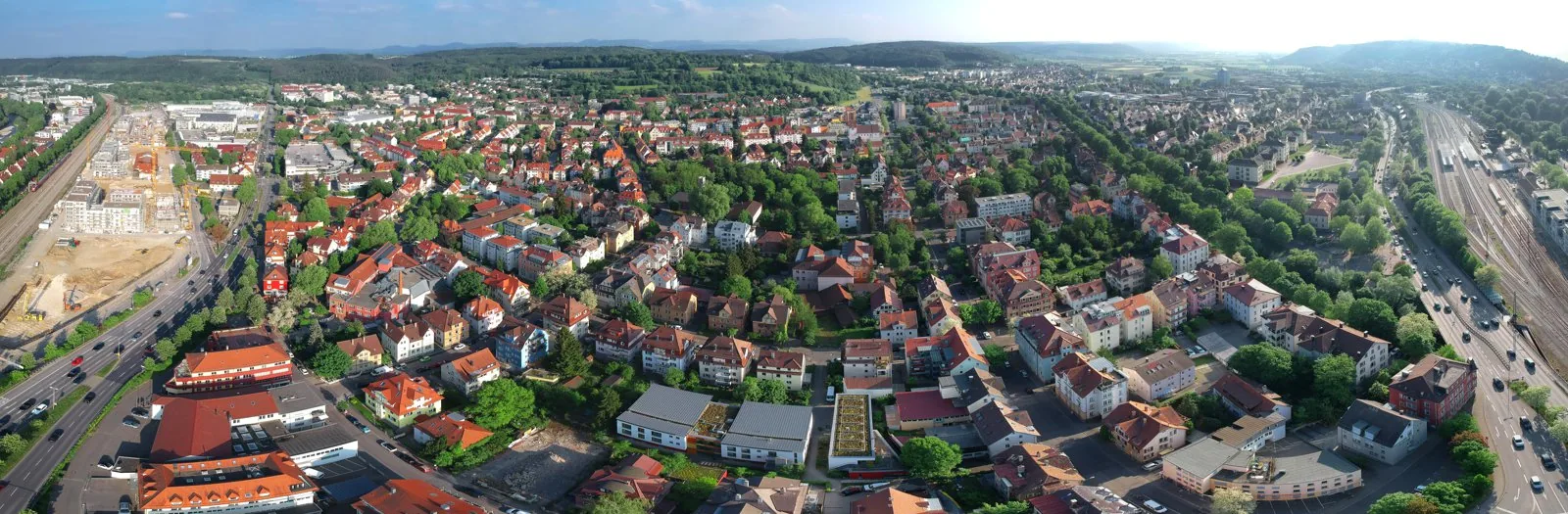
The Südstadt development in Tübingen, including the Loretto and Französisches Viertel quarters, converted former French military barracks into dense mixed-use neighbourhoods from the 1990s under the direction of the city. Instead of selling land to volume housebuilders, the municipality parcelled small plots to Baugruppen, groups of citizens acting as joint developers, within a strict framework of perimeter blocks, ground-floor workspaces and constrained parking. The result is a fine-grained, architecturally varied and strongly mixed quarter built at moderate cost.
Significance
Tübingen's model demonstrated that citizen-developer groups, given serviced plots and clear rules, could produce dense urban fabric with a diversity and affordability that conventional development rarely achieves. It became the principal reference for the German Baugruppen movement, influencing projects such as Freiburg Vauban and Berlin's building groups, and it features prominently in debates on land policy as the decisive lever of urban quality.
What shaped it
- A Pattern Language (1977)
- Sustainable development (Brundtland) (1987)
- The compact city (1973-1990s)
- Life Between Buildings (1971)
Plans it influenced
- Freiburg Vauban (1993–)
Sources
- https://en.wikipedia.org/wiki/S%C3%BCdstadt_(T%C3%BCbingen)
- https://livablecities.org/2018/11/09/articles-tubingen-s-loretto-and-french-quarter-original-cit