Two Rivers Urban Park (Cape Town) Framework
Core idea
Ecological restoration + mixed-use precincts
Why it matters
Green-blue urbanism in a sensitive confluence
Description
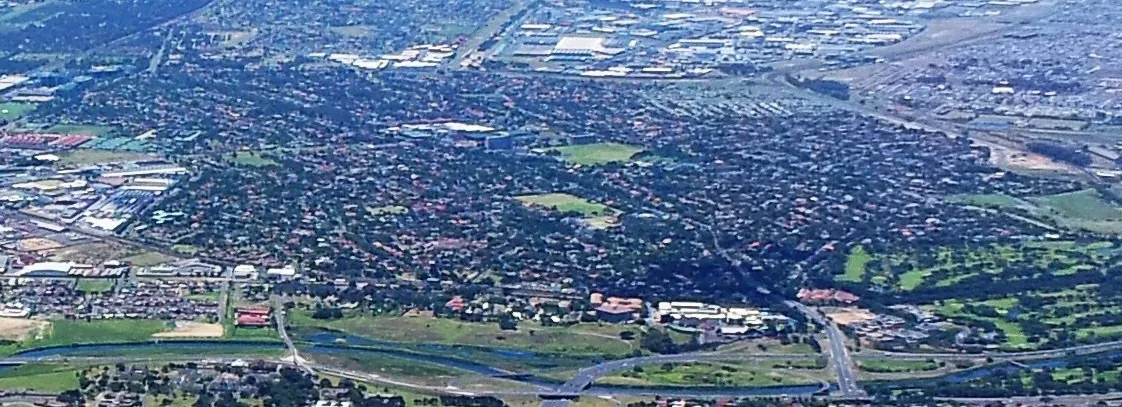
The Two Rivers Urban Park framework, advanced by the City of Cape Town from around 2019, is a local spatial development framework for the ecologically sensitive confluence of the Black and Liesbeek rivers on the city's eastern flank. It proposes ecological restoration of degraded floodplain and wetland systems combined with mixed-use development precincts, movement links and public open space, seeking to knit the site into surrounding neighbourhoods while managing flood risk. The area also carries deep heritage significance for Khoi and San communities, which the framework was required to address.
Significance
The framework exemplifies green-blue, landscape-led planning applied to a contested post-apartheid city, where ecological restoration, land restitution claims and development pressure intersect. Controversy over development within the precinct, most visibly the River Club site, made it a national test case for how heritage, indigenous rights and environmental value are weighed against urban intensification, and it is frequently cited in debates on decolonising planning in Sub-Saharan Africa.
What shaped it
- Landscape urbanism (Waldheim) (1997-2006)
- Urban resilience (2013)
- The linear park / greenway (1878 / 2009 revival)
- SDG 11 — Sustainable Cities (2015)
Sources
- https://resource.capetown.gov.za/documentcentre/Documents/City%20strategies,%20plans%20and%20fra
- https://obs.org.za/two-rivers-urban-park-local-spatial-development-framework/