Vancouver Southeast False Creek / Olympic Village
Core idea
Sustainable mixed-use with district energy
Why it matters
Canadian benchmark eco-district
Description
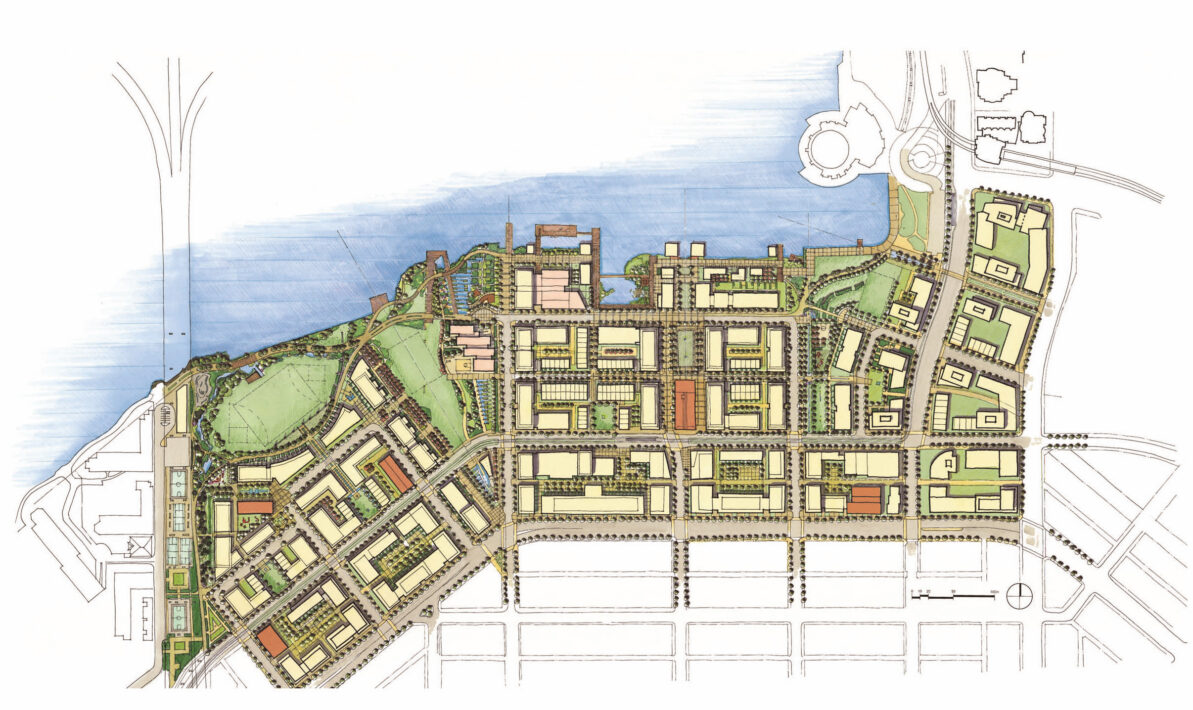
Vancouver's Southeast False Creek / Olympic Village (2007–10), built for the 2010 Winter Games, was designed as a model sustainable, mixed-income waterfront neighbourhood with high green-building standards, a restored shoreline, and district energy.
Significance
The Olympic Village is a benchmark for sustainable, legacy-focused Games development, showing how an event can leave behind a genuine, environmentally advanced residential community rather than white-elephant venues.
What became of it
Realised: built as the 2010 Winter Olympics athletes' village and converted to a sustainable mixed-use neighbourhood with district energy, though the City took on heavy financial losses when a developer defaulted during the 2008 crisis.
Critique
Marketed as a model green community but criticised for cost overruns and for delivering far less affordable housing than originally promised.
What shaped it
- Sustainable development (Brundtland) (1987)
- District heating (Lockport district system 1877; modern CHP networks 20th c.)
- Kyoto Protocol (1997)
- The compact city (1973-1990s)
- Transit-oriented development (TOD) (1993)
Plans it influenced
Sources
- https://vancouver.ca/home-property-development/southeast-false-creek.aspx
- https://vancouver.ca/home-property-development/southeast-false-creek-neighbourhood-energy-utilit