Wellington Urban Growth Plan 2014–43
Core idea
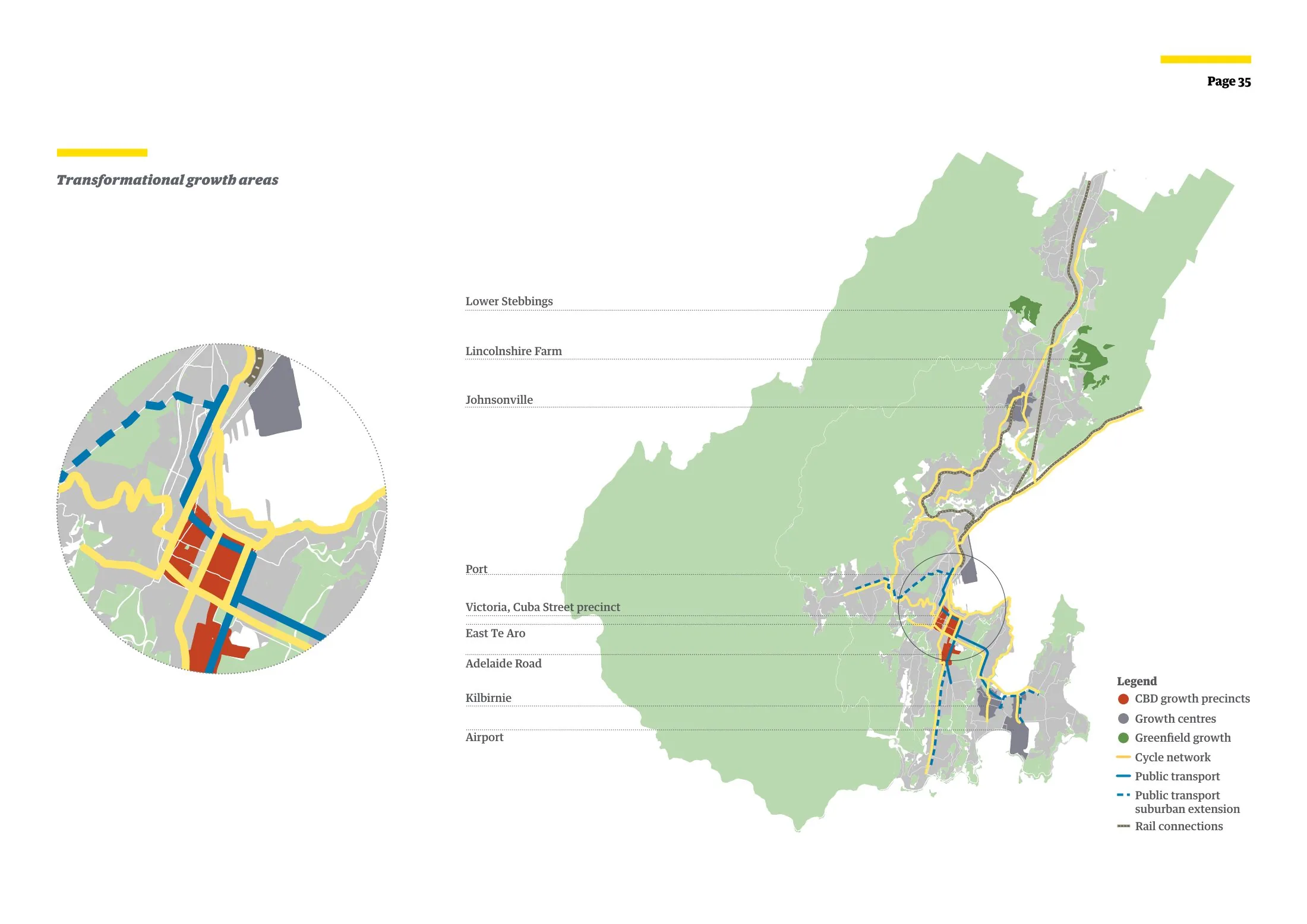
Densification along PT spine
Why it matters
Compact growth in a constrained city
Description
A growth management strategy adopted by Wellington City Council in 2014, setting the direction for the New Zealand capital's development to 2043. Confronted by a geographically constrained harbour setting, the plan directed most new housing into the central city and along a public transport spine running through existing suburban centres, paired with urban regeneration projects and protection of the surrounding green belt.
Significance
The plan exemplifies compact-city and corridor-based planning applied to a small, topographically constrained capital, anticipating New Zealand's later national push for intensification. It fed into ongoing debates about housing affordability, seismic resilience and the pace of densification that culminated in Wellington's contested district plan reviews of the 2020s.
What shaped it
- Transit-oriented development (TOD) (1993)
- The compact city (1973-1990s)
Plans it influenced
- Auckland Unitary Plan (2016)
Sources
- https://wellington.govt.nz/-/media/have-your-say/public-input/files/consultations/2014/09-wellin
- https://wellington.govt.nz/your-council/plans-policies-and-bylaws/policies/wellington-urban-grow