Bijapur (Vijayapura)
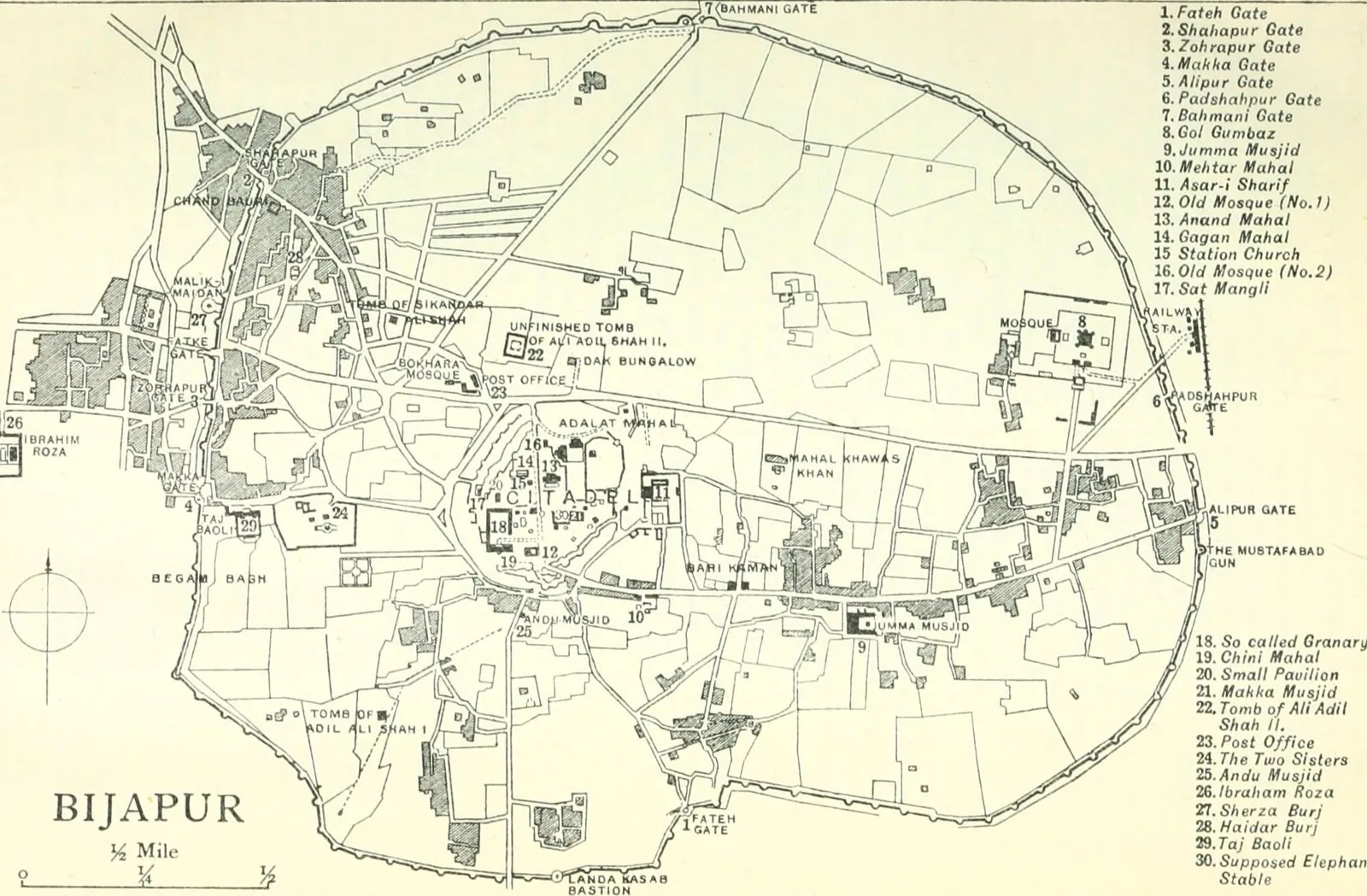
Core idea
Deccan sultanate capital remodelled with two concentric fortification rings, a citadel and major hydraulic works
Why it matters
A leading example of Indo-Islamic Deccan urbanism and bastioned, artillery-age city-building
Description
Bijapur, now Vijayapura in Karnataka, became the capital of the Adil Shahi sultanate founded by Yusuf Adil Shah in 1489. Over the following two centuries the dynasty remodelled the city within two concentric rings of fortification: an inner citadel, the Ark Killa, holding palaces, mosques and administration, and an outer wall running roughly ten kilometres with around a hundred bastions, a broad moat and gateways such as the Mecca and Fateh gates, much of it completed under Ali Adil Shah I about 1565. Congregational mosques, the vast Gol Gumbaz tomb and an elaborate system of underground aqueducts and tanks supplied a populous Deccan court city.
Significance
Bijapur is among the most complete surviving Deccan sultanate capitals, expressing a distinctive Indo-Islamic synthesis of Persian, Ottoman and indigenous building in both architecture and city form. Its double ring of artillery-ready bastioned walls reflects the gunpowder age, while its aqueducts and tanks show sophisticated hydraulic planning. The ensemble anchors the wider story of the Deccan sultanates and is included on India's tentative World Heritage list.
What shaped it
- The souq and qaysariyya (covered market) (developed c. 8th–10th c.)
- The stepwell (baoli / vav) (c. 6th c. CE onward)
Plans it influenced
- Shahjahanabad (Old Delhi) (1639–1648)