Shahjahanabad (Old Delhi)
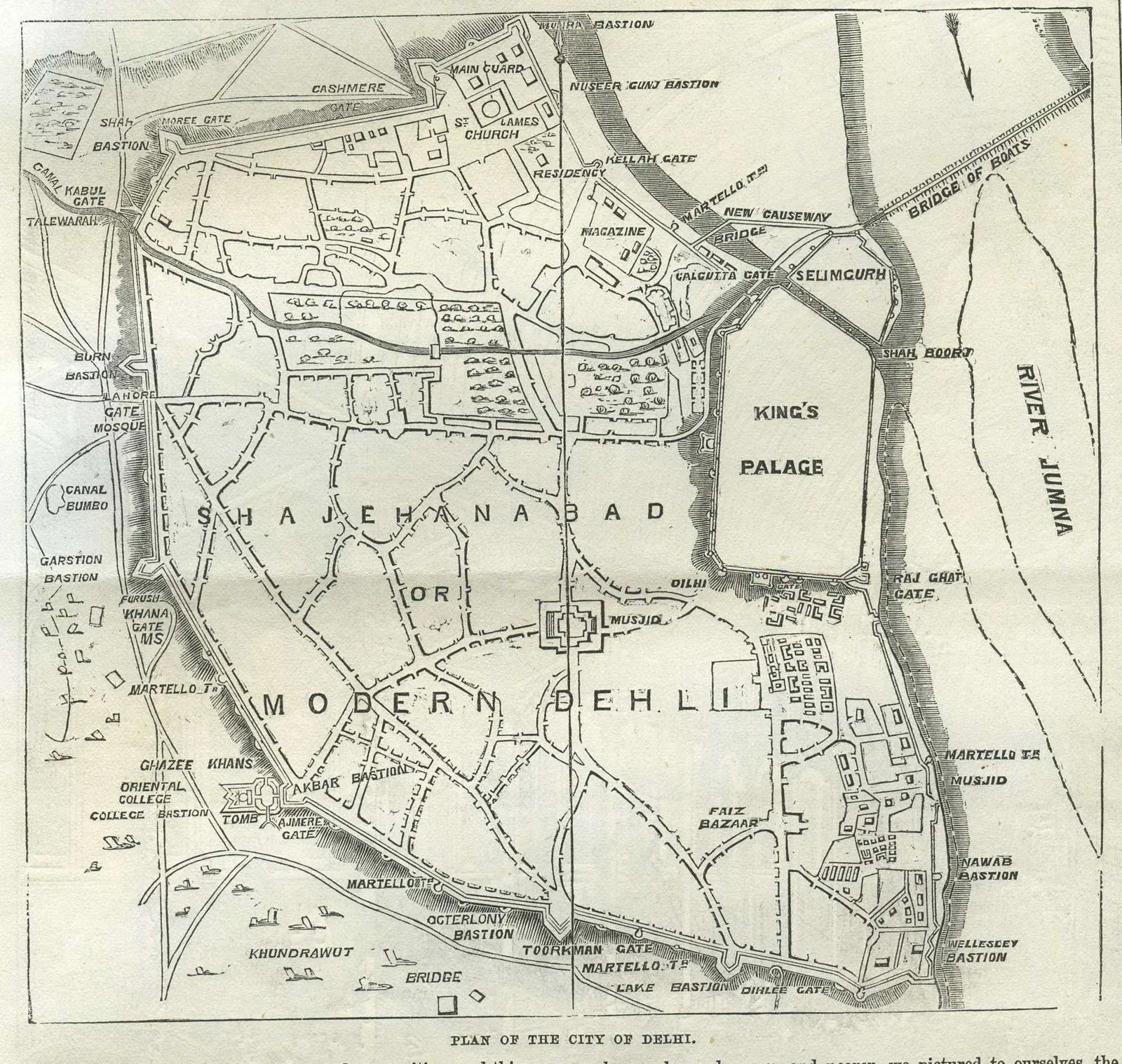
Core idea
Walled Mughal capital with axial Chandni Chowk, Red Fort, Jama Masjid, and hierarchical mohalla neighborhoods
Why it matters
Template for Mughal imperial urbanism; still the living core of Delhi
Description
Shah Jahan founded Shahjahanabad (Old Delhi) in 1639 as the walled Mughal capital, organized along the ceremonial spine of Chandni Chowk running from the Red Fort palace-fortress past the great Jama Masjid, with hierarchical residential quarters (mohallas) and a canal-fed water system threading the fabric.
Significance
Shahjahanabad is the template of the late Mughal imperial capital, balancing axial ceremony with organic neighbourhood life. Still the living, teeming core of Delhi, it demonstrates the endurance of pre-colonial planning within a modern megacity.
What became of it
Realised as the Mughal capital and still inhabited as Old Delhi; the Red Fort, Jama Masjid and Chandni Chowk survive, though the city walls were largely demolished after 1857 and the fabric is now densely overbuilt.
What shaped it
- Vastu Shastra / Mayamata / Manasara (c. 6th c. CE)
- Ottoman, Mughal and Qing imperial states (16th–18th c.)
- The mahalla (mosque-centred quarter) (characteristic from c. 9th–10th c.)
- The souq and qaysariyya (covered market) (developed c. 8th–10th c.)
- Christianity & Islam (1st c. CE / 622 CE)
Plans it influenced
- Jaipur (1727)
- Delhi MPD-2041 (2021)
- New Delhi (Lutyens’ Plan) (1911–1931)
Sources
- https://en.wikipedia.org/wiki/Shahjahanabad
- https://www.britannica.com/place/Jami-Masjid-mosque-Delhi-India