Postwar & Welfare-Modernist (1945–1975)
Chandigarh
Core idea
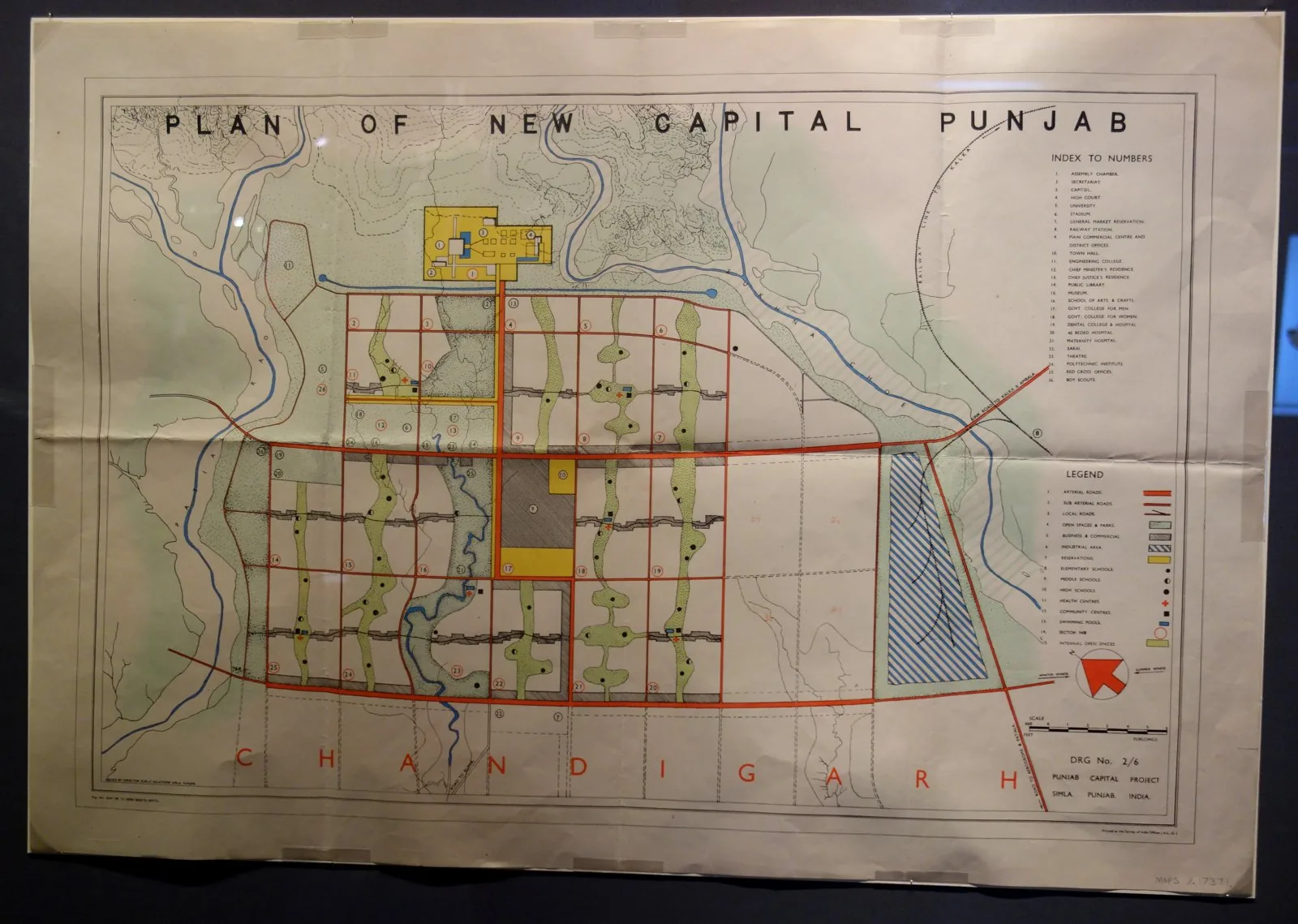
Sectoral grid; hierarchy of V1–V7 streets
Why it matters
Modernist capital; planning pedagogy icon
Description
Le Corbusier's Chandigarh (1951–65), capital of the Indian Punjab, realized his urban theories at city scale: a grid of self-contained 'sectors,' a hierarchy of seven road types (the 7Vs), separated functions, and a monumental concrete Capitol Complex of government buildings.
Significance
Chandigarh is the only city largely built to Le Corbusier's principles and the most complete realization of modernist planning. Postcolonial India's flagship of modernity, it remains a global pilgrimage site and a touchstone in debates over modernist urbanism.
What shaped it
- The Athens Charter (1933 / 1943)
- Ville Contemporaine / Plan Voisin / Ville Radieuse (1922–1933)
- The superblock (1920s–30s / 2016 revival)
- Zoning (1884 Germany / 1916 NYC)
- The Neighbourhood Unit (1929)
Plans it influenced
- Brasília Pilot Plan (1957–1960)
- Islamabad (1960)
- Auroville (1968–)
Sources
- https://www.archdaily.com/806115/ad-classics-master-plan-for-chandigarh-le-corbusier
- https://en.wikipedia.org/wiki/Chandigarh
hub.toekom.st — History of Urbanism · an interactive timeline of 850 planned cities across 6,000 years.