Brasília Pilot Plan
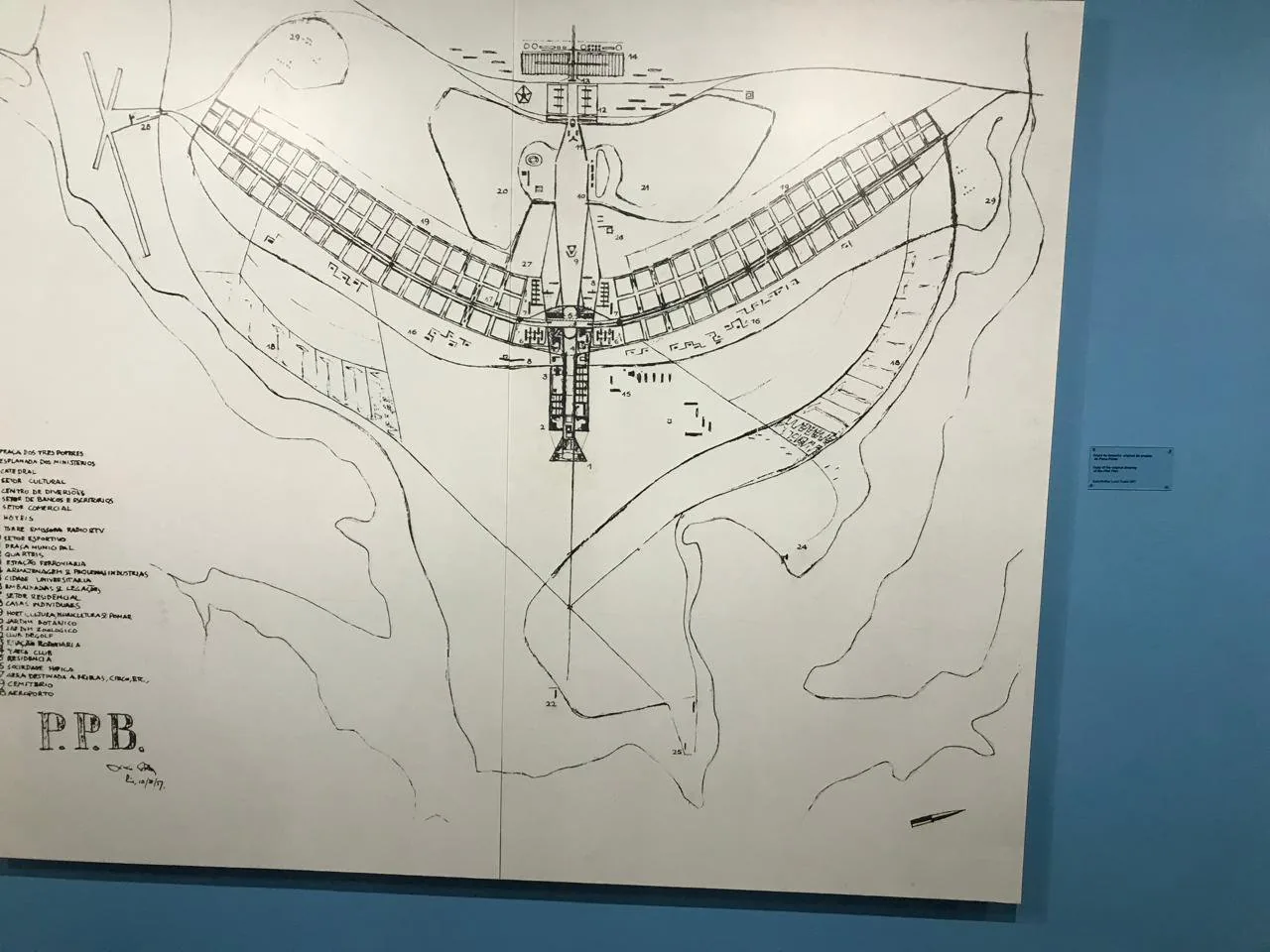
Core idea
Superquadras on monumental/residential axes
Why it matters
Large-scale modernist capital realized
Description
Lúcio Costa's 1957 Pilot Plan for Brasília, with buildings by Oscar Niemeyer, laid out a wholly new capital in the form of a cross or aeroplane: a monumental axis of government and a residential axis of uniform 'superquadra' housing blocks, strictly zoned and scaled for the automobile.
Significance
Brasília is the supreme built example of high-modernist capital planning, a UNESCO-listed icon of mid-century utopianism. Endlessly debated for its grandeur and its everyday livability, it embodies both the promise and the limits of the planned ideal city.
What became of it
Largely realised as designed and inaugurated as Brazil's capital in 1960; the monumental Plano Piloto core was inscribed as a UNESCO World Heritage Site in 1987. However, growth was absorbed into surrounding satellite cities and informal settlements, so the Federal District population (~2.8 million) vastly exceeds the intended 500,000.
Critique
James Holston's The Modernist City (1989) argues the plan's abstract modernist order - monumentality, the death of the traditional street, car-dependence and rigid zoning - produced social segregation and pushed the poor to the periphery.
What shaped it
- The Athens Charter (1933 / 1943)
- Ville Contemporaine / Plan Voisin / Ville Radieuse (1922–1933)
- CIAM founded (1928)
- The superblock (1920s–30s / 2016 revival)
- Garden Cities of To-Morrow (1898 / 1902)
Plans it influenced
- Abuja Master Plan (1979)
- Amaravati Capital City (stalled) (2015–)
- Sejong Special Self-Governing City (2012–)
- Islamabad (1960)
- Curitiba Master Plan (1966)
- Brazil II Plano Nacional de Desenvolvimento (II PND) (1974)
- Marine City / Sea City Unabara (1958–1963)