Düsseldorf MedienHafen
Core idea
Design-led waterfront reuse
Why it matters
Iconic contemporary architecture cluster
Description
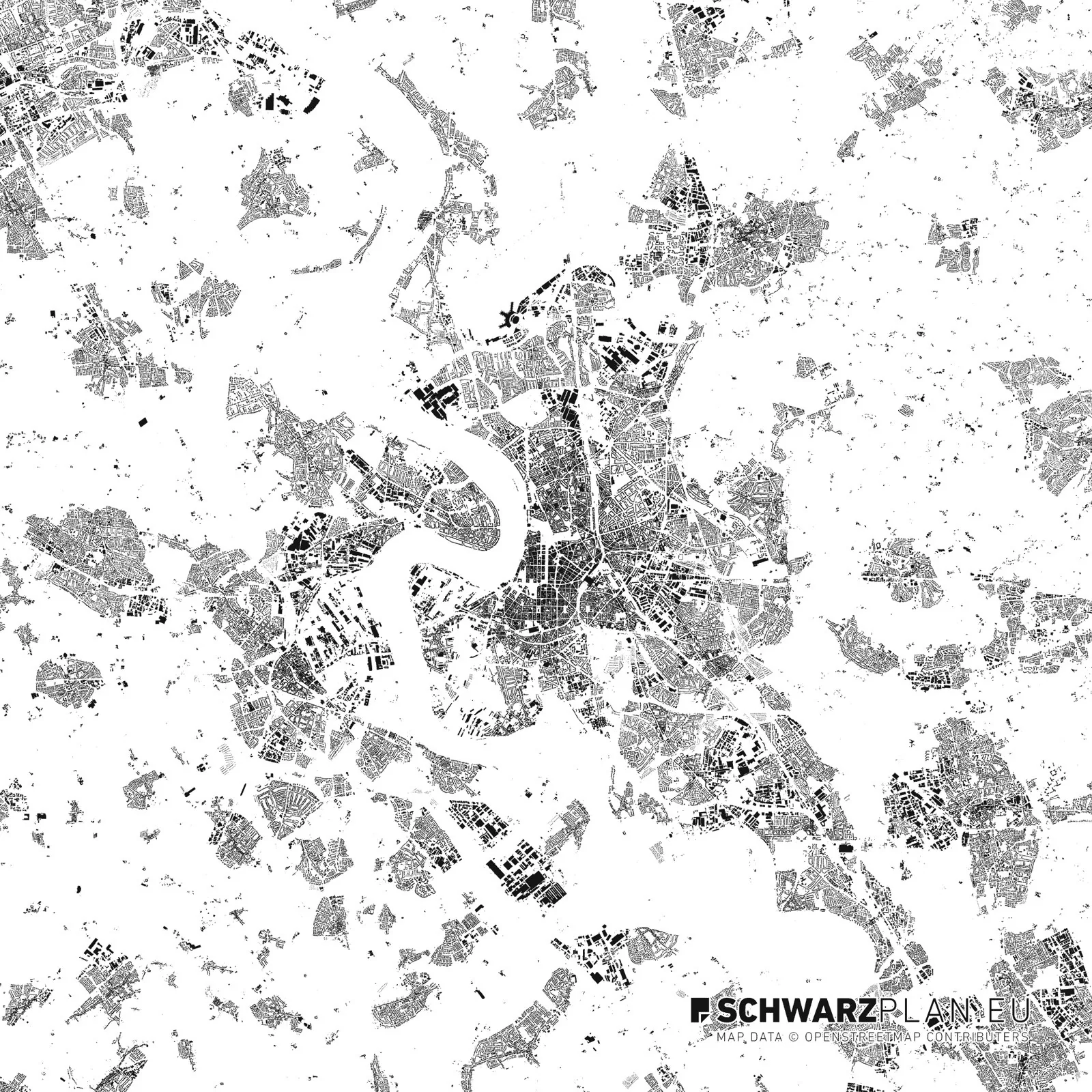
MedienHafen is the redevelopment of part of Düsseldorf's Rhine harbour, pursued by the city from the 1990s as a design-led conversion of docklands into a quarter for media, advertising, fashion and creative industries. Rather than comprehensive clearance, the plan retained basins, quay walls and selected warehouses while inserting signature buildings by architects including Frank Gehry, whose Neuer Zollhof ensemble became the district's emblem, alongside offices, studios, restaurants and hotels.
Significance
MedienHafen illustrates the architecture-led strand of waterfront regeneration, in which a collection of iconic buildings is used to rebrand an industrial harbour as a creative-economy address. It is often cited in discussions of the Bilbao-era reliance on signature architecture, admired for its successful economic repositioning and criticised for a public realm and social mix narrower than more housing-oriented harbour conversions.
What shaped it
- Postmodernism in architecture & planning (1977)
- Learning from Las Vegas (1972)
- The skyscraper (1885)
Plans it influenced
- Cologne Deutz Harbor (2010s–)
- Berlin Mediaspree Development (2000s–)
- Frankfurt Europaviertel (2005–)
- Cologne Rheinauhafen Redevelopment (2002–2011)
Sources
- https://en.wikipedia.org/wiki/Neuer_Zollhof
- https://www.baukunst-nrw.de/objekte/Neuer-Zollhof-am-Medienhafen-Gehry-Bauten--126.htm