Fort Kochi & Mattancherry (Portuguese–Dutch Town)
Core idea
Layered Portuguese–Dutch colonial port town on the Kochi waterfront.
Why it matters
India's earliest European settlement-town, capital of Dutch Malabar.
Description
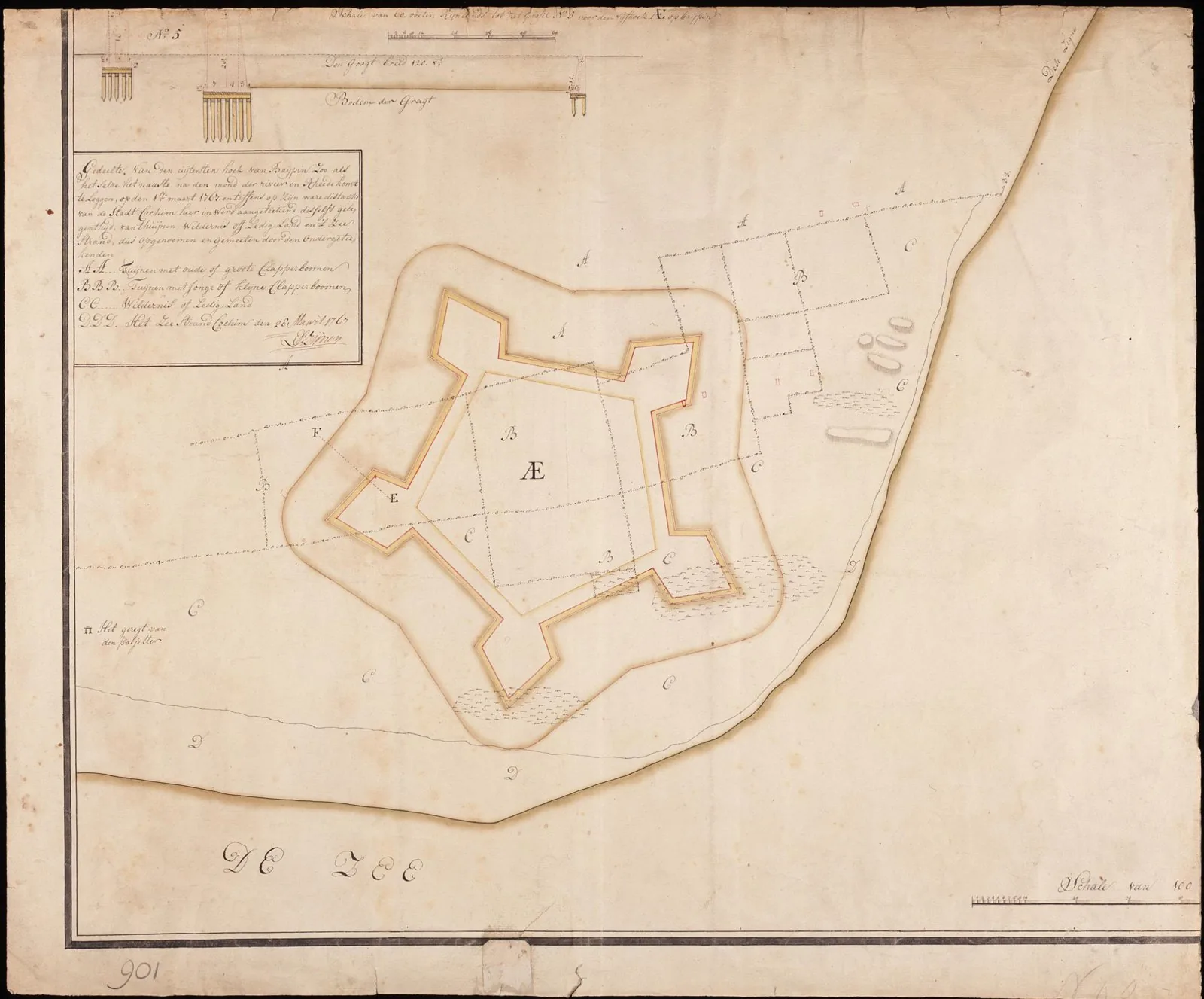
Fort Kochi grew from Fort Emmanuel, the fortified waterfront township the Portuguese began in 1503 under a grant from the Raja of Kochi and built up under Afonso de Albuquerque. After the Dutch East India Company seized Cochin in 1663 it became the administrative centre of Dutch Malabar, before passing to the British in 1795. The old town and the adjoining Mattancherry quarter, with its Jew Town and Dutch Palace, preserve a dense palimpsest of European colonial street fabric, churches, godowns and merchant houses rather than a single planned grid. St Francis Church (1503) and the Chinese fishing nets are among its emblematic survivals on the Malabar coast.
Significance
Fort Kochi is significant as the first sustained European colonial town in India and a textbook of layered port urbanism, in which Portuguese, Dutch and British interventions accreted over a single waterfront. Its surviving fabric of churches, warehouses, synagogue and merchant quarters records how successive trading empires adapted, rather than erased, one another's settlements, making it a key reference for the study of colonial Indian Ocean port-cities.
What shaped it
- Ocean-going caravel, galleon and navigation (15th–16th c.)
- The Columbian Exchange (from 1492)
- The Treaty of Tordesillas (1494)
Plans it influenced
- Pondicherry (Puducherry) Dual City (1674–1954)
- Tranquebar (Tharangambadi) — Danish Colonial Town (1620)