Kilwa Kisiwani
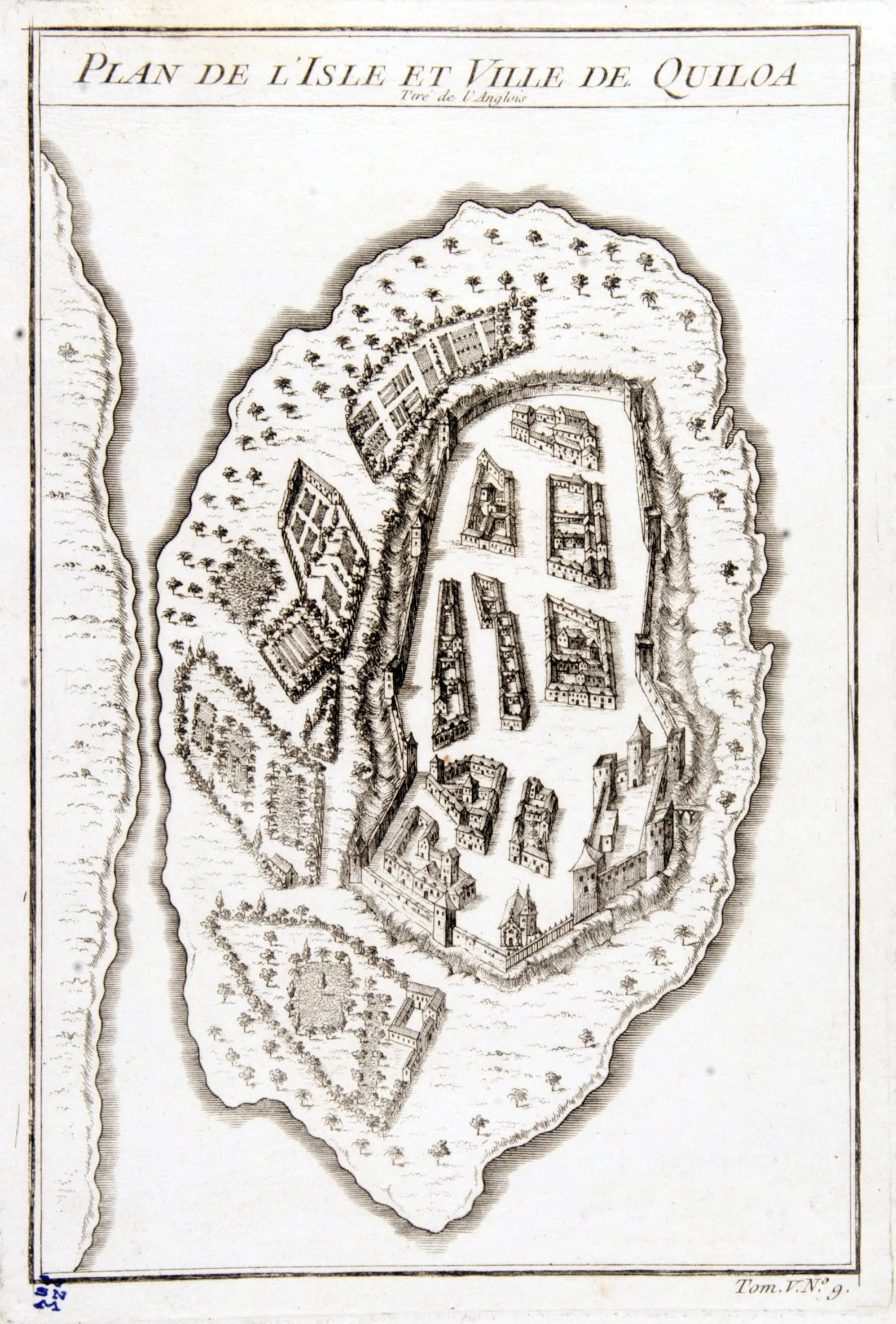
Core idea
Swahili island trading port with coral-stone palaces, Great Mosque, and harbor infrastructure
Why it matters
Key node in Indian Ocean trade network; African maritime urbanism linking East Africa to Arabia, India, and China
Description
Kilwa Kisiwani was the principal city of the Kilwa Sultanate, a Swahili trading port occupying an island off the southern Tanzanian coast and flourishing between roughly the eleventh and fifteenth centuries. The town combined coral-stone palaces, notably the great courtyard complex of Husuni Kubwa, with the multi-domed Great Mosque, merchant houses and harbour infrastructure serving dhow traffic across the Indian Ocean. Its urban fabric grew from the wealth of the gold, ivory and textile trades, organised by a Muslim mercantile elite rather than by a single designed scheme.
Significance
Kilwa is among the clearest demonstrations that sub-Saharan Africa produced sophisticated maritime urbanism, linking the East African interior to Arabia, India and China long before European contact. It anchors debates about the indigenous, cosmopolitan character of Swahili coast cities, countering older colonial narratives that attributed them to outside founders. As a UNESCO World Heritage Site it remains central to the historiography of Indian Ocean trade networks.
What shaped it
- Christianity & Islam (1st c. CE / 622 CE)
- The souq and qaysariyya (covered market) (developed c. 8th–10th c.)
Plans it influenced
- Great Zimbabwe (c. 11th–15th c.)
- Gedi (Gede) (c. 1200)