Kumbakonam
Core idea
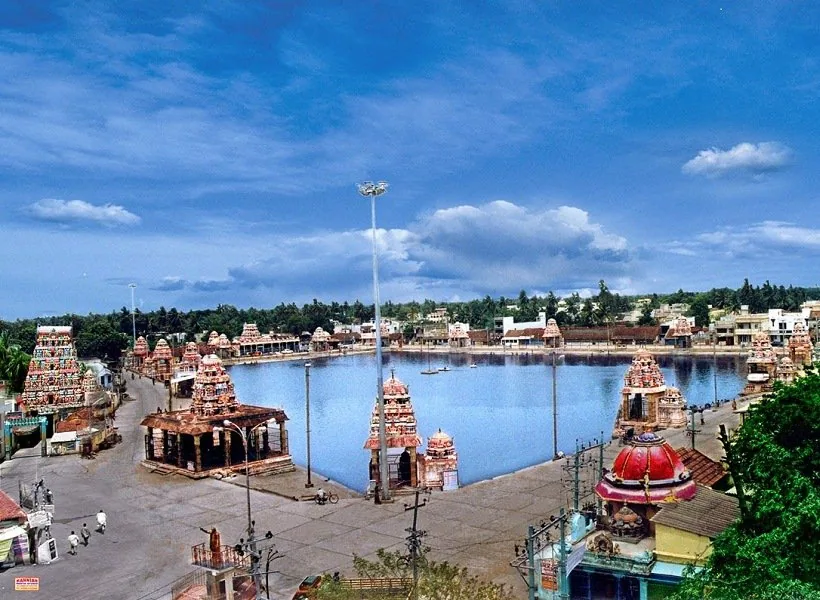
Delta temple-city of ~180 shrines linked by radial streets around the Mahamaham tank
Why it matters
A hydraulic-sacred urban ensemble typifying the temple towns of the fertile Cauvery basin
Description
Kumbakonam, set between the Cauvery and Arasalar rivers in the Thanjavur district of Tamil Nadu, rose as a temple town under the medieval Cholas, serving for a time as a capital and flourishing from about the ninth century. Around 180 Hindu temples crowd the municipal area, among them the Adi Kumbeswarar and Sarangapani shrines, linked by radial processional streets to the great Mahamaham tank, a roughly twenty-one-acre trapezoidal reservoir at the town's heart. Successive Vijayanagara, Nayak and Maratha patrons added and renovated temples, mandapams and tanks. Every twelve years the Mahamaham festival draws vast crowds to the tank, comparable in importance to the Kumbh Mela.
Significance
Kumbakonam concentrates the South Indian temple-town tradition at exceptional density, fusing sacred architecture with the hydraulic landscape of the Cauvery delta. Its radial streets, dozens of shrines and the central Mahamaham tank form an integrated devotional and water-management ensemble shaped over eight centuries of royal patronage. The town demonstrates how religion, irrigation and processional ritual together structured urban form in the Tamil heartland, sustaining a living pilgrimage economy.
What shaped it
- Hinduism & the Vedas (c. 1500 BCE onward)
- Temple-tank and eri (tank) irrigation hydraulics (c. 9th c. CE onward)
- The vastu-purusha mandala diagram (c. 6th c. CE (codified))