The vastu-purusha mandala diagram
What it is
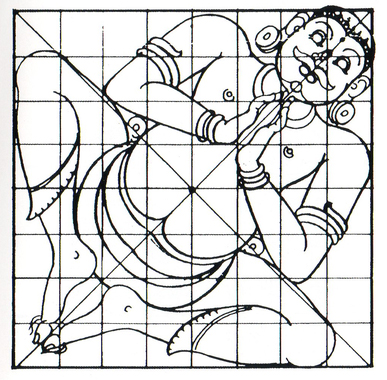
The vastu-purusha mandala is a square cosmological diagram in which a grid of cells is overlaid with a cosmic being (the vastu-purusha) and the deities of the directions, used to lay out temples, towns and houses. Its central cells are reserved for the supreme deity and open space, while gates, streets and quarters are assigned to peripheral cells by ritual rule. The diagram converts an abstract cosmic order into a buildable plan, fixing orientation, proportion and zoning. It functioned as the generative template behind South Asian sacred and civic layouts.
Why it matters
As a portable design instrument, the mandala translated cosmology directly into urban geometry, shaping temple-cities and planned capitals from Srirangam and Madurai to eighteenth-century Jaipur. It is one of history's most explicit diagrammatic links between belief and city form.
Plans it shaped
- Mahabalipuram (Mamallapuram) (c. 7th–8th c.)
- Angkor (Khmer Empire) (c. 9th–13th c.)
- Srirangam (Temple Island City) (c. 10th–17th c.)
- Thanjavur (Tanjore) (c. 10th–11th c.)
- Vijayanagara (Hampi) (c. 14th–16th c.)
- Madurai (Temple City) (c. 16th–17th c.)
- Jaipur (1727)
- Ayodhya Comprehensive Development Plan (2020s)
- Borobudur and the Kedu Plain (Medang/Mataram) (c. 780–850 CE)
- Kanchipuram (Pallava Temple Capital) (c. 6th century)
- Gangaikonda Cholapuram (Chola Imperial Capital) (c. 1025)
- Warangal (Kakatiya Circular Capital) (c. 13th c.)