New Haven Nine-Square Plan
Core idea
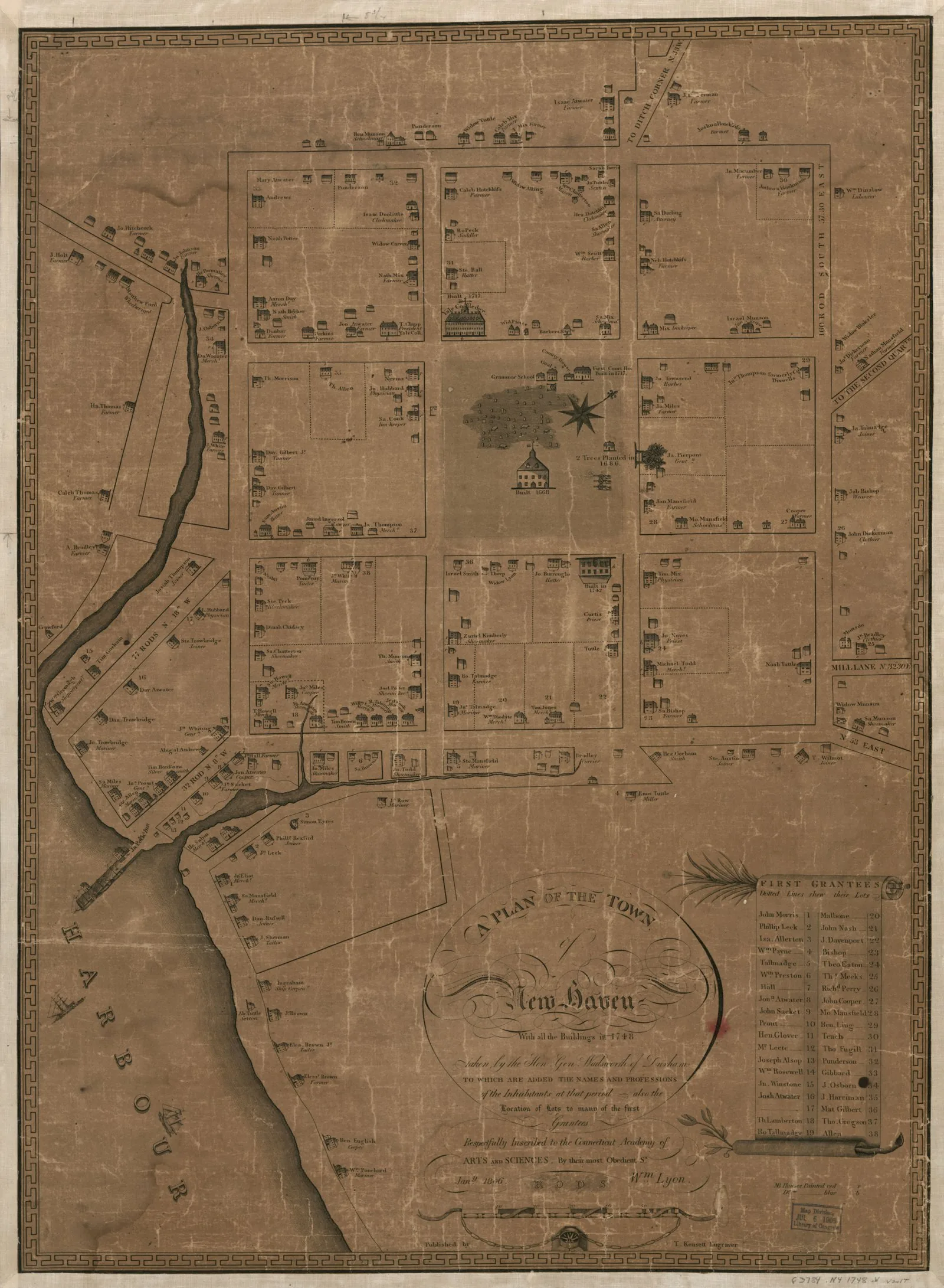
Nine-block core with central common
Why it matters
Template for colonial New England towns
Description
New Haven was laid out in 1638 by the Puritan founders John Davenport and Theophilus Eaton as a colonial settlement on Long Island Sound. The plan is a square of nine equal blocks, with the central block reserved as a common green for the meeting house, market and militia ground, and the surrounding eight blocks divided among the settlers. The scheme fused biblical ideals of the ordered community with practical land division.
Significance
The nine-square plan became a template for colonial New England town-founding and is among the earliest formal town plans in what became the United States. The New Haven Green endures as a canonical American civic space, and the plan is a staple of teaching on colonial urbanism and the religious roots of American town design.
What shaped it
- The grid (c. 2500 BCE)
- The Reformation (1517)
- Utopia (1516)
Plans it influenced
- Savannah Ward Plan (1733)
- Philadelphia Plan (1682)
Sources
- https://en.wikipedia.org/wiki/New_Haven,_Connecticut
- https://www.colonialwarsct.org/1638_eaton_davenport.htm