Rotterdam Stadshavens / M4H
Core idea
Port-city transition with innovation programs
Why it matters
Industrial-to-urban transformation
Description
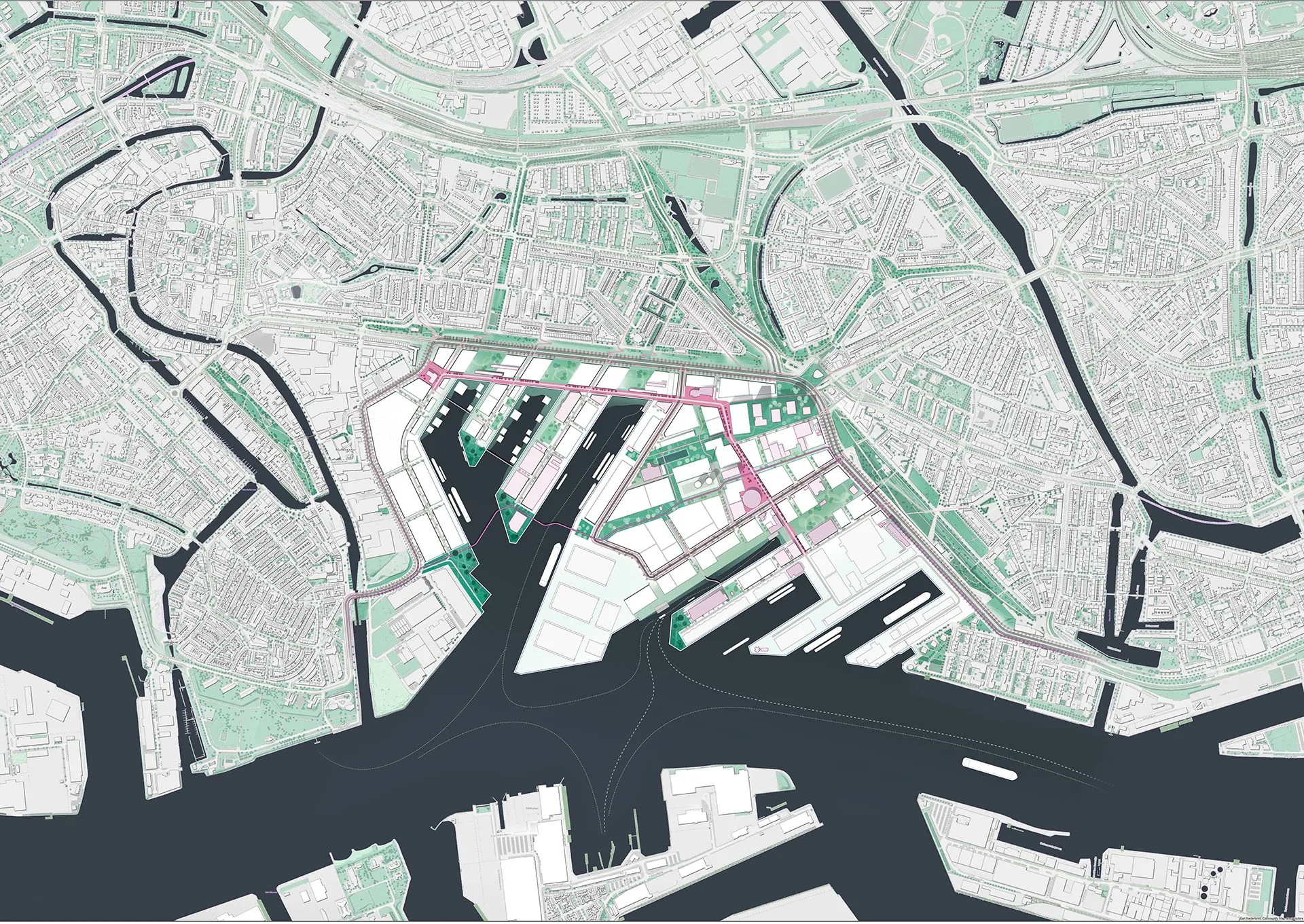
Stadshavens Rotterdam, launched from 2007 by the City and Port of Rotterdam, is a long-term strategy for transforming some 1,600 hectares of inner port areas as cargo activities migrated westwards to deeper water. Rather than wholesale conversion to housing, the plan promotes a gradual port-city transition organised around innovation programmes in clean technology, maritime industry and floating construction, with the Merwe-Vierhavens (M4H) district developed jointly as a makers' quarter for manufacturing, research and creative enterprise. Experiments such as the Floating Pavilion and RDM campus in former shipyards embody its approach.
Significance
Stadshavens and M4H are internationally noted for reframing port regeneration as an innovation-economy and next-economy strategy rather than conventional waterfront property development. The approach has informed European debates on productive cities and port-city relationships, positioning Rotterdam as a laboratory for adaptive reuse, circular industry and climate-resilient development in active port territory.
What shaped it
- Landscape urbanism (Waldheim) (1997-2006)
- Containerised-logistics scale-up (1970s–1990s)
- Sustainable development (Brundtland) (1987)
- The Leipzig Charter on Sustainable European Cities (2007 (renewed 2020))
Plans it influenced
Sources
- https://theportandthecity.wordpress.com/2015/11/11/the-rotterdam-experience/
- https://www.dutchurbansolutions.com/xxl---m4h-development-strategy
- https://circularports.vlaanderen-circulair.be/cases/makers-district-rotterdam/