Salt Lake City, Kolkata (Bidhannagar) Plan
Core idea
Gridded satellite with lakes/parks
Why it matters
Early Indian planned new town
Description
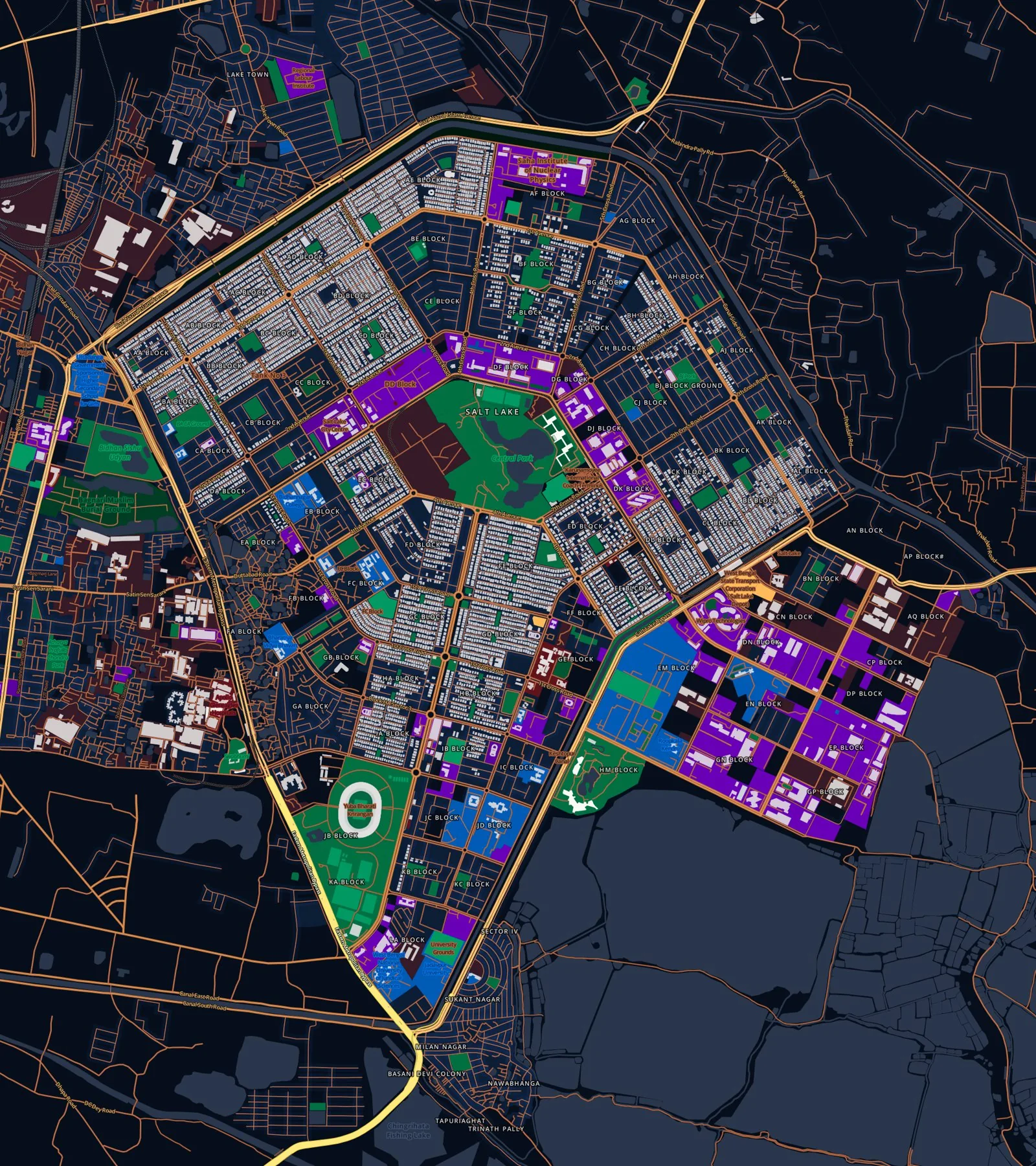
Salt Lake City, officially Bidhannagar, is a planned satellite town developed from 1962 on reclaimed salt lakes northeast of Calcutta, initiated by West Bengal's chief minister Dr B. C. Roy with a masterplan by the Yugoslav planner Dobrivoje Tošković. The plan laid out a geometric arrangement of sectors and blocks with generous parks, retained water bodies and a clear road hierarchy, intended to house the middle classes of the congested metropolis.
Significance
Bidhannagar was one of independent India's early planned new towns and a notable episode of socialist-era technical cooperation, bringing Yugoslav planning expertise to South Asia. It demonstrated large-scale land reclamation as a route to urban extension in the Bengal delta, prefiguring later and more contested reclamation projects, and it remains a reference for state-built middle-class townships in Indian planning history.
What shaped it
- The grid (c. 2500 BCE)
- Garden Cities of To-Morrow (1898 / 1902)
- The public park (1843–1858)
- Postwar decolonisation (1947–1960s)
Plans it influenced
- New Town Kolkata (Rajarhat) (1999–)
- Navi Mumbai (1967)