Early 20th Century & the Modern Movement (1900–1945)
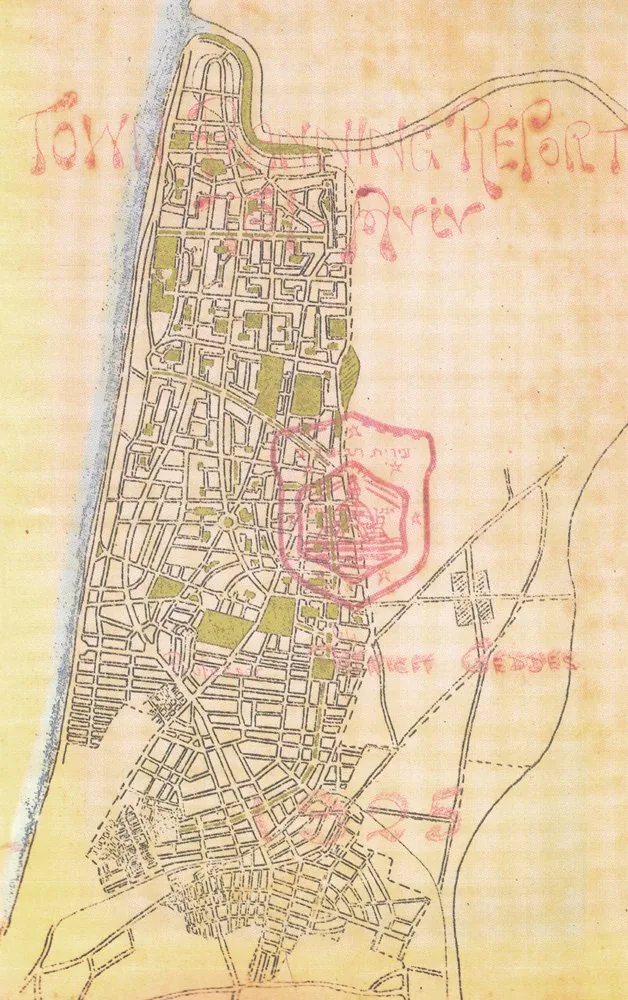
Tel Aviv Geddes Plan
Core idea
Garden-suburb logic on modern grid
Why it matters
Blends ecological thinking with urban design
Description
Patrick Geddes's 1925 plan for Tel Aviv applied garden-city principles to the new Jewish city: a hierarchy of main boulevards and quiet residential streets, generous greenery, and small public gardens, creating low-rise, walkable neighbourhoods later filled with Bauhaus 'White City' architecture.
Significance
The Geddes Plan shaped one of the most fully realized garden-city-influenced urban cores, and its human-scaled grid became the frame for the world's largest concentration of International Style architecture.
What shaped it
- Cities in Evolution (1915)
- Garden Cities of To-Morrow (1898 / 1902)
- The garden suburb (1903)
- Survey-before-plan (1915)
Plans it influenced
Sources
- https://en.wikipedia.org/wiki/Geddes_Plan_for_Tel_Aviv
- https://muse.jhu.edu/article/316606/figure/fig05
hub.toekom.st — History of Urbanism · an interactive timeline of 850 planned cities across 6,000 years.