Thiruvananthapuram
Core idea
Temple-centred royal capital grown outward from the Padmanabhaswamy temple within a four-gated fort
Why it matters
A deliberate temple-centred capital and a model of devotional royal city-making in southern Kerala
Description
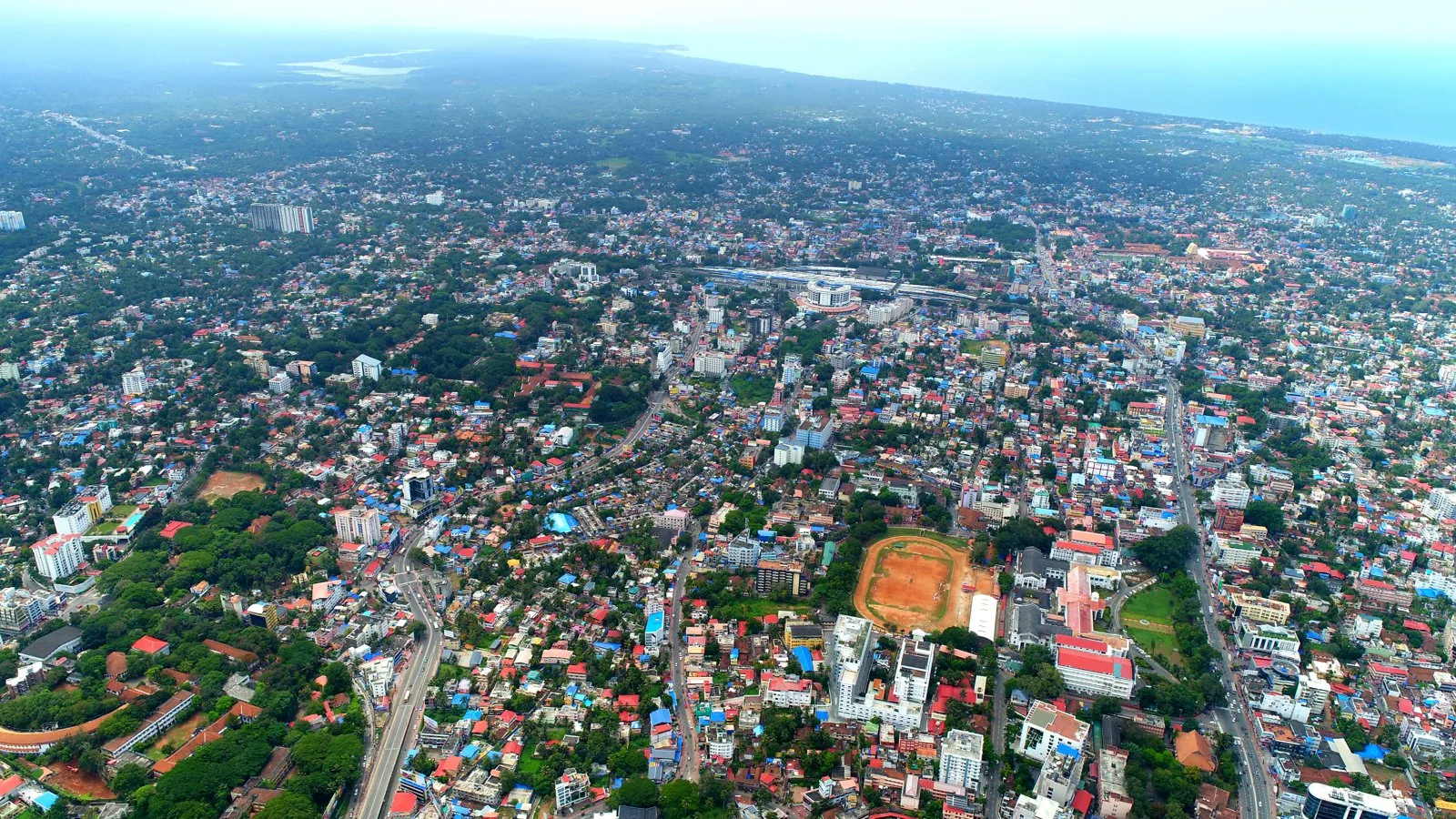
Thiruvananthapuram became the capital of Travancore when Marthanda Varma, founder of the modern kingdom, transferred his seat there around 1745 and dedicated the realm to its tutelary deity, ruling as Padmanabha Dasa, servant of Vishnu. The city grew outward from the Sri Padmanabhaswamy temple, the reclining-Vishnu sanctuary that remains its iconic landmark, within a fort enclave whose four gates gave the surrounding East, West, South and North Fort districts their names. Marthanda Varma and his successors added roads, canals and irrigation works, fostered foreign trade, and drew artists and scholars who made the temple-capital a cultural centre, its chief artery later becoming Mahatma Gandhi Road.
Significance
Thiruvananthapuram is a clear instance of the temple-centred royal capital, in which a great sanctuary supplies both the symbolic and the physical nucleus of the city and a four-gated fort orders its districts. Marthanda Varma's dedication of the kingdom to Padmanabha fused sacred kingship with deliberate capital-making, producing an urban form in which religion, dynasty and administration are spatially inseparable, a southern Kerala counterpart to the great temple-towns of the Tamil country.
What shaped it
- The vastu-purusha mandala diagram (c. 6th c. CE (codified))
- Temple-tank and eri (tank) irrigation hydraulics (c. 9th c. CE onward)
Plans it influenced
- Mysore (Mysuru) (c. 1799–1940)