Yerevan General Plan (Tamanian Plan)
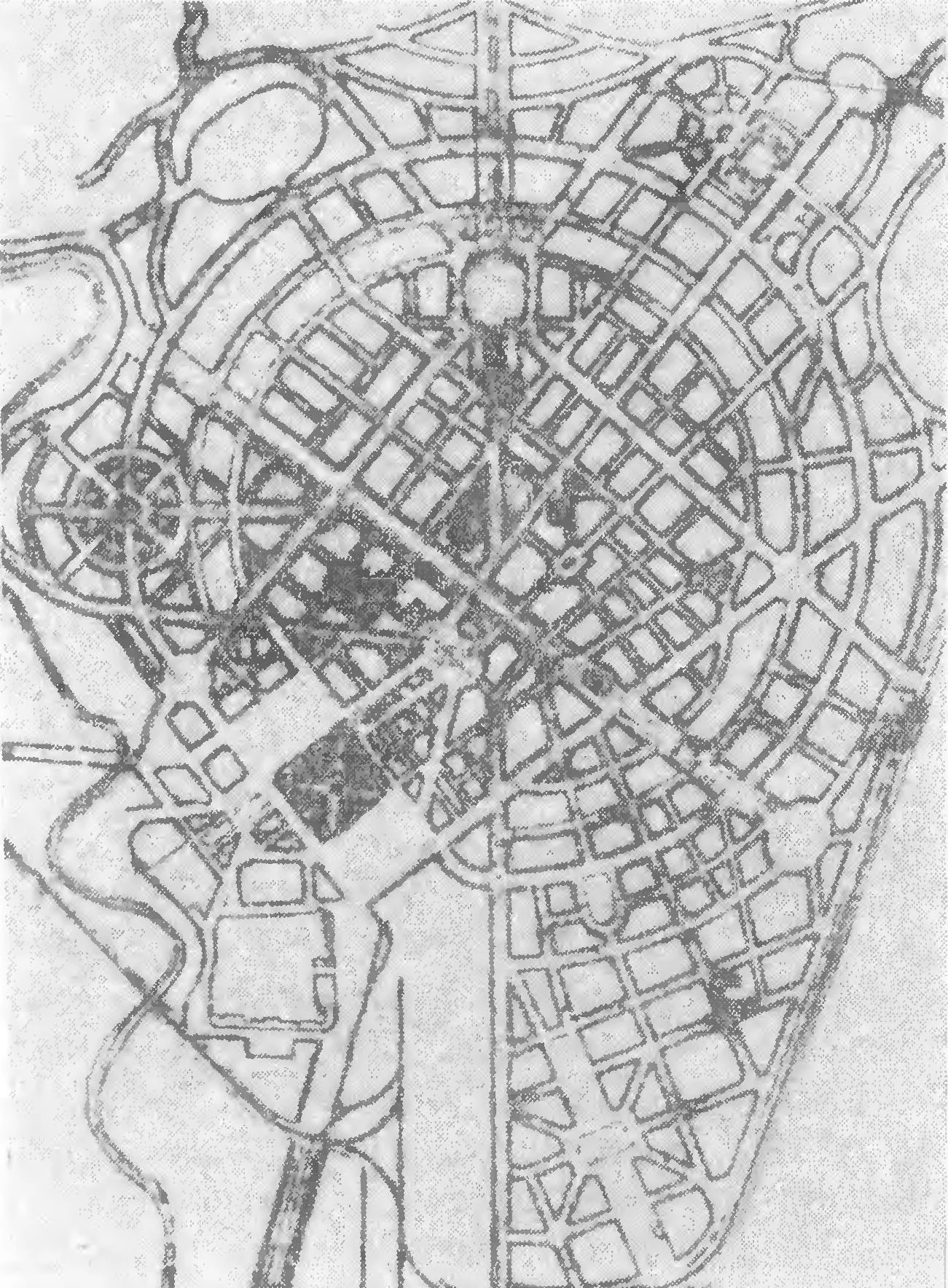
Core idea
A radial garden-city general plan for the Armenian capital oriented towards Mount Ararat.
Why it matters
The first general plan approved in the USSR and the framework that shaped modern Yerevan.
Description
Approved in 1924, Alexander Tamanian's general plan reorganised Yerevan from a provincial town into the planned capital of Soviet Armenia. Drawing on the garden-city tradition, it laid out a radial network of avenues converging on a central core, anchored by a ring boulevard and circular park, with distinct zones for government, culture and recreation sized for a projected population of around 200,000. Generous green spaces were conceived as the city's 'lungs'. The composition was deliberately oriented towards Mount Ararat, the national symbol, and combined European planning principles with Armenian architectural motifs in its civic ensembles.
Significance
Tamanian's scheme was the first municipal general plan formally approved in the Soviet Union, setting a precedent for Soviet capital planning. It gave Yerevan a coherent radial structure and national-romantic civic identity that still governs its centre. The plan is a landmark fusion of garden-city ideas, Soviet planning and Armenian cultural symbolism.
What shaped it
- Garden Cities of To-Morrow (1898 / 1902)
- City Planning According to Artistic Principles (1889)
- Communism and the USSR (1917 / 1922)
- The boulevard (17th–19th c.)