Bilbao Abandoibarra
Core idea
Riverfront regeneration incl. Guggenheim
Why it matters
Flagship of culture-led urban renewal
Description
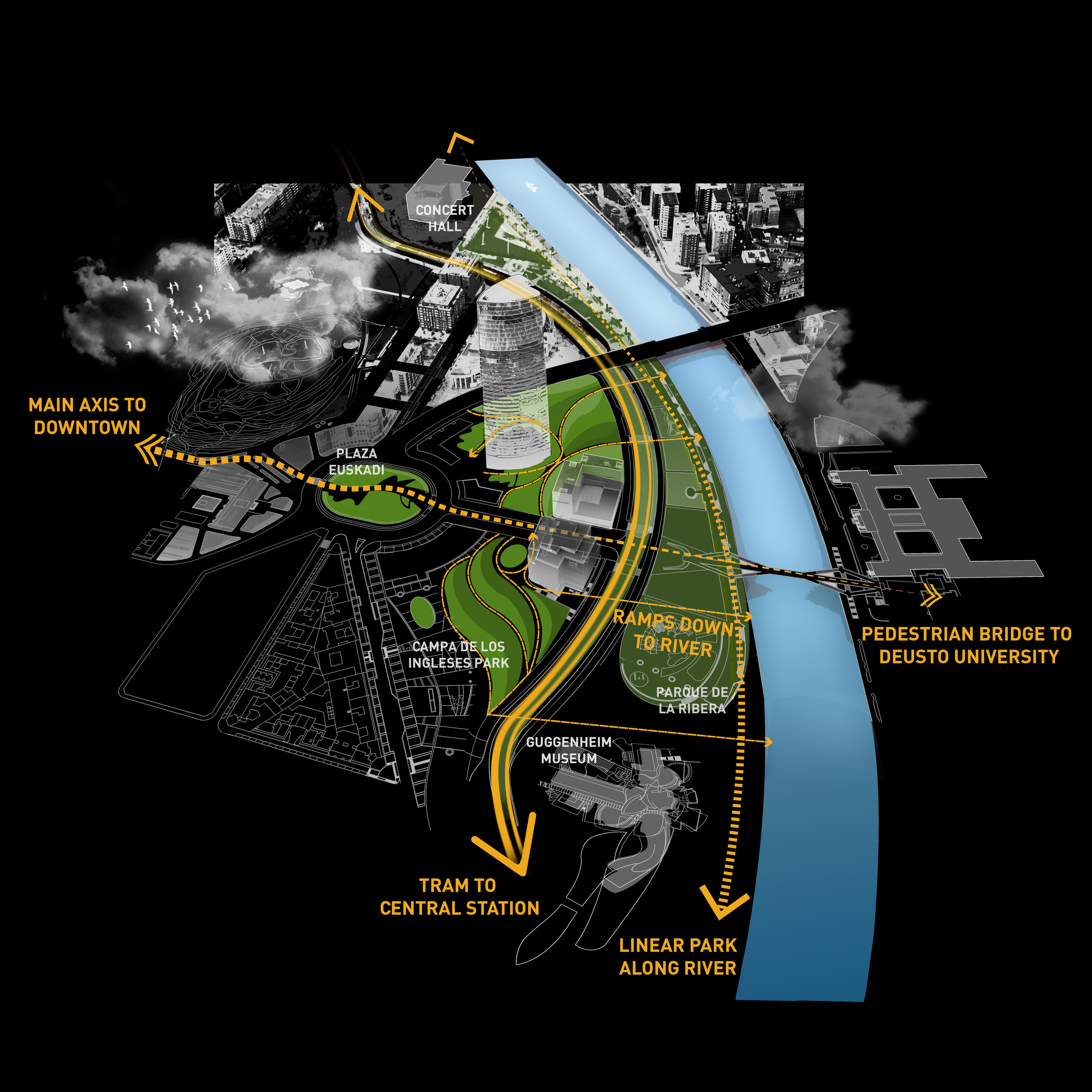
Bilbao's Abandoibarra district (1990s) redeveloped derelict riverside industrial land around Frank Gehry's Guggenheim Museum (1997), pairing iconic architecture with new public riverfront, transit, and cultural facilities to reinvent a declining industrial city.
Significance
Bilbao gave the world the 'Guggenheim effect' — the idea that a single spectacular building plus waterfront regeneration can rebrand and revive a post-industrial city. It became the most cited model of culture-led regeneration.
What became of it
Largely realised in the 2000s as planned by Balmori, Pelli and Aguinaga (1998), anchored by the Guggenheim Museum, Euskalduna conference centre and Iberdrola Tower; it is widely regarded as a flagship success of post-industrial waterfront regeneration.
Critique
Critics note the so-called 'Bilbao effect' has been over-generalised as a replicable model, and that high-end housing and cultural flagship development brought limited direct benefit to the wider working-class city.
What shaped it
- Neoliberalism (1970s–1990s)
- Postmodernism in architecture & planning (1977)
- The master plan (early 20th c.)
Plans it influenced
- Glasgow Clyde Waterfront Regeneration (2000s–)
- Guayaquil Malecón 2000 & Puerto Santa Ana (2000s–)
- Bilbao Zorrotzaurre Masterplan (2007)
Sources
- https://www.leekuanyewworldcityprize.gov.sg/case-studies/abandoibarra-waterfront/
- https://knowledgehub.clc.gov.sg/liveability-in-action/city-case-study--bilbao/