Piraeus
Core idea
Gridded port city with modular blocks
Why it matters
Model for harbor-city integration
Description
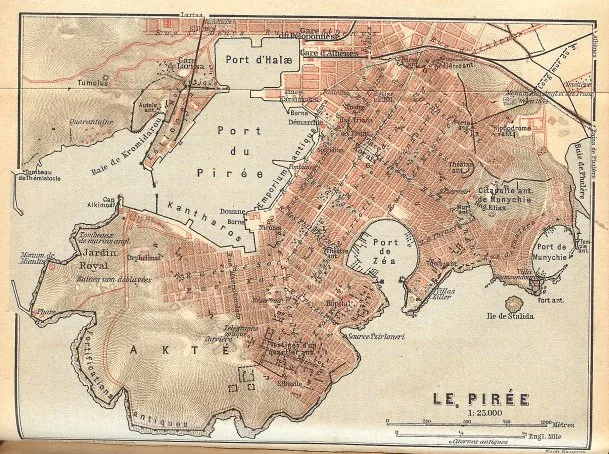
Piraeus, the port of classical Athens, was laid out in the fifth century BCE to a plan attributed to Hippodamus of Miletus. The scheme applied an orthogonal grid of streets and modular residential blocks across the rocky peninsula, coordinating the three natural harbours with an agora, shipsheds and defined zones for commerce, naval activity and housing. It gave Athens a purpose-built maritime town connected to the city by the Long Walls.
Significance
Piraeus is the canonical work of Hippodamus, whom Aristotle credited with inventing the formal division of cities, and it stands at the head of the Western tradition of orthogonal town planning. As a model for integrating a harbour with a rationally ordered town, it influenced Hellenistic and later port cities, and it made the grid an instrument of civic order as much as of land division.
What shaped it
- The grid (c. 2500 BCE)
- The plaza / forum / agora (c. 500 BCE)
- Athenian democracy (508/507 BCE)
Plans it influenced
- Miletus (5th c. BCE)
- Priene (4th c. BCE)
- Taxila (Sirkap) (c. 2nd c. BCE)
Sources
- https://www.britannica.com/biography/Hippodamus-of-Miletus
- https://www.livius.org/articles/concept/hippodamian-plan/