Plan Obus for Algiers (unbuilt)
Core idea
Elevated coastal megastructure
Why it matters
Influential megastructure vision
Description
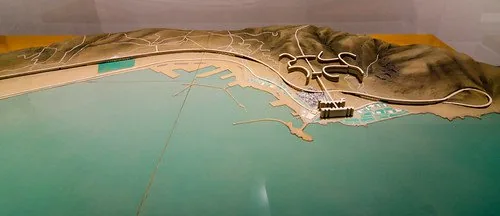
Le Corbusier's unbuilt 1931–34 Plan Obus for Algiers proposed a colossal megastructure: a sinuous elevated motorway carrying continuous housing along the coast, vast viaducts, and a business district, draped over the existing city and topography as a single sculptural infrastructure.
Significance
Plan Obus is the boldest statement of megastructure and techno-utopian urbanism — the city reconceived as one continuous, infrastructural object. Though never built, it has haunted and inspired radical urban thinking ever since.
What became of it
Never built. Le Corbusier pursued the Algiers plans without commission for some eleven years (1931 onward), but no part of Plan Obus was ever realised.
Critique
The speculative megastructure ignored the existing Casbah and local society, treating the colonial city as raw ground for an imposed European vision.
What shaped it
- Ville Contemporaine / Plan Voisin / Ville Radieuse (1922–1933)
- CIAM founded (1928)
- Reinforced concrete (Monier 1867; Hennebique system 1892)
- The British Empire and modern colonialism (1600 – 20th c.)
Plans it influenced
- Plan for Tokyo 1960 (unbuilt) (1960)
- Brasília Pilot Plan (1957–1960)
- The Athens Charter (CIAM IV, the Functional City) (1933 (published 1943))
- La Ville Spatiale (Spatial City) (1958–1962)
Sources
- https://www.bidoun.org/articles/le-corbusier-s-algerian-fantasy
- https://arab-architecture.org/db/building/concept-of-a-linear-city-in-algeria-plan-Obus