The Athens Charter (CIAM IV, the Functional City)
Core idea
Doctrine zoning the city into the four functions of dwelling, work, recreation and circulation.
Why it matters
Codified functionalist planning that guided postwar reconstruction worldwide.
Description
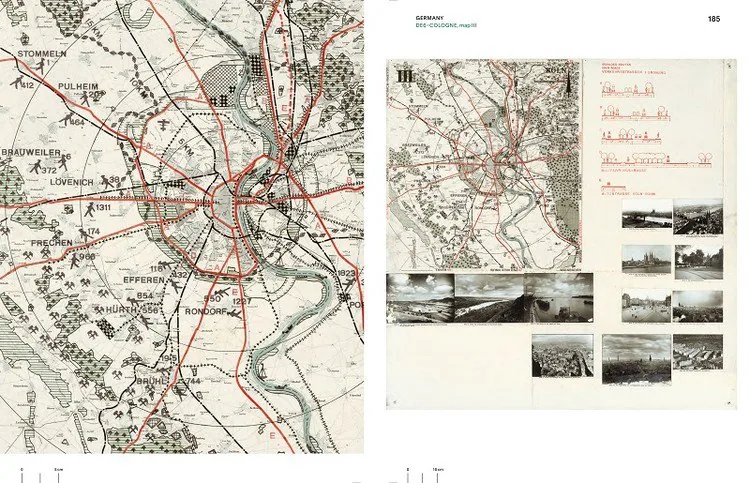
The Athens Charter is a planning manifesto arising from the fourth congress of the Congrès Internationaux d'Architecture Moderne, held in 1933 aboard a ship between Marseille and Athens on the theme of the Functional City. It analysed dozens of cities against four functions—dwelling, work, recreation and circulation—and argued that each should be allocated to its own zone, with high-density housing freely arranged in greenery to maximise light and air, industry separated from residence, parkland provided as a right, and a hierarchical road network organised for vehicular movement. Le Corbusier compiled and substantially reworked the congress findings into the published text of 1943.
Significance
More polemic than plan, the Charter distilled interwar functionalism into a portable doctrine of zoning and tower-in-park housing. Through Le Corbusier's 1943 edition it became one of the most influential—and later most criticised—documents in twentieth-century urbanism, shaping postwar reconstruction and new towns across the world before reaction against its separation of functions helped define later urban thought.
What became of it
Hugely influential as doctrine: drafted at CIAM IV (1933) and published by Le Corbusier in 1943, it shaped post-war functionalist zoning and reconstruction worldwide.
Critique
Widely criticised for promoting rigid single-use zoning and high-rise slab housing that fragmented traditional urban fabric and street life.
What shaped it
- CIAM founded (1928)
- Ville Contemporaine / Plan Voisin / Ville Radieuse (1922–1933)
- Zoning (1884 Germany / 1916 NYC)
- Une Cité Industrielle (1904 / 1917)
- The Athens Charter adopted (1933)
Plans it influenced
- Moscow General Plan (1935)
- Amsterdam AUP (Algemene Uitbreidingsplan) (1935)
- Rotterdam Basisplan (1946)
- Brasília Pilot Plan (1957–1960)
- Harlow New Town (1947)
- Vällingby ABC-town (1950s)
Sources
- https://en.wikipedia.org/wiki/Athens_Charter
- https://architecture-history.org/library/AJ/Creating%20the%20Charter%20of%20Athens.pdf