Vällingby ABC-town
Core idea
Arbete–Bostad–Centrum metro satellite
Why it matters
Iconic Scandinavian TOD new town
Description
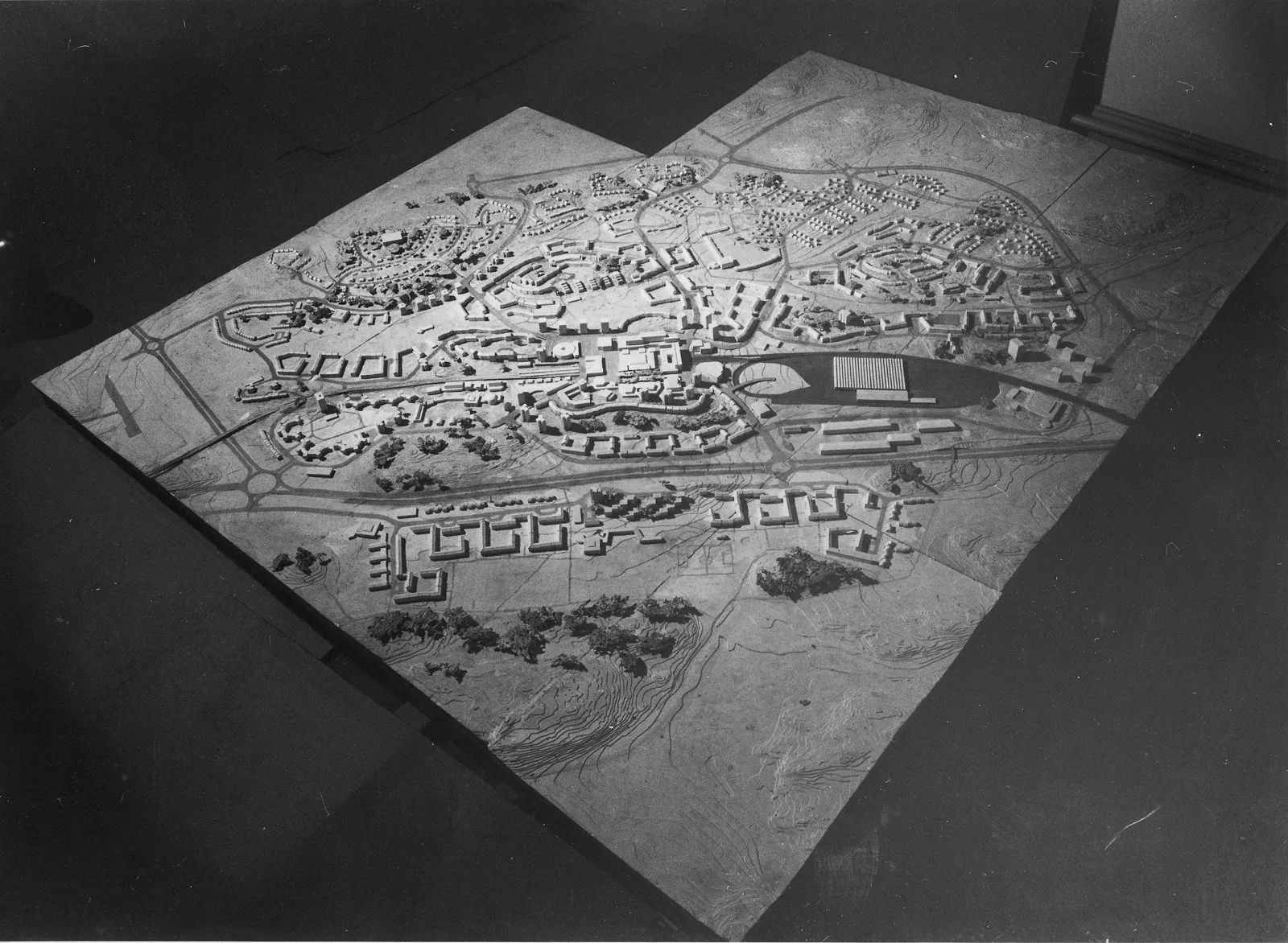
Stockholm's Vällingby (1950s) pioneered the 'ABC-town' (Arbete-Bostad-Centrum: work-housing-centre), a satellite organized around a rail station and a pedestrian town centre, with housing graded by density outward from transit — a self-sufficient community integrated with the metro.
Significance
Vällingby became an internationally studied model of the transit-served, balanced satellite town, influencing new-town and TOD planning across Europe and beyond as a humane alternative to dormitory suburbs.
What became of it
Largely realised and inaugurated 14 November 1954 as Sweden's first ABC-town and flagship of the post-war folkhem welfare state; the housing, metro-linked centre and neighbourhood structure were built broadly as planned, though self-sufficiency was only partly achieved.
Critique
Scholars note the A (Arbete/work) component failed in practice - local workplaces never matched the master plan and most residents commuted out - so the intended self-contained ABC-town effectively became a dormitory suburb.
What shaped it
- The Neighbourhood Unit (1929)
- The metro / underground railway (1863)
- Garden Cities of To-Morrow (1898 / 1902)
- The Athens Charter (1933 / 1943)
Plans it influenced
- Tama New Town (1965–)
- Seoul New Towns (Bundang, Ilsan, etc.) (1990s)
- Stockholm General Plan (1952)
Sources
- https://en.wikipedia.org/wiki/V%C3%A4llingby
- https://newtowninstitute.org/pdf/NewTownPub-180212Vallingby.pdf