Battery Park City Master Plan (NYC)
Core idea
Landfill waterfront planned community
Why it matters
Prototype for public authority-led urbanism
Description
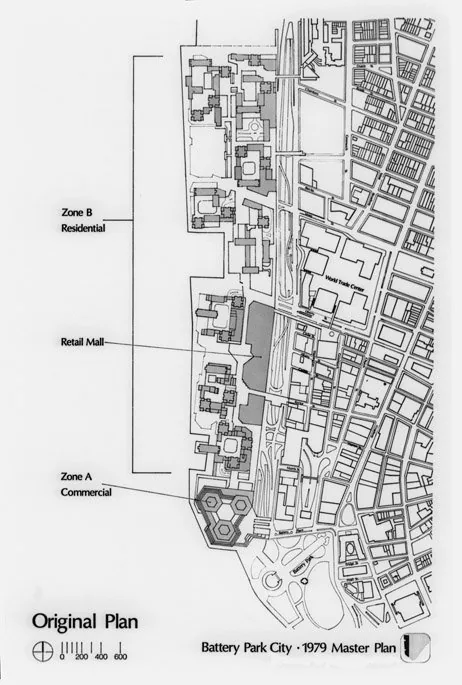
Battery Park City (master plan 1979) reclaimed landfill on Manhattan's lower west side and, rejecting tower-in-the-park modernism, rebuilt the traditional New York street grid, block structure, and waterfront esplanade with mixed-use buildings and generous public space.
Significance
Battery Park City marked the turn away from modernist superblocks back toward traditional urbanism — streets, blocks, and public waterfront. Its design guidelines became a widely copied template for late-20th-century American waterfront development.
What became of it
Successfully realised, it became a model waterfront community with a vibrant grid of streets, parks and mixed-use development.
Critique
Its high-end residential character has been criticised as exclusive and disconnected from the wider city's affordability needs.
What shaped it
- The Death and Life of Great American Cities (1961)
- The master plan (early 20th c.)
- The Image of the City (1960)
- Zoning (1884 Germany / 1916 NYC)
- The Architecture of the City (1966)
- The 1973 oil shock (1973–74)
Plans it influenced
- London Docklands Regeneration (1981–)
- Yokohama Minato Mirai 21 (1983–)
- Vancouver ‘Living First’ (Central Area) (1991)
- Baltimore Harbor East/Harbor Point Plans (2000s–)
- Canary Wharf Masterplan (Isle of Dogs) (1985–)
- Rotterdam Kop van Zuid Masterplan (1991)
- Hudson Yards Master Plan (NYC) (2009)
- West Chelsea/High Line Rezoning (NYC) (2005)