Canary Wharf Masterplan (Isle of Dogs)
Core idea
Docklands high-rise CBD development
Why it matters
Transformative shift of London’s financial core
Description
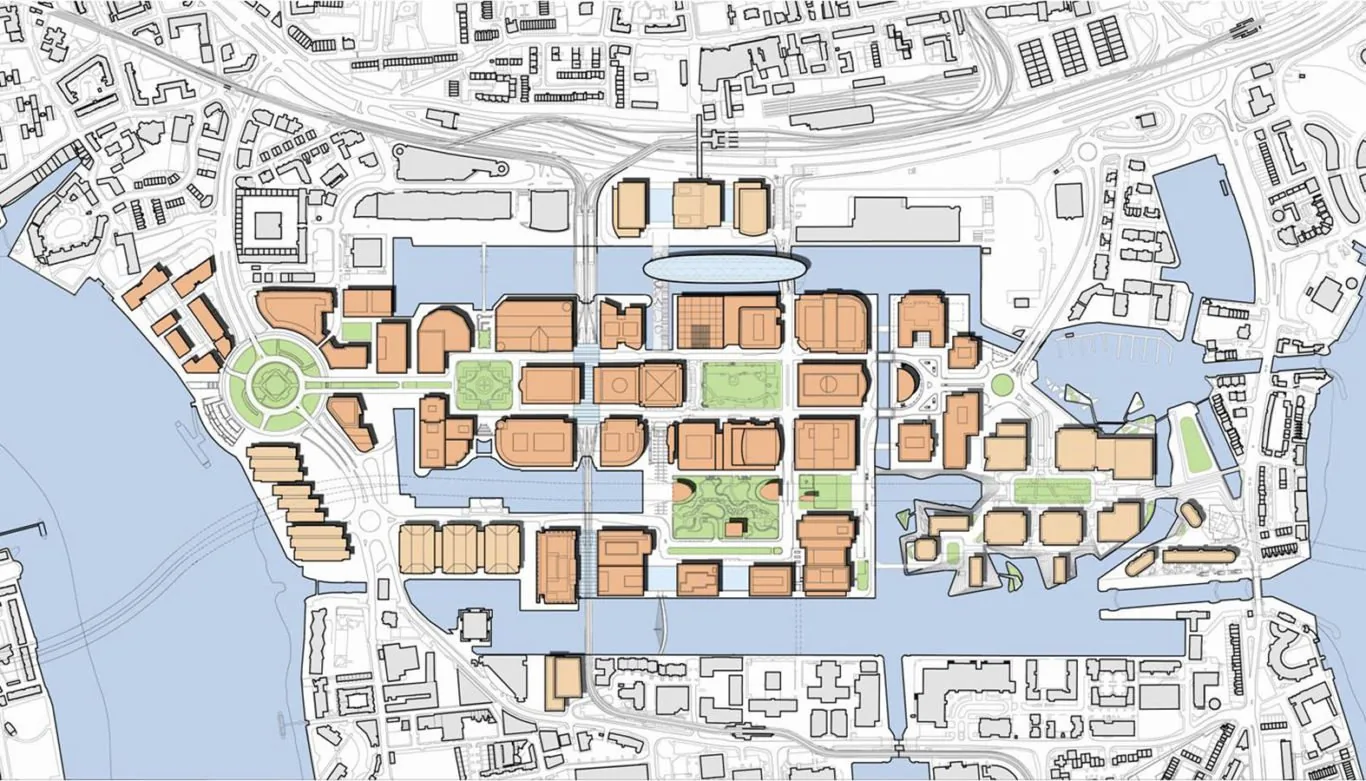
Begun in 1985 on the derelict Isle of Dogs, the Canary Wharf masterplan built a high-rise corporate financial district — towers, a transit hub, and underground retail — on former dock land, becoming the anchor of London Docklands regeneration.
Significance
Canary Wharf is a landmark of late-20th-century financial-district megaprojects, shifting London's centre of gravity eastward and demonstrating both the power and the placelessness risks of corporate-led mega-development.
What became of it
The masterplan was largely realised but troubled: original developer Olympia & York went bankrupt in May 1992 as the London property market collapsed, before an international consortium bought control in 1995 and the district grew into a major global financial centre that keeps expanding.
Critique
Critics frame Canary Wharf as a speculative, finance-driven mono-functional high-rise enclave whose isolated CBD form integrated poorly with surrounding Docklands communities.
What shaped it
- Thatcher–Reagan deregulation (1979–1989)
- Neoliberalism (1970s–1990s)
- The skyscraper (1885)
- Steel-frame and curtain-wall construction (steel frame 1885; curtain wall from 1950s)
Plans it influenced
- King’s Cross Central (2006–)
- Amsterdam Zuidas (1998–)
- Greenwich Peninsula Masterplan (2015)
- Stratford City / International Quarter London (2011)
- Paddington Basin / Paddington Waterside (1998)
- Thames Gateway Planning Framework (1995)
- Paris Rive Gauche (PRG) – 13e Arrondissement (1991)
- Warsaw Centrum Praskie Koneser Area Plan (2010s)