Karlsruhe
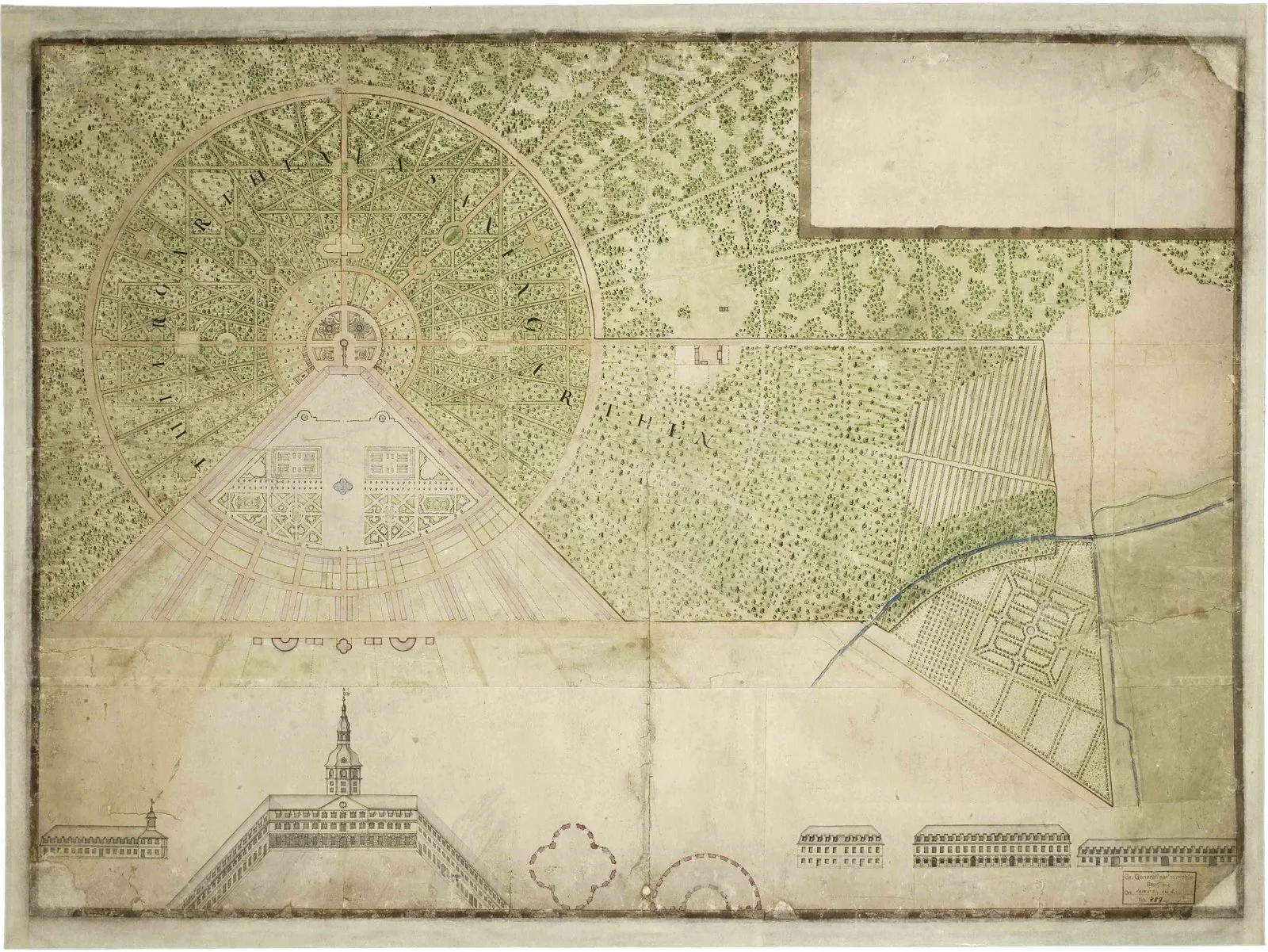
Core idea
Fan-shaped radial plan from palace
Why it matters
Iconic radial geometry used as city emblem
Description
Karlsruhe was founded in 1715 by Margrave Karl Wilhelm of Baden-Durlach as a new residence city in the forest. Thirty-two avenues radiate from the central palace tower in a full circle, with the fan-shaped southern sector developed as the town, giving the city its enduring nickname of the fan city. The geometry places the ruler's seat literally and symbolically at the centre of the urban and territorial order.
Significance
Karlsruhe is one of the purest built expressions of baroque absolutist planning, its radial fan so distinctive that it serves as the city's emblem. It is a standard reference in accounts of the residence city and of geometric planning as an instrument of princely power, and it later influenced radial-plan thinking elsewhere, including comparisons with Washington and other capital designs.
What shaped it
- The Enlightenment (18th c.)
- Plan for Rebuilding London (1666)
- Rebuilding of London Act (1667)
Plans it influenced
- St. Petersburg (1716)
- Washington, D.C. (1791)
- Detroit Woodward Plan (1807)
- Place Stanislas ensemble, Nancy (1752–1755)