Medellín PUI & MetroCable
Core idea
Integrated urban projects + cable transit
Why it matters
Social urbanism in steep informal areas
Description
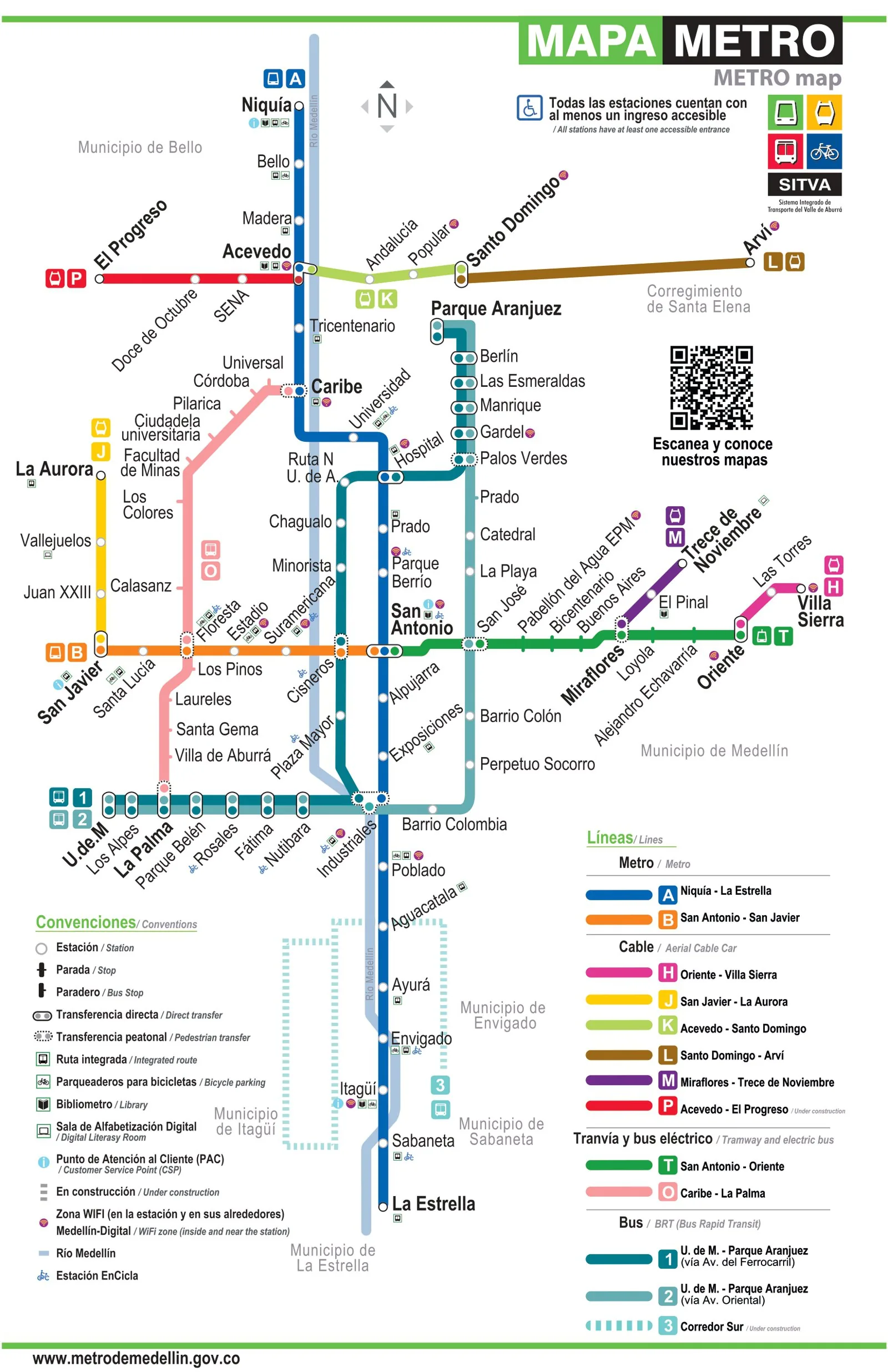
Medellín's Proyectos Urbanos Integrales and MetroCable (from 2004) extended gondola transit up the steep informal hillsides and paired it with high-quality libraries, schools, and public spaces in the poorest comunas — 'social urbanism' targeting investment where it was most needed.
Significance
Medellín's MetroCable and social urbanism transformed the city's global image and made it the world's leading example of using transit and design as tools of social inclusion and violence reduction.
What became of it
Realised and internationally celebrated as the 'Medellín model', with the MetroCable and PUIs credited for steep falls in violence and improved access in hillside informal settlements; the approach has since been replicated in other Colombian and Latin American cities.
Critique
Critics note gentrification pressures and that physical works outpaced sustained social investment, with benefits unevenly distributed.
What shaped it
- Aerial cable transit (2004)
- Bus Rapid Transit (BRT) (1974)
- John Turner & self-help housing (1972-1976)
- Le Droit a la ville (Lefebvre) (1968)
- Brazil's City Statute (Estatuto da Cidade) (2001)
Plans it influenced
- La Paz 2040 Plan (2014)
- Montevideo Mobility Plan (2016)
- Bogotá Regiotram & Metro Expansion Plans (2016–)
- Medellín BIO 2030 (2011)
- Lima Sustainable Urban Transport Plan (2015)
- Addis LRT Corridor Plans (2015–)
- Mexico City Plan Verde (2007)
- Guadalajara TOD Plan (2016)
Sources
- https://centreforpublicimpact.org/public-impact-fundamentals/the-metrocable-transport-by-urban-c
- https://prizeforcities.org/project/metrocable